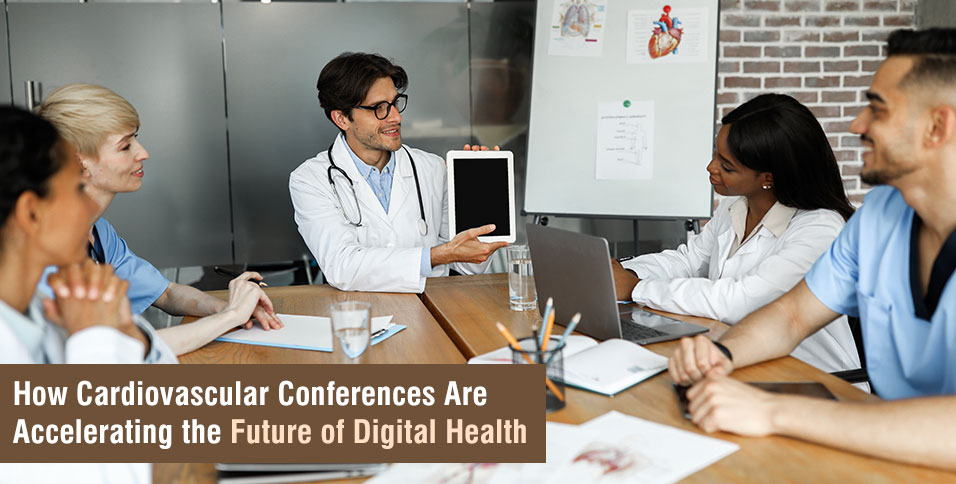
Digital health is evolving at an unprecedented rate, particularly in areas related to the prevention, diagnosis, treatment, and long-term management of cardiovascular disease. As care models shift and patient expectations rise, you’re seeing more pressure on health systems, clinical leaders, and innovators to deliver solutions that are smarter, more connected, and easier to scale.
The urgency couldn’t be clearer: globally, cardiovascular diseases claimed nearly 19.8 million lives (32% of all deaths worldwide) in 2022 alone, making them the leading cause of mortality. With demand on the rise, digital health tools continue to evolve in sophistication, offering new ways to detect early symptoms, manage chronic conditions, and facilitate faster clinical decisions. While technology is driving much of that growth, one surprising force is speeding up the pace even more: cardiovascular conferences. (1)
These events aren’t simple lecture rooms or vendor halls anymore. They’re now high-level hubs where data-driven conversations, research updates, and new care strategies fuel the next wave of digital transformation. If you’re working within cardiovascular care, or you’re part of an organization that supports the field, these gatherings have become one of the most important places to understand what’s coming next.
Below, you’ll see exactly how cardiovascular conferences accelerate digital health and why they’ve become essential for shaping real progress.
Bring Experts Together to Shape Smarter Digital Strategies
Many of the most forward-thinking discussions in cardiovascular care happen in environments where decision-makers can freely compare experiences, highlight challenges, and explore digital solutions without the usual day-to-day pressure. That’s partly why attending a cardiovascular conference now feels less like observing and more like participating in a strategic workshop.
Clinical leaders, cardiovascular fellows, researchers, and technology partners often use these events to share insights that strengthen approaches to heart failure management, interventional cardiology techniques, and digital pathways that support faster diagnoses.
Conferences provide a shared space for everyone to evaluate new systems, weigh clinical evidence, and understand how emerging data can help reduce cardiovascular-related complications, such as aortic stenosis progression, myocardial infarction risk, and vascular disease patterns.
Expand Digital Health Innovation Through Real-Time Knowledge Exchange
Digital health can’t evolve in isolation. You need input from electrophysiology, vascular medicine, invasive cardiovascular angiography, and other areas that contribute to the full picture of cardiovascular biology. With over 1.4 billion people expected to use digital health tools by 2025, the pressure to strengthen these systems has never been higher. Cardiovascular conferences pull these perspectives into one place, giving you access to research findings, clinical case reviews, and keynote presentations that highlight the future of care. (2)
For example, some sessions take deep dives into acute coronary syndromes, valvular heart disease progression, or transcatheter cardiovascular therapeutics. Others focus on the heart team approach and how digital tools streamline coordination, documentation, and decision-making. When those insights are shared in real time, and not months later in a publication, they’re easier to implement and adapt.
This kind of immediate exchange matters, particularly if you’re evaluating new digital systems or designing care pathways that rely on advanced data use. These conversations help you understand what’s working, what’s changing, and what needs improvement. Because digital health thrives on accuracy and updated data, the ability to gather current information from multiple subspecialties shortens learning curves and strengthens your next steps.
Support Training That Integrates Digital Tools Into Daily Practice
Digital health only works if clinicians know how to use the tools with confidence. That need keeps rising, especially as the digital health market reached USD$171.86 billion in 2024 and continues to expand every year. That’s why many cardiovascular conferences now focus on practical training through skills labs, simulation sessions, and hands-on demonstrations. (3)
Instead of simply reviewing theories, you get to see how digital support improves assessment, planning, and procedure-related decision-making. If you work in interventional cardiology, cardiovascular surgery, or any area that relies heavily on imaging, cardiovascular conferences make it easier to understand how updated tools fit into the procedures you already perform.
There are also dedicated training paths for early-career clinicians. Fellows’ course programs help cardiovascular fellows build confidence using digital resources from the start of their training, including updated diagnostic approaches and enhanced imaging methods that promote safer, more efficient care.
Strengthen Care Models Through Shared Experience and Practical Insights
Many health systems are rethinking how they deliver cardiovascular care. Rising demand, limited staff, and more chronic cases are pushing organizations to adopt technology that supports earlier detection, smarter triage, and better follow-up. Conferences give you a clearer view of how others are navigating those shifts.
You’ll find conferences that cover digital workflows that reduce unnecessary visits, remote approaches that help clinicians identify concerns earlier, and structures that make managing complex cases more efficient. Some discussions also touch on newer research areas that may influence how long-term care evolves.
These shared experiences help you refine your own digital health literacy. By learning what worked and what didn’t in other organizations, you avoid common missteps and move your programs forward with more confidence.
Accelerate Clinical Research and Expand Access to Useful Data
Cardiology conferences also support the growth of cardiovascular research. Because they gather specialists from different backgrounds, they’re ideal for forming new collaborations or shaping ongoing studies.
Expect updated insights on new therapies, advances in treatment techniques, and improved methods for diagnosing and managing various heart conditions. Some presenters during the conference also share case findings or early results from emerging technologies, giving you a sense of where the field is heading.
These events also help attendees explore potential research funding or understand the broader grant landscape. When researchers connect and share data, digital health tools and care models improve, making these conferences a strong foundation for future innovation.
Improve Operational Readiness and Strategic Planning
Many leaders use cardiovascular conferences to sharpen their approach to long-term planning, especially when preparing for digital upgrades. Sessions often cover shifts in the healthcare landscape, evolving staffing structures, and practical considerations for managing future initiatives.
Care models that use virtual monitoring, predictive tools, or AI-supported diagnostics depend on solid operational groundwork. Conferences give you a look at how other organizations build these systems, the hurdles they run into, and the steps they take to keep teams aligned. Hearing real experiences from peers facing similar pressure also helps you refine your timeline and anticipate challenges before they slow you down.
You’ll also gain a better sense of how leaders set budgets, coordinate across departments, and evaluate new technology. If your goal is to accelerate your organization’s digital progress, these insights offer a clearer and more realistic path forward.
The Bottom Line
Cardiovascular conferences have become powerful accelerators of digital health because they give you access to real-world insights, advanced training, and collaborative problem-solving across multiple specialties. Since these events gather clinicians, researchers, and leaders in one place, as an attendee, you’ll understand what’s changing, why it matters, and how to apply new strategies with confidence. As cardiovascular care becomes more digital, these conferences serve as essential touchpoints that keep everyone aligned and ready for what’s ahead.
Author Bio
Marissa Lane is a healthcare writer specializing in digital health and clinical innovation. She works closely with medical professionals to write complex research and turn it into clear, actionable insights for clinicians and health leaders. When she’s not writing, she’s attending healthcare conferences across the country and sometimes, baking cookies at home for her family.
References:
- “Cardiovascular diseases (CVDs)”, Source: https://www.who.int/en/news-room/fact-sheets/detail/cardiovascular-diseases-%28cvds%29
- “Digital health – Statistics & Facts”, Source: https://www.statista.com/topics/2409/digital-health/
- “Digital health market revenue worldwide from 2017 to 2029”, Source: https://www.statista.com/forecasts/1498262/digital-health-market-revenue-worldwide