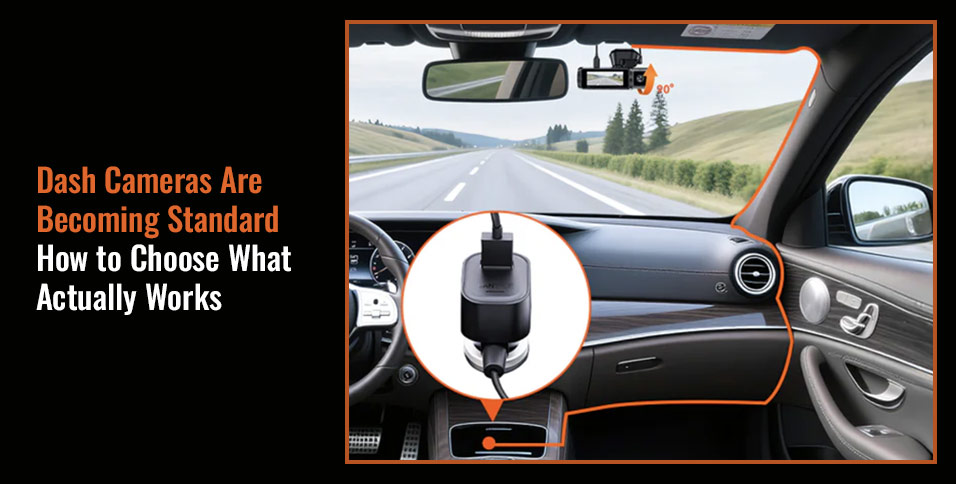
You drive through crowded intersections, unpredictable weather, and parking lots where “Sorry, I didn’t see it” shows up after the fact. That’s why more drivers are recording their journeys: you want clear, usable evidence if something happens; you want to know which features matter and which are just marketing; and you don’t wish to store, privacy, or installation to become a project of their own. A Vantrue car vehicle dash camera gives you a compact witness that captures the road (and sometimes the cabin) with the kind of detail that can settle questions quickly and fairly.
Why the Brand Choice Matters Now
A dash cam is only as helpful as the evidence it preserves. The best systems combine multi-channel coverage, strong day–to–night clarity, reliable power, and efficient file management, so you can retrieve the right clip in minutes—not hours. With a Vantrue car vehicle dash camera, such as the Nexus 5S, you can match those fundamentals to your needs without turning the purchase into a science project. That matters in moments when seconds—not specs—decide whether you have what you need.
What’s Driving Adoption
Incident Documentation and Insurance Support
Video doesn’t get flustered. It records the lane positions, timing, and context that can be hard to recall under stress. When a crash or close call happens, you can pull a clip that shows exactly what unfolded, rather than debate it from memory.
Everyday Access and Sharing
Built‑in Wi‑Fi and simple mobile apps make it easy to preview, trim, and save highlights—from a scenic mountain pass to a risky merge you want to report. You keep full control over what you share and what you store.
Fleet and Accountability Use Cases
If you drive for work or manage a small fleet, interior recording with infrared (IR) lighting can deter disputes and provide context. Just remember to post appropriate notices and establish a retention policy before rolling out cameras in vehicles used by multiple drivers.
Core Recording Fundamentals
Channels & Coverage in a Car Vehicle Dash Camera
Single‑channel cameras capture the road ahead. Dual-channel adds the rear view to tell the full story, including tailgates and parking bumps. Three-channel systems add a cabin view with IR for low-light clarity—useful for ride-sharing, carpools, and families who want in-cabin context at night.
Resolution & Frame Handling
Higher resolution sharpens small details, such as plates and road signs. Paired with balanced exposure (HDR) and fast frame handling, you get footage that stays readable when you’re moving quickly or facing headlight glare.
Storage & File Management
Loop recording overwrites the oldest files, so your card never “fills and fails.” High-endurance microSD cards are a smart choice for continuous writing, and larger capacities let you store more data.
Coverage vs. storage at a glance
| Setup | Typical use | Suggested capacity | Why it fits |
| 1‑channel 1080p | Daily commuting | 128 GB | Long overwrite window for routine driving |
| 2‑channel 1440p | Family cars | 256 GB | Balanced detail and history |
| 3‑channel 4K/1080p | Rideshare/fleets | 512 GB–1 TB | More angles and data per hour |
Day–Night Visibility and Image Clarity
Optics and Processing
Look for fast lenses, back‑illuminated image sensors, and HDR processing that tame harsh contrast. These reduce motion blur and control headlight flare so plates stay legible when it counts.
Cabin Capture and Night Monitoring
An interior camera with IR LEDs captures a clear, black-and-white view of the cabin when the light levels are low. It’s invaluable for ride-share shifts, late-night trips, and documenting events that occur inside the vehicle.
Connectivity, Apps, and Cloud
Local Connectivity in a Car Vehicle Dash Camera
Wi‑Fi lets you preview the frame, download clips, and update firmware directly from your phone. GPS logging adds speed and location data to your recordings, allowing you to reconstruct a route alongside the video.
LTE Add‑ons and Remote Features
Some models include LTE or accept a plug-in module, allowing you to receive incident alerts, check live view, track the vehicle, and sync important clips to the cloud when you’re away from the car. It’s especially useful if you street park or travel frequently.
Power, Durability, and Installation
Power Architectures
You can power a dash cam from the 12V socket, a USB-C port, or a three-lead hardwire kit. Hardwiring unlocks parking modes and safeguards your battery with configurable low‑voltage cutoffs so the camera sleeps before the car does.
Thermal and Environmental Tolerance
Heat is tough on electronics. Systems that rely on supercapacitors (instead of lithium-ion batteries) tolerate wider temperature ranges and resume cleanly after hot-soak or deep-cold starts—key for long-term reliability.
Mounts, Filters, and Location Data for a Car Vehicle Dash Camera
Adhesive low‑profile mounts reduce vibration and keep your view clear. A circular polarizing (CPL) filter cuts windshield reflections on bright days. With GPS enabled, your clips include speed and route context, which can significantly shorten any investigation.
Parking Surveillance Modes
Triggered and Continuous Options
Choose the mode that fits your energy and storage budget: buffered motion detection (records a few seconds before and after motion), impact detection for hits while parked, low‑bitrate continuous recording, or time‑lapse at 1 FPS to compress long stretches without missing activity.
Cloud‑assisted Oversight
If you enable LTE features, you can receive a push alert when an impact is detected, open live view to check on the scene, and automatically upload protected clips for later review.
Practical Selection Considerations
Matching Configuration to Use Case
For commuting, a two-channel setup (front and rear) strikes a balance between cost and detail. For family road trips or street parking, consider three channels plus a hardwire kit for around‑the‑clock protection. For ride‑share and service vehicles, pair interior IR with GPS logging and remote alerts.
Data Workflow and Compliance
Treat recordings like any important file: set a retention window, decide who can access clips, and post notices if passengers might be recorded. That way, you gain accountability without creating a privacy headache.
Conclusion
Dash cams are quickly becoming standard equipment because they give you something memory can’t: a neutral record that preserves what actually happened. Focus on coverage, clarity, storage, connectivity, and power—then select the configuration that suits your driving style and parking habits. When you’re ready to put reliable evidence on your side, a Vantrue car vehicle dash camera can help you capture the moments that matter and retrieve them without fuss.