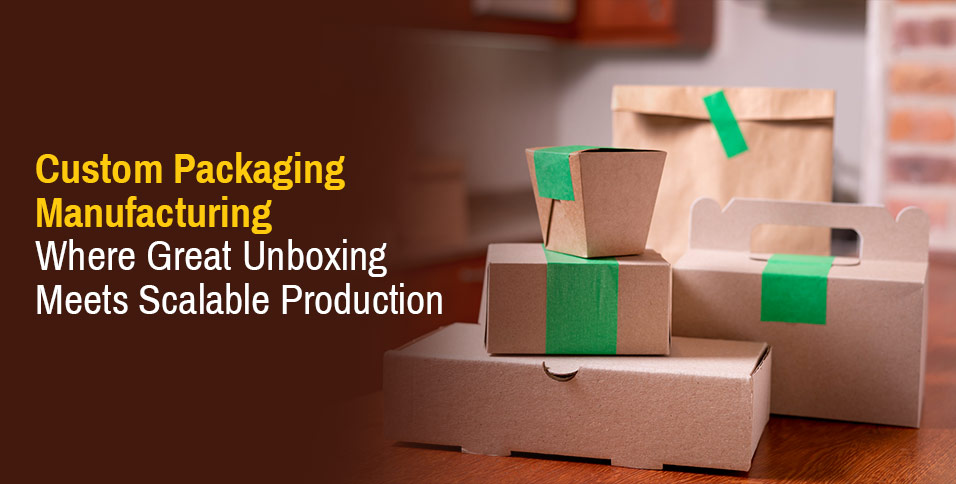
In custom packaging, “premium” isn’t just how the box looks—it’s how the entire system performs once it hits real operations: fulfillment lines, drop tests, retail shelves, and customer hands. Brands that scale fast learn a hard truth: packaging is a product. And like any product, it needs repeatability, tight tolerances, and predictable lead times.
That’s where injection molding becomes a quiet advantage in modern packaging manufacturing services. While cartons, corrugate, and labels create the first impression, injection-molded components often determine whether the experience stays premium at volume—think custom trays, protective inserts, display-ready shells, caps/closures, dispensers, and reusable cases.
Injection molding is a manufacturing method that forms parts by injecting molten material (most commonly thermoplastic polymers) into a mold, then cooling and ejecting the finished shape.
Below is a practical framework for packaging teams that want fewer surprises, faster launches, and a supplier strategy that holds up when orders jump from hundreds to tens of thousands.
Why injection molding belongs in the packaging conversation
Many packaging projects fail in the “last mile,” not the design phase. A beautiful concept can turn into dented corners, scuffed surfaces, rattling products, or inconsistent fits. Injection-molded elements solve three common pain points:
1) Protection with less material
A molded tray or insert can lock a product into place with engineered contact points—reducing void fill and lowering damage risk. It’s also easier to standardize protective performance across SKUs when geometry is controlled.
2) Repeatable fit and finish
When customers open a premium package, small misalignments feel like big quality problems. Molded components improve alignment, hinge action, snap fits, and “click” feedback—details that make the experience feel intentional.
3) Faster scaling once tooling is set
Packaging teams often underestimate how much time is lost to rework: inconsistent die cuts, shifting materials, or manual assembly steps. Injection molding can reduce variation and simplify assembly—especially when the molded part replaces multiple cut-and-fold elements.
The packaging components that benefit most from injection molding
If your team buys “custom packaging manufacturing services,” you’re likely sourcing multiple items across vendors: printed boxes, foam, inserts, labels, and sometimes product-adjacent plastic parts. Consider injection molding for:
- Custom thermoformed alternatives: When thermoforming isn’t consistent enough for your tolerances, injection molding can tighten fit.
- Trays and cradles: For cosmetics, electronics, and accessories where presentation matters.
- Caps, closures, and dispensers: For consumables where leakage and user experience are critical.
- Reusable packaging systems: For B2B shipments, subscription refills, or returnable programs.
- Protective corner/edge components: When corrugate alone doesn’t survive shipping realities.
The bigger pattern: use printed packaging for storytelling and injection-molded parts for performance.
Supplier checklist for predictable outcomes (and fewer late-stage surprises)
When evaluating partners—especially if you’re considering overseas production—use a checklist that forces clarity early.
A) Design-for-manufacturing (DFM) collaboration
Ask whether the supplier flags risks like undercuts, wall-thickness transitions, sink marks, and ejection challenges. Draft angles matter because they help parts release cleanly from molds; many design guides recommend draft on vertical faces to improve moldability.
B) Tooling plan and iteration speed
Request a tooling timeline that includes:
- DFM feedback loop
- Prototype approach (3D print / soft tooling / bridge tooling)
- First sample milestone
- Validation plan (what gets measured, when, and how)
C) Quality control that matches your risk
At minimum, you want a first-article style measurement report on early production samples to confirm conformance to specs using calibrated measurement tools.
If your packaging component affects safety, leakage, or assembly yield, ask about in-process checks and how they control drift over time (not just “final inspection”).
D) Material selection aligned to the packaging job
Packaging plastics are not one-size-fits-all. Your requirements might include:
- drop resistance
- scratch resistance
- chemical compatibility (for lotions, fragrances, cleaners)
- food contact considerations (if relevant)
- recyclability targets
A good partner helps you choose materials based on performance and consistency at volume—not just cost.
E) Assembly and logistics thinking
Packaging is a system. Ask:
- Will parts arrive bulk, nested, or kitted?
- Are there surface protection needs (film, separators) to prevent scuffs?
- Can the supplier coordinate with your box/print vendor to reduce mismatched timelines?
Where “Injection molding China” fits in a modern packaging strategy
For brands balancing speed, capability, and cost, China remains a common manufacturing hub—especially for projects that combine tooling, molding, and secondary steps like texturing, pad printing, or simple assembly.
The key is to treat supplier selection like a product decision, not a purchasing task. Look for a partner who can translate packaging requirements into manufacturing controls—and who communicates clearly when tradeoffs appear.
If you’re exploring an end-to-end path—from design support to tooling to production—EzraMade is one option brands use for custom manufacturing, including support around injection molding China when packaging performance depends on precise molded components.
Final takeaway: make packaging scalable by design
Premium packaging isn’t just aesthetics—it’s repeatability. When you combine strong structural packaging (cartons/corrugate) with injection-molded components engineered for fit, protection, and assembly, you get a system that survives scaling.
If your next launch needs fewer returns, smoother fulfillment, and a consistent unboxing experience across every unit, it may be time to treat injection molding as a packaging tool—not a separate department.