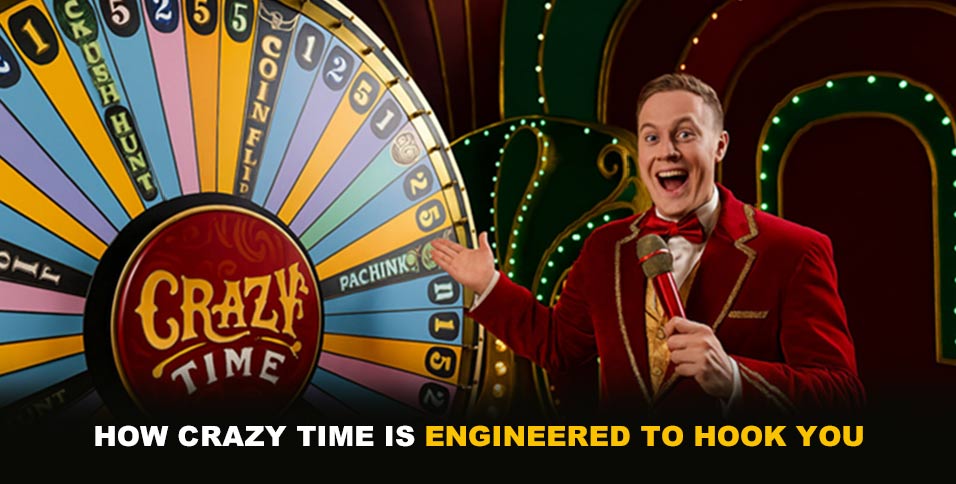
It looks like fun. Bright lights, a giant spinning wheel, a host grinning so hard it almost hurts. Crazy Time doesn’t feel like gambling at first glance—it feels like you’ve stumbled onto a flashy TV show where you just happen to place bets. But let’s be real: this isn’t casual fun thrown together. It’s carefully built, layer by layer, to keep you glued to the screen.
The Show That Pretends It’s Not Gambling
Other casino games don’t even try to hide what they are. Roulette is a ball and a wheel. Blackjack is math with cards. Crazy Time registration at the official website? It’s a circus. A “live experience” dressed up with neon, noise, music, and a host who keeps talking even when nothing happens.
And that’s the first trick. By dressing up risk as entertainment, Crazy Time lowers your guard. You don’t feel like you’re in a casino. You feel like you’re watching Saturday night TV. But your wallet knows the truth.
The Wheel That Never Lets You Go
That giant wheel isn’t innocent. The tick-tick-tick sound as it slows down is engineered suspense. Every click drags your eyes closer. Every near-miss (landing just one slot away from a jackpot) slams your brain with the almost won feeling that psychologists call the near-miss effect.
And those big colorful sections? They’re spaced out perfectly, so no matter where the wheel lands, you see the jackpots flash by. Your brain remembers them. It convinces you they’re more common than they really are.
The Bonus Round Bait
Without the bonus rounds, Crazy Time would get stale fast. But Evolution Gaming knew exactly what they were doing. They built four little dopamine factories inside the main game:
- Coin Flip — simple, dumb, but “choose red or blue” feels like you’re in control.
- Pachinko — pure chaos. The puck bounces around, dodging the big prize at the last second. Heartbreaking, but addicting.
- Cash Hunt — you aim and click. Even though it’s all random, your choice makes you believe you influenced the result.
- The Crazy Time Wheel — the “jackpot show.” Massive wheel, massive multipliers. Players dream of landing here. That dream keeps them coming back.
Each round is a little jolt of variety, a fresh trick to stop boredom from setting in.
The Hosts Are Actors, Not Dealers
Don’t be fooled by the laughing, the shouting, the constant stream of chatter. Those hosts are basically performers. Their job isn’t just to spin—it’s to hype. To clap when a 2x multiplier hits, to scream like Pachinko just changed history, to keep you believing something exciting is about to happen.
Sometimes they’re cringey. Sometimes they’re borderline annoying. But they serve the exact purpose they’re paid for: keeping you emotionally invested.
The Crowd Effect: “We’re All in This Spin”
Crazy Time isn’t played in silence. It’s loaded with a live chat. People typing emojis, shouting in caps, celebrating wins. You could be playing alone on your phone at 2 a.m., but it feels like you’re part of a crowd.
That’s social proof at work. Someone hits a big multiplier, and even if you lost, you feel excited. Because if it happened to them, maybe it’ll happen to you next.
The Psychology Lab Behind the Curtain
Let’s not pretend this was an accident. Crazy Time is a cocktail of psychology tricks:
- Variable rewards — never knowing when the “big one” will hit keeps you hooked.
- Near misses — almost winning is more motivating than flat-out losing.
- Illusion of control — Cash Hunt, Pachinko, even Coin Flip make you feel like you chose your fate.
- Continuous stimulation — no downtime. Spin, host chatter, bonus, chat, repeat. The cycle never stops.
It’s the same playbook social media apps use to keep you scrolling. Only here, money’s on the line.
Viral Wins as Marketing
If you’ve spent any time online, you’ve probably seen it: screenshots of a 20,000x Crazy Time multiplier. Clips on TikTok, Reddit threads, YouTube highlights. Those stories spread like wildfire, and every new viewer thinks the same thing: that could be me.
Those once-in-a-blue-moon wins are fuel for the whole machine. They keep thousands of players spinning, chasing their own “viral moment.”
Why Crazy Time Beats Other Casino Games
Blackjack feels serious. Roulette feels old. Slots are lonely. Crazy Time crushes them all because it blends spectacle with simplicity.
You don’t need to study rules. You don’t need to calculate odds. You just pick your bet, watch the circus, and get swept up in the ride. That accessibility is exactly why it’s dominating live casinos.
The Ugly Truth: No Real Strategy
Sure, you’ll find endless “Crazy Time strategies” floating around the internet. Bet small on everything, bet only on bonuses, chase multipliers. Truth bomb? None of it works. The game is random.
But here’s the twist: people want to believe there’s a way to beat it. That belief keeps them playing longer, just in case they crack the code.
Final Word: Designed to Keep You Spinning
Crazy Time isn’t just addictive—it’s built to be addictive. Every element, from the neon wheel to the bonus rounds to the caffeinated hosts, is tuned to push your brain’s buttons.
And that’s the thing. People don’t stop playing because Crazy Time isn’t just a game—it’s a trap wrapped in a show. Fun? Yes. Harmless? Not exactly. If you’re going in, know what you’re up against. Because this wheel doesn’t spin for free.