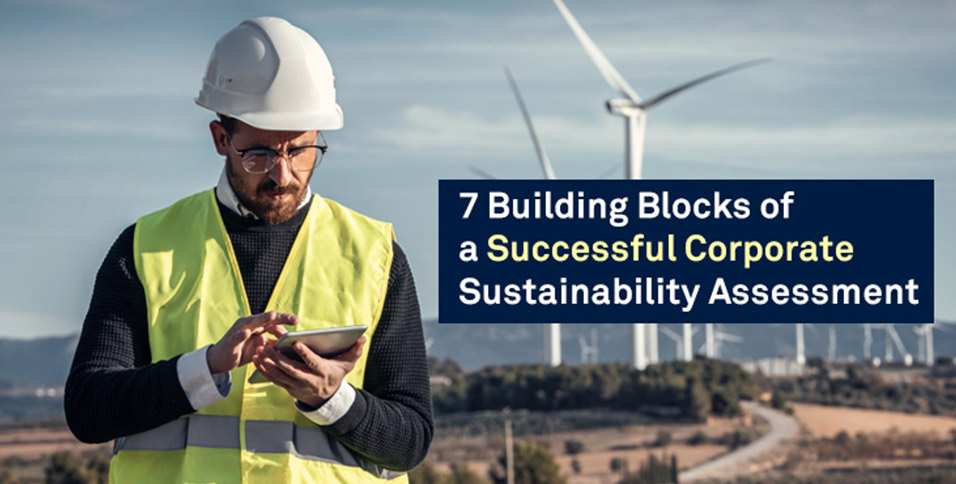
Sustainability is a requirement for long-term competitiveness in Singapore. In this forward-looking country, it’s not out of the ordinary for stakeholders, from regulators and investors to customers and employees, to pay close attention to how companies manage their environmental and social impact. This makes it crucial for you to understand not only how to measure sustainability performance but also what makes an assessment truly effective.
A well-designed corporate sustainability assessment helps you identify areas for improvement, demonstrate accountability, and align your operations with global sustainability goals. Here are the elements that impact its success:
1) Clear and Aligned Objectives
Every successful assessment begins with a clear purpose. Before you start collecting data or designing frameworks, you must define what you want the assessment to achieve. Are you looking to reduce carbon emissions or improve supply chain transparency? Perhaps your goal is to meet specific Environmental, Social, and Governance (ESG) reporting requirements?
Setting measurable objectives ensures that your sustainability assessment aligns with your organisation’s broader business strategy. It also helps you prioritise efforts and resources where they matter most, be it enhancing energy efficiency, improving employee well-being, or maintaining ethical sourcing. Without this clarity, your results risk becoming fragmented or disconnected from your company’s long-term goals.
2) A Robust Framework and Methodology
Once your goals are clear, the next step is to adopt a robust framework for assessment. Common frameworks include the Global Reporting Initiative (GRI), Task Force on Climate-Related Financial Disclosures (TCFD), and Sustainability Accounting Standards Board (SASB) standards. These provide a structured way to measure and monitor, as well as communicate, sustainability performance across key indicators.
The right framework depends on your sector and scale. Another consideration when narrowing down your options are your target stakeholders. For instance, manufacturing companies may focus on material efficiency and emissions, while financial institutions may prioritise social and governance metrics. Whatever framework you select, your methodology must be consistent and transparent so you can track and compare results and maintain credibility over time.
3) Reliable Data Collection and Management
Accurate data is the backbone of any sustainability assessment. After all, you need a system that captures relevant metrics across operations, from energy consumption and waste generation to employee diversity and supplier practices. Data quality, meaning its accuracy in addition to its completeness and timeliness, determines how useful your insights will be.
Many Singaporean firms now use digital platforms to automate sustainability reporting and analytics. These tools integrate data from different departments as a way to improve visibility and reduce errors. Keep in mind, though, that technology alone is not enough. You must establish clear internal protocols on how data is gathered, verified, and stored to ensure accountability across all levels of the organisation.
A practical approach is to:
- Assign data ownership to specific departments or individuals.
- Conduct regular audits to verify accuracy.
- Use standardised metrics to maintain consistency.
4) Stakeholder Engagement and Materiality
A corporate sustainability assessment is more than an internal exercise. Rather, it’s also about understanding what matters most to your stakeholders. Engaging with them allows you to identify material issues that significantly impact your business and society. Their perspectives can guide you in prioritising issues and allocating resources effectively. For instance, customers may value eco-friendly packaging, while investors might focus on your governance practices and risk management.
Effective engagement can take various forms, such as:
- Conducting stakeholder surveys or interviews.
- Hosting focus groups or roundtable discussions.
- Maintaining open communication channels for feedback.
If you actively listen to your stakeholders, you can ensure your sustainability goals stay relevant and socially responsive.
5) Cross-Functional Collaboration
Sustainability cuts across the entire organisation, which means that successful assessments require collaboration among teams. The participation of each group can bring to the table unique insights that enrich the overall analysis.
Building a culture of shared responsibility helps integrate sustainability into daily decision-making. For example, procurement teams can evaluate supplier sustainability, while HR can focus on workplace diversity and inclusion. When all teams are aligned, your sustainability strategy becomes part of the organisational DNA and not just a side project.
6) Continuous Monitoring and Improvement
Regular monitoring, such as by conducting periodic internal reviews and benchmarking against industry peers, helps you track progress and identify gaps early in your sustainability assessment. It’s also important to view sustainability assessment as a continuous improvement process. This means that the insights gained from one cycle should inform the next. Over time, this approach leads to stronger governance structures, better environmental outcomes, and more resilient business practices.
To strengthen continuous improvement, you can:
- Set annual sustainability targets and publicly report progress.
- Use performance dashboards for real-time tracking.
- Conduct scenario analyses to anticipate future challenges.
7) Transparent Reporting and Communication
Finally, how you communicate your sustainability performance can greatly influence trust and reputation. Transparent reporting builds credibility with investors, regulators, and the public. In Singapore, sustainability reports are increasingly viewed as a marker of corporate responsibility, especially as the Singapore Exchange (SGX) strengthens its sustainability reporting requirements.
Effective communication means presenting both achievements and challenges honestly. This transparency enhances accountability and fosters confidence among stakeholders that your organisation is committed to long-term sustainability.
The Broader Impact Beyond Business
When your corporate sustainability assessment is well-executed, the benefits extend beyond your organisation. It contributes to Singapore’s national sustainability efforts and supports global climate targets. It also plays a role in building a business community that values long-term resilience over short-term gain. If you can actively learn about and strengthen these building blocks, you can transform sustainability from a reporting exercise into a meaningful driver of change that can have a positive impact on the wider community.