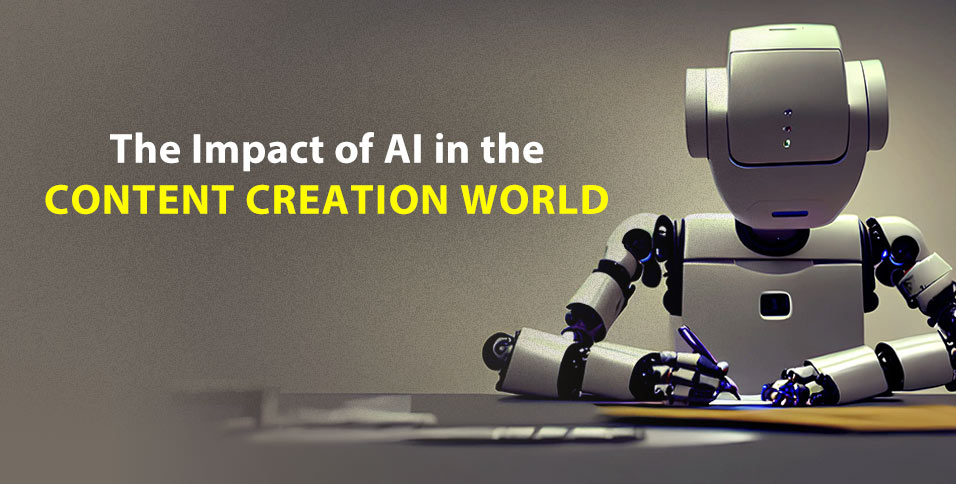
Before the rise of AI tools, content creation was developed slower and were more expensive because of the number of creative personnel needed. Even writing scripts and novels from scratch could take months, not even counting the setbacks.
AI in entertainment has become a disruptive force, providing creators and producers with tools to enhance creative workflows, streamline production processes, and deliver more dynamic and engaging content than ever before. Let’s explore, together in this guide, the continued rise of AI in content creation as it meets today’s creative challenges.
The Impact of AI in the Content Creation World
From writing the latest novels to coming up with a jazzy music score, discover the main ways that AI continues to take content creation and entertainment to a new level.
Say Hello to a New CGI Breed
Advances in artificial intelligence, along with improved hardware, have accelerated the creation of mind-blowing special effects using visual effects (VFX) software tools and CGI. Creative teams can work together to create more realistic effects than ever before in a fraction of the time it took previously. Production times for VFX are getting shorter as audiences worldwide are demanding ever more complex and jaw-dropping VFX and CGI content. Using AI VFX tools in production pipelines also helps creative professionals maintain greater control over costs and schedules.
Without the need for extensive manual labor and editing work, visual effects artists and CGI specialists can now seamlessly integrate virtual characters and effects into real-world scenes. Object detection API can precisely and easily segment individual objects in a scene. The resulting mask can then be used by VFX artists to remove or add effects to the objects with minimal effort. Scene composition and background removal AI APIs can also be used to insert virtual characters or effects into a real-world scene for a truly immersive experience.
Better Content Personalization and Audience Targeting
In a world where attention is a valuable commodity, personalization is an ever more important strategy for entertainment providers looking to keep audiences engaged. One of the many applications of AI in entertainment is personalized content creation, which promises to tailor content to the user like never before.
AI-driven content personalization can be achieved by using a number of powerful image processing APIs, including facial analysis, object detection, and brand recognition APIs. Facial analysis APIs, for instance, can be used to identify a viewer’s age, gender, or even emotion, and either automatically adjust the content or suggest content that is suitable for their profile. Video and gaming streaming platforms like Nintendo and Spree Casino could also take advantage of video personalization APIs by analyzing facial expressions to use in more secure multi-factor authentication.
Stay in Tune with Creative Licenses and Copyrights
Companies in the entertainment industry, like many other sectors, are having to pay much closer attention to the management of their intellectual property assets, such as licensing and copyright. Protecting your content through the monitoring of licensed materials, ensuring DRM policies are being followed, and tracking down unauthorized uses of your work is a complex and often manual process. With AI for copyright management, companies can automate the process of identifying and tracking copyrighted materials using AI image processing APIs. That way, they can stay in compliance and help to prevent costly violations and lawsuits.
Using AI for Content Moderation
With so much media being uploaded every second, manual content moderation is no longer realistic. However, AI tools come in handy for automatically identifying and filtering out inappropriate or offensive media. Content moderation with AI can help entertainment and social media platforms scan images and videos for explicit content, nudity, or other sensitive material that may violate community standards in real-time.
Conclusion
In the future, AI may also be used to create new and innovative content formats that blend media types, reality with virtual or augmented reality experiences, and more. AI in the media business is not about replacing creativity with technology. Content creation tools driven by AI are designed to work in collaboration with human creativity, enhancing and extending the capabilities of media creators.
AI tools can also help content creators achieve their creative vision by reducing the time and effort to produce visual masterpieces. This new wrinkle enables them to focus more of their attention and energy on the creative aspects of their work.