Have you ever struggled to get your point across in a meeting, or felt misunderstood despite your best efforts? Do you wish you could speak more confidently, listen more effectively, and build stronger relationships in both your personal and professional life? For aspiring and current leaders, these challenges are even more critical—strong communication can be the difference between inspiring a team and causing confusion or disengagement. While some people naturally excel in communication, most of us can benefit significantly from structured learning and practice. This is where communication skills training comes in, providing the tools and techniques needed to express ideas clearly, listen actively, and engage meaningfully with others.
Understanding Communication Skills
Communication is a broad term that encompasses verbal, non-verbal, and written methods of exchanging information, ideas, and emotions. Verbal communication refers to the use of words and tone of voice, while non-verbal communication includes body language, facial expressions, gestures, and eye contact. Written communication involves conveying messages through emails, reports, social media, or other textual formats. Effective communication requires a combination of these skills, enabling an individual to convey ideas clearly and understand others accurately.
Communication skills training is designed to enhance all these aspects. It focuses on improving clarity, confidence, empathy, and persuasion, allowing participants to navigate diverse situations, whether in professional meetings, customer interactions, or personal relationships.
The Importance of Communication Skills Training
- Professional Success: In the workplace, communication is a cornerstone of productivity and collaboration. Employees who communicate effectively can share ideas clearly, manage conflicts constructively, and build stronger relationships with colleagues and clients. Training in communication skills equips professionals with the ability to present their thoughts persuasively, negotiate successfully, and adapt their style to different audiences.
- Leadership Development: Leaders must inspire, guide, and motivate their teams. Strong communication skills are integral to leadership because they enable leaders to articulate their vision, provide feedback, and foster an environment of trust and openness. Leadership is not just about giving instructions; it is about influencing, motivating, and building relationships. Communication skills training helps aspiring and current leaders develop these competencies, making them more effective in managing teams, driving collaboration, and handling difficult conversations with confidence.
- Personal Growth: Communication is not limited to professional settings. Effective interpersonal communication contributes to personal growth by improving relationships, enhancing empathy, and boosting confidence. Individuals who undergo communication skills training often find it easier to resolve conflicts, express emotions appropriately, and maintain meaningful connections with family and friends. Strong communicators often emerge as informal leaders in social or community settings, demonstrating the link between communication and influence.
- Adaptability in a Globalized World: In an era of globalization, cross-cultural communication has become increasingly important. Misunderstandings arising from cultural differences can lead to conflicts and inefficiencies. Communication skills training often includes components of intercultural communication, helping individuals understand cultural norms, adapt their communication style, and build strong international relationships. Leaders who master these skills are better equipped to guide diverse teams and negotiate in global environments.
Core Components of Communication Skills Training
A comprehensive communication skills training program typically focuses on several key areas:
- Active Listening: Listening is often undervalued, yet it is as important as speaking. Active listening involves paying full attention to the speaker, interpreting both verbal and non-verbal cues, and responding thoughtfully. Leaders who listen actively gain trust, improve team morale, and make more informed decisions.
- Verbal Communication: This includes clarity of speech, tone, vocabulary, and the ability to organize thoughts coherently. Training sessions often involve exercises such as presentations, role-playing, and impromptu speaking to build confidence and fluency. Leaders benefit particularly from practicing how to communicate vision, inspire action, and deliver feedback constructively.
- Non-Verbal Communication: Body language, facial expressions, and gestures can reinforce or contradict verbal messages. Communication skills training teaches individuals to become aware of their non-verbal cues, use them effectively, and interpret the cues of others accurately. Leaders who master non-verbal communication convey confidence, approachability, and credibility.
- Written Communication: Clear and concise writing is essential in professional contexts. Training may focus on email etiquette, report writing, social media communication, and formal documentation, emphasizing grammar, tone, and structure. Leaders benefit by learning to convey strategic direction clearly and succinctly.
- Conflict Resolution and Negotiation: Miscommunication often leads to conflicts. Communication skills training equips participants with strategies to resolve disputes constructively, negotiate win-win outcomes, and maintain positive relationships even in challenging situations. Leadership requires these skills to maintain team harmony and guide decision-making under pressure.
- Presentation and Public Speaking Skills: Many individuals struggle with public speaking due to nervousness or lack of structure. Training programs teach techniques to engage an audience, manage anxiety, and deliver presentations confidently and persuasively. Leaders must be able to communicate ideas effectively to inspire teams, present to stakeholders, and represent their organizations.
Methods of Communication Skills Training
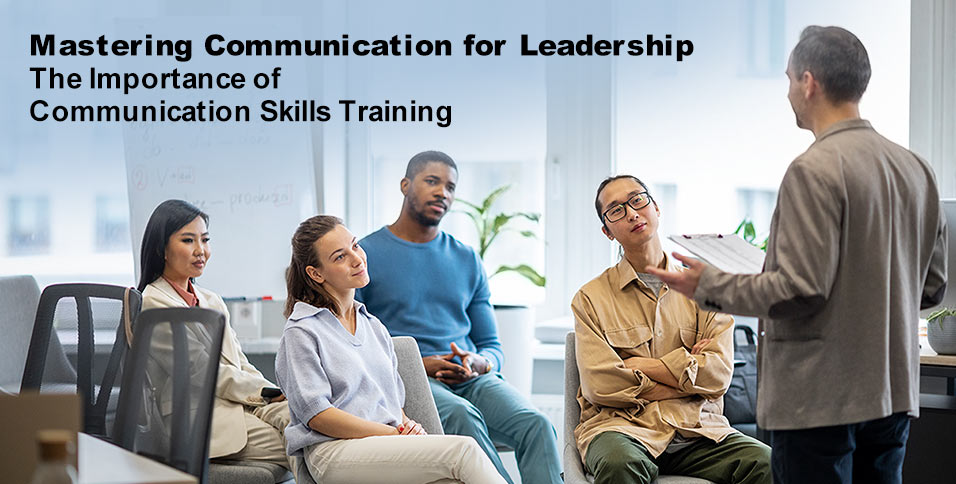
Communication skills training can take various forms, including workshops, seminars, online courses, coaching, and peer-to-peer exercises. Interactive methods such as group discussions, role-playing, and simulations are particularly effective, as they provide participants with hands-on experience in real-life scenarios. Feedback from trainers and peers is crucial in helping participants identify strengths, address weaknesses, and track progress over time.
Technology has also expanded opportunities for communication skills training. Online platforms offer webinars, virtual workshops, and e-learning modules that allow individuals to learn at their own pace. Virtual reality (VR) and AI-based simulations are emerging tools that provide immersive environments for practicing communication in realistic settings.
Measuring the Impact of Training
The effectiveness of communication skills training can be measured in several ways. Pre- and post-training assessments, self-evaluation surveys, feedback from colleagues or clients, and performance metrics in workplace interactions are common methods. Organizations often find that employees who undergo such training demonstrate improved teamwork, higher productivity, better customer service, and increased confidence in public speaking and presentations. Leaders who participate in such programs are better equipped to motivate teams, handle challenges, and communicate strategic objectives effectively.
Conclusion
Communication is the lifeblood of human interaction, and the ability to communicate effectively is a skill that can be learned, refined, and mastered. Communication skills training provides individuals with the tools to express themselves clearly, listen actively, resolve conflicts, and adapt to diverse social and professional contexts. For leaders, these skills are critical—they enable vision, influence, and guidance that can transform teams and organizations.
In essence, the power of words, gestures, and expressions extends far beyond mere conversation—it shapes relationships, builds trust, and drives success. By prioritizing communication skills training, individuals and organizations alike can unlock the full potential of human interaction, create inspiring leadership, and cultivate a culture of collaboration and understanding.