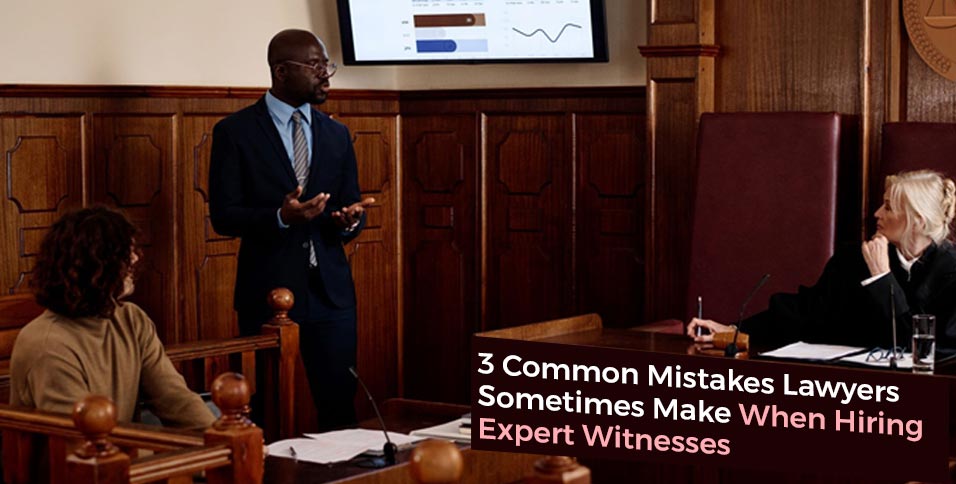
Even experienced attorneys make missteps that can weaken the impact of expert testimony or result in its exclusion. One of these errors is hiring experts who are big on credentials but small on communication skills.
If an expert is as smart as a whip but doesn’t communicate well, they won’t be a good fit. Expert witnesses are supposed to provide testimony that enlightens by explaining complex arguments. They won’t do a good job if they obscure by using complicated industry jargon. Talking at rather than to the jurors is another communication faux pas to be avoided.
Jurors don’t have time for that — and neither do judges presiding over cases. If a lawyer retains the services of an expert witness who, for whatever reason, can’t explain things in a way that jurors can grasp and make sense of, the expert will hurt the lawyer’s chances of winning the case.
Here are three common mistakes lawyers sometimes make when retaining the services of expert witnesses.
1. Relying Too Heavily on Credentials Alone
A good expert witness can increase a lawyer’s odds of winning a case. By the same token, the wrong expert witness can jeopardize a case.
Some lawyers hurt their own cause by choosing experts based solely on credentials — where they went to school, what degrees they have, where they work, how many books they’ve published, and other things.
Credentials are important, of course. After all, lawyers want to hire professionals with sufficient expertise and experience in their fields of study. But credentials alone aren’t enough.
If the expert a lawyer hires is book smart but not too good at communicating and keeping their composure under pressure, they may be more trouble than they’re worth. Communication skills are key since expert witnesses are tasked with breaking things down for jurors and judges to make sense of. They must be able to give jurors unbiased information so they can deliberate and make informed decisions.
Experts must also be able to stay cool under pressure — something that’ll prove useful if their testimony is picked apart during cross-examination.
2. Failing to Vet the Expert Thoroughly
Another problem some lawyers make when hiring experts is failing to be thorough when vetting them. Lawyers should perform extensive background checks on any experts they hire to testify in court. If a lawyer fails to dot all the i’s and cross all the t’s during the vetting phase, the expert witness they hire could hurt their case.
An opposing lawyer could point out inconsistencies, errors, or outright fabrications. A lawyer also doesn’t want to hire an expert with a shady background that was not uncovered during the vetting stage. Making a mistake on this front could be a disaster and cost the lawyer the case.
3. Waiting Too Long to Hire the Expert
Some lawyers make the mistake of dragging their feet too long before finally retaining the services of experts.
Depending on the nature of the case, expert witnesses might be a must-have rather than a nice-to-have. Sometimes the key points are so multi-layered and complicated that a lawyer needs to hire an expert who can break things down and ensure jurors understand the key points.
But if lawyers wait too long, they may find it hard to get the right fit. Choosing the wrong expert could lead to an underwhelming performance that does little to help, and might even hurt, the lawyer’s case.
These are some of the mistakes lawyers sometimes make when hiring experts to testify in court. As you can imagine, these missteps could do more than frustrate the lawyers who hire them. They could negatively impact the outcome of court cases.
Also Read: Seeking Justice? Atlanta’s Best Wrongful Death Lawyers Can Help