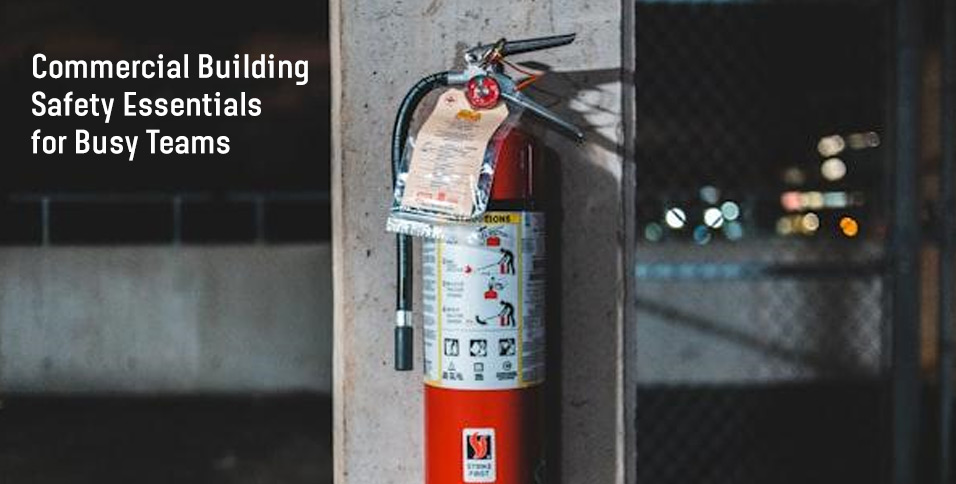
I know you are juggling tight budgets, multiple sites, and high stakes every day. This playbook targets the 20 percent of controls that stop the most severe incidents. You get a prioritized sequence, clear owners, and acceptance criteria you can drop straight into your computerized maintenance management system (CMMS) or environment, health, and safety (EHS) workflow.
You will see notes where Australia and New Zealand requirements differ from U.S. OSHA and NFPA guidance. That way, you do not apply the wrong rule in the wrong place.
Why This Matters Right Now
Speed and focus on safety save lives and money. Nonresidential building fires remain costly and deadly, with an estimated 110,000 incidents in the U.S. in 2023. Those fires caused 130 deaths, 1,200 injuries, and 3.16 billion dollars in direct loss, according to the U.S. Fire Administration.
Electrical malfunctions are a leading ignition source and drove an estimated 354.4 million dollars in direct losses in U.S. nonresidential buildings in 2023. Hot work still triggers large losses when permits and fire watch are weak. That is why this guide emphasizes permits, watches, and post monitoring, alongside evacuation and suppression readiness.
How To Use This Guide
Phase the work so you see progress each week without slowing operations. Level 1, for days 1 to 30, focuses on life safety and shutdown controls, including evacuation plans, exit routes, fire protection, lockout tagout, and hot work permitting.
Level 2, for days 31 to 60, covers hazardous materials and water systems, including asbestos registers and a written Legionella water management program. Level 3, for days 61 to 90, tackles contractor controls, photovoltaic system shutdown labeling in Australia, governance, and leading indicators you can update in 30 minutes a month.
Five Controls To Prioritize In The First 30 Days
Start with these high impact actions to build momentum fast. Publish an Emergency Action Plan that meets OSHA 29 CFR 1910.38 with reporting methods, evacuation procedures, roles, and contact lists. Review the plan with each covered employee when it is created, when responsibilities change, or when the plan changes.
Verify exit routes and signage to OSHA 29 CFR 1910.37 so paths are unobstructed and EXIT signs are illuminated. Document a monthly walkdown with a simple checklist. Put water based fire protection on NFPA 25 inspection frequencies, including weekly, monthly, quarterly, and annual tasks.
Run a lockout tagout program with written machine specific procedures and an annual inspection per OSHA 29 CFR 1910.147. LOTO done right prevents around 120 fatalities and 50,000 injuries a year. Adopt a hot work permit that enforces area preparation, the 35 foot rule, and a designated fire watch during work and for at least 30 minutes after, per OSHA 29 CFR 1910.252.
Control Electrical And Energy Hazards
A robust energy control program protects people and uptime. Roughly 3 million U.S. workers perform servicing where hazardous energy is present, and injured workers lose an average of 24 workdays per incident, according to OSHA.
Lockout Tagout That Passes An Audit
Write machine specific LOTO steps for each asset, then inspect each procedure at least once a year as OSHA requires. Train authorized employees, affected employees, and everyone else on roles and notifications. Keep rosters and sign-in sheets for proof, and track completion rates monthly so you can investigate any deviation.
Rooftop PV Shutdown Design For Australia
Apply AS NZS 5033 2021 for your photovoltaic (PV) system, which removed blanket requirements for rooftop DC isolators in many systems and now requires updated emergency information labels. Ensure documentation shows all shutdown points and placards are visible from firefighter access routes.
For Australian facilities planning new rooftop arrays, work with a licensed installer such as Expert Electrical TAS to design to AS NZS 5033 2021, document shutdown points, and install required emergency signage for firefighter access and to support safe operations, maintenance planning, and emergency response coordination across your sites through solar power commercial installations. Record PV arrays and isolators on site drawings, and include the shutdown card in your emergency plan.
Handle Hazardous Materials And Indoor Air Concerns
Identify asbestos and other hazardous building materials before you disturb anything. In New Zealand, the Health and Safety at Work Asbestos Regulations 2016 require a written asbestos management plan when asbestos is identified or likely to be present.
Asbestos Due Diligence For AU And NZ
Survey before refurbishment or maintenance that may disturb suspect materials, and create a site asbestos register with locations, condition, and risk ratings. Create and implement an asbestos management plan that includes roles, training, labeling, and reinspection frequency.
If your New Zealand site was built before 2000 or you are planning refurbishment, commission surveying, and lab analysis early to create a compliant register and management plan, and consider engaging a certified local provider like SQN to expedite sampling, chain of custody, and reporting through an accredited asbestos testing in New Zealand. Keep a strict chain of custody for samples, and use accredited labs.
Manage Hot Work And Contractor Risk
Permits, watches, and monitoring that match OSHA and NFPA guidance cut ignition risk from cutting and welding. Use a written hot work permit for any welding, cutting, brazing, or grinding that could ignite combustibles. Prepare the area, move combustibles 35 feet or shield them, and verify sprinklers and hoses are available.
Maintain a designated fire watch during hot work and for at least 30 minutes after completion, per OSHA. Align to NFPA 51B 2019 by targeting a 60 minute post watch with up to 3 hours of additional monitoring. Audit a sample of permits weekly and document defects such as missing signatures or poor housekeeping.
Your 90-Day Execution Plan
Follow this time boxed sequence to build momentum fast. Days 0 to 14, refresh the Emergency Action Plan, complete an egress audit, stand up an impairment log, and roll out the hot work permit. Days 15 to 45, finalize LOTO procedures, verify arc flash labels, draft the water management program, and check asbestos register status.
Days 46 to 90, implement PV signage for Australian sites, complete contractor prequalification, run the first joint drill, publish after action items, and activate the metrics dashboard.
Conclusion
You can make large risk reductions fast by focusing on evacuation, suppression, energy control, and hot work while you move hazardous materials and water programs into place in the second month. Publish your plan, assign owners, and start the first walkdowns this week. The rest of the program builds from those early wins and keeps people safe while protecting assets and uptime.
Frequently Asked Questions
How often do we review the emergency plan, and who signs it?
Review the plan whenever it is first created, when there are role changes, or when the plan changes, as required by OSHA 29 CFR 1910.38. Many organizations do an annual review as a good practice. Have the site leader and the EHS or facilities manager sign the cover sheet.
What is the minimum fire watch after hot work?
Maintain a continuous fire watch during hot work and at least 30 minutes after completion, per OSHA 29 CFR 1910.252. To match NFPA 51B 2019 and insurer guidance, target 60 minutes of post watch plus up to 3 hours of monitoring.
How do we know if we need an asbestos register in AU or NZ?
In Australia, keep an asbestos register and management plan where asbestos is present. A register is not required for workplaces built after 31 December 2003 if no asbestos is identified. In New Zealand, if asbestos is identified or likely, a written plan is required under the Health and Safety at Work Asbestos Regulations 2016. For site-specific surveys and sample analysis, engage asbestos testing new zealand through a certified local provider.
When do arc flash labels need to be refreshed?
Review studies and labels at least every five years and after any power system change, per NFPA 70E consensus guidance. Do a quick field walk to verify labels are legible and match the one line diagram after any project.