You can have a packed calendar, a high-performing team, and a strong strategy—and still be quietly sabotaging your own output. Chronic sleep deprivation shows up as slower thinking, sharper reactions, and a creeping sense that everything takes more effort than it used to.
If you’re leading at a senior level, the cost compounds. Your decisions ripple through budgets, culture, and risk. When sleep becomes optional, burnout stops being a personal issue and turns into an executive performance problem that spreads.
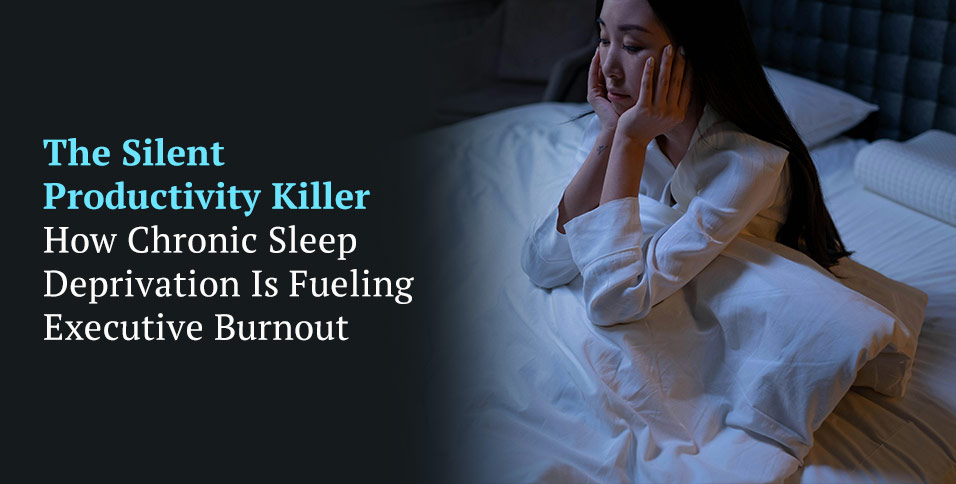
Photo by cottonbro studio on Pexels
Chronic Sleep Deprivation Is The Burnout Multiplier You Don’t See
Sleep loss rarely feels like the root cause, because it’s not painful at the moment—it’s numbing. You adapt to being tired, then mistake adaptation for resilience. The “fine” you feel becomes your new baseline, even as your patience, memory, and judgment quietly erode.
The Leadership Sleep Trap: Your Job Never Really Ends
Slack pings, late investor emails, and “quick” approvals train you to stay partially on-call—even on nights you technically sleep. You aren’t just losing hours—you’re losing depth. And shallow sleep doesn’t restore you the way you think it does.
The Infinite Workday Makes Tiredness Feel Normal
Knowledge work has shifted into a pattern of constant context switching: meetings, messages, dashboards, and AI-generated summaries arriving at all hours. Your day doesn’t end—it just fades into more work from a different screen. This is one reason chronic sleep deprivation is rising among leaders, even when total hours look “reasonable” on paper.
Travel, Time Zones, And Social Jet Lag Add Hidden Debt
Early flights, late client dinners, and hotel sleep stack up into a deficit that no single Saturday morning fixes. Even without travel, “social jet lag” happens when you sleep short during the week and try to catch up on weekends—your body never fully stabilizes.
Burnout Fixes That Ignore Sleep Backfire
A lot of leadership advice treats sleep as a “nice to have” that you earn after you fix your productivity. Sleep is the foundation that makes focus, discipline, and emotional control possible. If you try to stack self-improvement on top of exhaustion, you’re building on sand.
Caffeine can mask fatigue while making sleep quality worse later. So, when you’re searching for how to fall asleep fast, it’s worth considering whether caffeine earlier in the day is working against you.
Alcohol can knock you out faster, but it tends to fragment sleep and reduce restorative stages.
Weekend Catch-Up Doesn’t Reset Your System
Sleeping in can reduce short-term fatigue, but it often shifts your body clock later. That makes Sunday night harder, Monday morning worse, and the whole cycle repeats. The result is a constant state of “almost recovered,” which is not the same as recovered.
Mindfulness Becomes Another Task When You’re Exhausted
Breathwork, cold plunges, and meditation can help—until they turn into performance theater. When you’re chronically sleep-deprived, you may use wellness habits to push harder instead of to recover. That’s how burnout hides behind healthy routines.
Sleep Deprivation Hijacks Executive Decision-Making
When you cut it short night after night, your executive function becomes less “executive.” You can still operate, but you start trading strategic clarity for urgency. That shift feels productive because you’re busy, yet it pushes you toward burnout-grade work patterns.
Risk Gets Louder While Consequences Get Quieter
Sleep deprivation increases your tendency toward risky decisions and weakens the way you learn from negative feedback. That can look like overconfident bets, impatient pivots, or ignoring early warning signals you would normally respect.
Emotional Regulation Breaks First—And It’s Expensive
When you’re sleep-deprived, you’re more reactive, less empathetic, and faster to interpret ambiguity as threat. That can turn routine friction into conflict, even in high-stakes rooms. People around you start managing your mood instead of focusing on the work.
Big-Picture Thinking Shrinks Into Task Management
The most dangerous effect of chronic sleep deprivation is subtle: you stop seeing around corners. Creativity and cognitive flexibility drop, so you default to what worked last quarter. Your calendar fills with tactics because strategy starts to feel “hard,” not because it’s less important.
Sleep Strategies That Actually Move The Needle
Sleep and recovery are becoming trackable, actionable signals instead of vague self-care. That matters for executives because you can’t manage what you refuse to measure. The point isn’t to gamify rest—it’s to spot risk early, and correct course before burnout becomes inevitable.
Modern wearables increasingly combine sleep duration, sleep consistency, heart rate variability, and recovery scores into patterns you can act on. Treat the data like financial reporting: watch trends, not single nights. If your sleep consistency drops for two weeks, that’s a leadership risk indicator.
Treat Sleep Apnea Screening As Performance Hygiene
A surprising number of high performers have undiagnosed sleep disorders, even sleep apnea. Consumer sleep tech is moving closer to clinically meaningful signals, and some devices now offer sleep-apnea-related notifications that can prompt medical follow-up.
If you snore, wake up unrefreshed, or rely on naps to function, don’t normalize it. Addressing sleep breathing issues can produce a bigger performance jump than any productivity method.
Design Your Calendar For Circadian Reality
Start by protecting a consistent sleep and wake window on most days. Then build your schedule around it. Use AI scheduling tools and “meeting hygiene” to cap your day. If you need a hard boundary, create a personal “decision curfew” where approvals stop at a set time.
Turn Sleep Into A Leadership System, Not A Personal Hack
Executive burnout thrives in cultures where exhaustion is treated like commitment. If your organization rewards always-on behavior, you’ll eventually pay through turnover, mistakes, and stalled innovation. Sleep protection is a governance issue: it affects risk, judgment, and team stability.
Define response expectations, establish true emergencies, and set quiet hours for noncritical channels—you can still run a global business without training everyone to be permanently reachable.
When leaders respect off-hours boundaries, teams follow—and sleep improves without a single wellness memo.
Measure Recovery Like You Measure Revenue
Add simple signals: meeting load after 6 p.m., frequency of weekend messages, and average time between last work touchpoint and bedtime. You don’t need invasive monitoring—you need visibility into norms. Burnout prevention becomes real when you can see the pattern you’re creating.
Model Boundaries So Your Team Doesn’t Copy Your Exhaustion
If you send midnight emails, people assume midnight responsiveness is the bar. If you brag about four hours of sleep, you turn self-harm into a status symbol. The most credible burnout prevention move is boring: you sleep, you stop work at a consistent time, and you protect the same for others.
Conclusion
Chronic sleep deprivation is a silent productivity killer, as it enables you to function while steadily eroding the quality of your leadership. It pushes you toward reactive decisions, weaker emotional control, and a limited perspective on what matters.
If you want a real edge, stop treating sleep as recovery you earn and start treating it as performance you protect. Use data to catch the slide early, redesign your calendar around consistency, and build norms that reduce after-hours spillover.