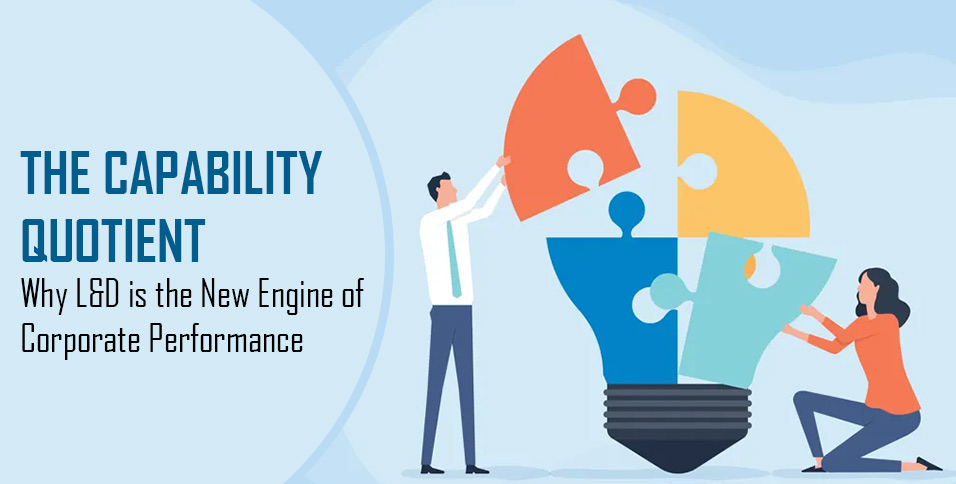
The corner office view of corporate learning is changing—and not a moment too soon. For decades, the Learning and Development (L&D) function was often relegated to the corporate basement, viewed as a necessary, compliance-driven cost center. Its mission, it seemed, was to ensure the organization survived regulatory audits, not to ensure it outperformed the market. Learning was an administrative hurdle, marked by mandatory, soul-crushing modules designed less for skill transference and more for liability reduction.
This antiquated model, where a “complete” status on an e-learning course was the gold standard, is now in terminal decline. The firms that are winning—the market-makers and disruptors—have already initiated a paradigm shift. By 2026, the seismic change is complete: L&D is no longer a check-the-box function; it is the central engine of performance management, fusing learning directly with output and establishing a non-negotiable, skills-first organizational culture.
The Great Performance Pivot
What drives this transformation? A perfect storm of accelerating technological change, talent scarcity, and the brutal transparency of the modern marketplace. The half-life of a technical skill is now measured in months, not years. A data scientist hired today must re-skill continuously to remain valuable six months from now. In this environment, an organization’s capacity to learn is fundamentally its capacity to compete.
The core of the pivot lies in recognizing the flaw of the old system: it was designed for coverage, not competence. A manager was incentivized to ensure their team completed the project management course; they were not incentivized to ensure their team could, demonstrably, manage a project better as a result.
The new model dismantles this silo. Performance management systems are now being hardwired to L&D platforms, creating a real-time feedback loop. Consider the sophisticated sales organization. A quarterly review doesn’t just look at revenue numbers; it identifies a specific capability gap, such as “negotiating with multinational clients.” The system immediately deploys a curated, personalized learning pathway—a mix of virtual-reality role-playing, expert mentorship, and micro-learning modules—and, crucially, tracks the immediate behavioral change and resulting revenue uplift.
Learning, in this new world, is a continuous, measurable input that directly affects the performance output.
From Compliance Culture to Capability Culture
The philosophical shift is just as critical as the technological one. The old system was rooted in a culture of compliance: Did you do what the company told you to do?
The future is defined by a culture of capability: Can you do what the market demands of you right now?
This capability-first mindset alters everything, beginning with talent acquisition. Top-tier organizations are moving beyond simple role titles and years of experience. Instead, they are defining roles based on a dynamic “skill adjacency model.” This model maps the specific competencies a firm needs tomorrow (e.g., expertise in proprietary AI modeling, proficiency in quantum supply chain logistics) and uses L&D to proactively close those gaps within their existing workforce.
The result is a radical re-imagining of the employee value proposition. Employees are no longer cogs in a machine; they are assets in a continuous self-improvement loop. The most valuable perk an employer can offer today is not a lavish office or an unlimited vacation policy—it is guaranteed future employability through continuous, high-value upskilling such as performance management certification. This is the new war for talent, and L&D is the primary weapon.
The Rise of the Chief Capability Officer
This monumental shift elevates the L&D leader from a departmental director to a strategic executive—effectively, the Chief Capability Officer (CCO), though the title may not always be formal.
The modern L&D leader must possess the operational rigor of a CFO and the strategic foresight of a CTO. They are the executive charged with ensuring the human capital balance sheet remains liquid, adaptable, and competitive. Their KPIs are no longer “course completion rates” but rather:
- Time-to-Competence: How quickly can a worker acquire a critical, new skill?
- Skill-Gap Reduction: The percentage reduction in the defined gap between the organization’s required skills and its current employee skills.
- Performance Correlation: The measurable statistical correlation between participation in a learning pathway and subsequent performance improvements (e.g., productivity gains, reduction in errors, higher customer satisfaction scores).
Technology, specifically data analytics and AI, is the CCO’s co-pilot. Adaptive learning platforms, powered by machine learning, can identify individual learning styles, optimal pacing, and motivational triggers that were previously impossible to track. AI can analyze millions of performance data points to pinpoint the exact micro-skill that, if improved, will yield the highest return on investment for a specific employee. This is no longer mass training; it is hyper-personalized capability engineering.
The Investment Mandate
For the CEO and the Board, the message is simple: L&D spending is not an operating expense; it is a capital investment in future organizational capacity. In an era of increasing technological disruption, the ability to pivot rapidly—to redeploy talent from yesterday’s processes to tomorrow’s innovations—is the ultimate competitive advantage. This agility is only possible if the learning infrastructure is robust, dynamic, and integrated.
Firms that fail to make this investment are effectively writing their own expiration date. Their workforces will ossify, their skills will degrade, and they will find themselves perpetually chasing the market leaders. They will be stuck in the compliance trap, teaching 20th-century skills to solve 21st-century problems.
The capability-first organization, on the other hand, is built for endurance and growth. By treating learning as the constant, mandatory precursor to performance, they create a virtuous loop: better skills lead to better performance, which in turn fuels further investment in human capital.
The transition from Compliance to Capability is not just an upgrade to an internal process; it is the fundamental redefinition of the modern business enterprise. The organizations that embrace this transformation are not merely preparing for the future; they are actively building it, one measurable, mastered skill at a time. The capability quotient is the new metric of corporate dominance. Ignore it at your peril.