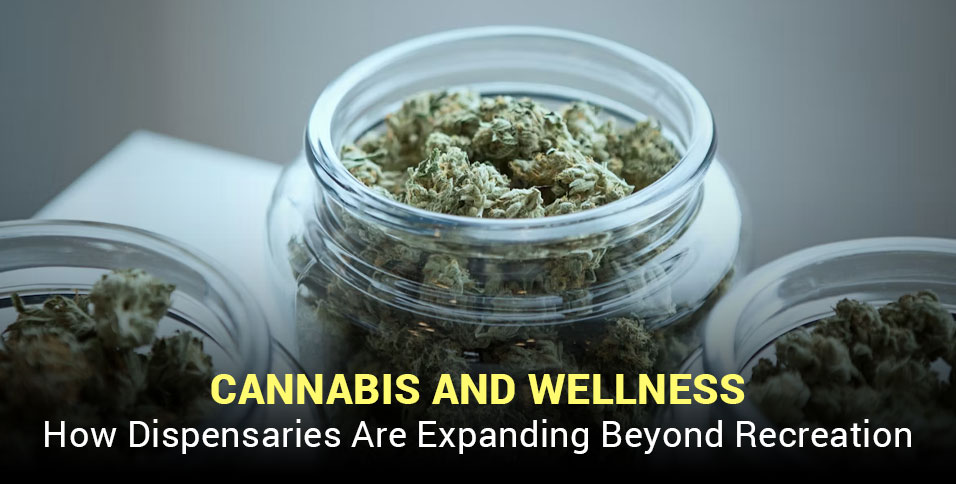
Over the past few years, something interesting has been happening with cannabis: what used to sit on the fringes of conversation drifted into everyday life. People talk about it casually now; someone mentions they tried a CBD tincture to help with sleep, someone else talks about a low dose edible they keep on hand for nights when their mind simply won’t settle.
Dispensaries, once known mainly for recreational shoppers, have started to mirror that shift. They are turning into places people walk into not for thrills, but for a kind of gentle support. Maybe even comfort. They’re looking for something that helps them take a breath they couldn’t quite reach on their own.
If you step inside a dispensary nowadays, you may be surprised by how inviting and warm it feels inside. Bottles of oils sit neatly on a shelf, while small jars of cream catch the light. Tinctures with soft descriptions invite a closer look. You don’t feel rushed. You don’t feel intimidated.
From Counterculture to Care
There was a time when dispensaries catered almost exclusively to people who already spoke the language. They knew the strains. They knew the effect they wanted before they walked through the door. For anyone outside that circle, the experience could feel confusing. Sometimes scary.
But people’s needs have shifted. Maybe the world got busier, heavier, or simply more exhausting. Whatever the reason, more people started wondering if cannabis could offer something softer than its old reputation suggested. Something to help them sleep. Something to help loosen the tension that settles in their shoulders. Something to steady their mind at the end of a long day.
And dispensaries noticed. Staff have become guides instead of gatekeepers. They explain things plainly, not assuming you know a thing. They don’t laugh at questions. They don’t rush through conversations. They create room for uncertainty, and that alone changes how people feel walking through the door.
Dispensaries as Wellness Hubs
If you haven’t visited a dispensary in a while, the atmosphere might catch you off guard. Many of them now resemble slow, quiet boutiques. There is space to breathe. Space to wander. Space to think.
On the shelves, you might see balms that look as though they belong in a spa. Tinctures you could mistake for herbal extracts. Edibles that aren’t trying to be loud but are trying to be comfortable. The whole store feels designed to lower your shoulders a few inches.
And the conversations inside reflect that. Staff members tend to ask about how your days feel rather than what you want to “get”. They ask whether you prefer subtlety. Whether you’re sensitive to certain things. Whether you want a product that melts into your routine instead of disrupting it.
This subtle, almost gentle approach makes it easier for new people to walk in without feeling out of place.
Shifting Public Perception and Growing Acceptance
It’s not just dispensaries that have changed. Public perception has softened too, bit by bit. Research has helped, even if it hasn’t answered everything. People hear enough to stay curious. Enough to wonder whether cannabis might help them sleep a little better or unwind after long days that just don’t quit.
Regulators in many regions have also started recognizing that not everyone is looking for intensity. Some now allow dispensaries to stock products aimed directly at wellness seekers. Low dose blends. CBD heavy formulas. Products that offer calm without requiring someone to completely step away from themselves.
And because lab tested products are standard now, people can actually see what they’re bringing home. No guessing. No mystery. Just information. That clarity builds trust, especially for those who were hesitant for years.
What This Means for Consumers
One of the most notable changes for consumers is the sense of ease. The guessing game that once defined cannabis shopping has faded. Labels make sense. Staff explain things in full sentences, not jargon. Visitors don’t have to pretend they know anything at all.
The advantages are easy to see:
• Gentler products that fit into daily life,
• Information that is actually helpful,
• Spaces that welcome beginners,
• The ability to explore without pressure.
Consider a Snoop Dogg dispensary as an example. Rather than offering a million and one options, the store focuses on a thoughtful curation that begs for a knowledgeable, unrushed journey of discovery. Customers may take the time to review the products on offer and ask any questions.
This measured approach lends itself to confident decision-making. It befits the way most people start their wellness journey-not forced, but incrementally, with their attention and time to understand what works best for their needs.
Cannabis as Part of a Modern Wellness Lifestyle
Cannabis is beginning to show up in people’s wellness routines in subtle ways. A dropper of oil before bed. A low dose edible used like a small evening ritual. None of it feels out of place anymore.
Dispensaries are responding by adjusting their offerings, their spaces, and even their tone. They know people want clarity. They know people want honesty. They know this is no longer about escapism, but about relief, balance, and small moments of calm.
For those interested in learning more about how cannabis is already impacting daily health and pain management, there are many resources that explore the benefits of medical cannabis for chronic conditions.
Shaping the Future of Cannabis Wellness
Little by little, cannabis is finding its place in ordinary routines. Not as a rebellion. Not as a loud cultural statement. More as a quiet companion to the tasks and tensions that make up everyday life.
Dispensaries that focus on education and comfort seem to understand this instinctively. They are building environments where people can explore plant based support without feeling overwhelmed.
If this trend continues, cannabis will likely become something people reach for the same way they reach for lavender, tea, or a warm bath. Something steady. Something supportive.
And maybe that’s why this shift feels so natural. Cannabis is not becoming something new. It’s becoming something familiar.