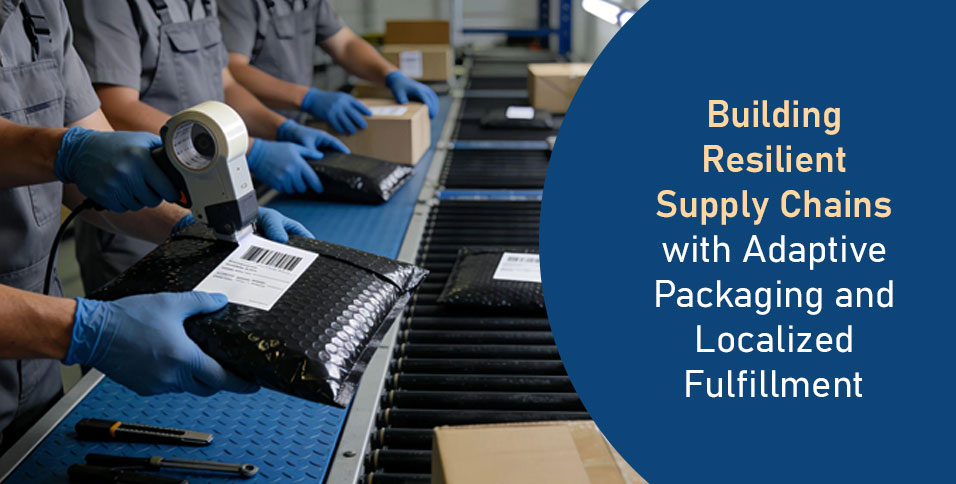
In today’s unpredictable global economy, supply chains are under more pressure than ever. Demand surges without warning, product lines evolve rapidly, and logistics disruptions can emerge overnight. For businesses striving to stay competitive, resilience is no longer a defensive strategy — it is a core operational capability.
While organizations often focus on sourcing strategies, transportation optimization, and inventory planning, an equally critical but frequently overlooked element plays a decisive role in resilience: adaptive packaging. The ability to access the right protective materials — from small bubble mailers to padded bubble mailers — at the right time and in the right locations can directly influence delivery reliability, cost efficiency, and customer satisfaction.
Packaging as a Strategic Supply Chain Lever
Packaging is no longer just a protective shell; it is a vital enabler of the supply chain.
When thoughtfully planned, it helps organizations:
- Respond faster to order spikes
- Adjust to product assortment changes
- Maintain fulfillment efficiency without operational disruption
For small and lightweight products — such as accessories, electronics, personal care items, or components — small bubble mailers offer space efficiency and cushioning while reducing freight costs. Meanwhile, padded bubble mailers provide enhanced impact resistance, protecting fragile and higher-value products from in-transit damage and costly returns.
Organizations that maintain access to a versatile range of packaging formats are better positioned to scale operations quickly, reduce risk exposure, and preserve service consistency.
Balancing Protection, Cost, and Operational Performance
Modern supply chains are not only judged by speed — they are measured by reliability and cost discipline. Packaging decisions directly influence all three.
Insufficient protection increases return rates and damages brand credibility. Excessive packaging adds cost, waste, and warehouse handling complexity. Intelligent use of adaptive packaging solutions helps businesses strike this balance, supporting:
- Faster packing lines through standardized protective materials
- Reduced dependency on excess fillers
- Lower risk of breakage and shipment delays
- Better customer satisfaction scores and post-purchase experience
In a market where customer experience increasingly defines competitive advantage, packaging becomes a quiet but powerful contributor.
Localized Fulfillment: Turning Packaging Availability into Agility
Adaptive packaging delivers its full strategic value only when it is readily available where it is needed most. This is where localized fulfillment plays a transformative role.
Distributed warehousing models enable businesses to secure essential packaging closer to fulfillment hubs, reducing procurement lead times and reliance on distant or single-source suppliers. This regional access helps companies:
- Maintain operational continuity during demand volatility
- Protect against transportation disruptions
- Avoid bottlenecks that cascade into shipping delays
For e-commerce and retail in particular, delays in packaging availability can be just as damaging as delays in product inventory. Localized access ensures fulfillment teams can continue operating at full speed — even during peak seasons or unplanned surges.
Industry Momentum Supporting Adaptive Packaging
Several trends in global supply chains highlight just how important packaging has become.
E-commerce growth keeps driving more orders, and they come faster than ever. In 2023, global e-commerce sales topped $6.3 trillion, with return rates averaging 15–30% (Statista, 2023). This makes reliable protective packaging—like small bubble mailers and padded mailers—essential to avoid damage and costly returns.
At the same time, the rising cost of returns shows the value of durable, break-resistant solutions. The reverse logistics market, which includes returns, recycling, and refurbishment, is expected to reach $603 billion by 2027 (Data Bridge Market Research). Poorly packaged goods can hit a company’s bottom line hard.
Packaging inefficiencies also add to operational costs. According to Swiftpak Insights, up to 30% of shipping expenses come from issues like repeated shipping, inspections, and handling damaged items.
Finally, decentralized inventory strategies are becoming the norm, making regional access to adaptive packaging more important than ever. Having materials like small and padded bubble mailers available close to fulfillment centers ensures teams can keep orders moving smoothly, even during peak seasons or sudden demand spikes.
All of this reinforces one clear point: packaging isn’t just a box or envelope—it’s a supply chain asset that protects products, cuts costs, and keeps customers happy.
Industry Example: Adaptive Packaging in Action
Forward-thinking companies are already combining these principles. As an example, organizations with multi-country warehousing strategies ensure that small bubble mailers and padded bubble mailers are available near fulfillment hubs. By making protective packaging readily accessible, businesses can reduce disruption risk, stabilize delivery performance, and maintain a consistent customer experience across dynamic market conditions.
This approach demonstrates how adaptive packaging paired with localized availability supports operational resilience without relying solely on any single vendor.
Supporting Businesses Across Growth Stages
Resilient packaging strategies are not limited to large enterprise operations. Small and medium-sized businesses also benefit from versatile packaging availability and regional fulfillment approaches. Whether scaling an e-commerce operation, entering new markets, or managing seasonal variations, access to adaptive packaging plays a meaningful role in sustaining reliability and growth.
Conclusion
Supply chain resilience has become one of the defining priorities of modern business. Adaptive packaging solutions — from small bubble mailers to padded bubble mailers — provide essential protection, cost efficiency, and flexibility that help companies maintain stable operations, even during volatility. When paired with localized availability, their strategic value multiplies, enabling faster response, reduced risk, and stronger delivery performance.
Organizations that treat packaging not as a consumable but as a strategic resilience tool are better positioned to protect both their products and their customer relationships in an increasingly uncertain global supply chain landscape.