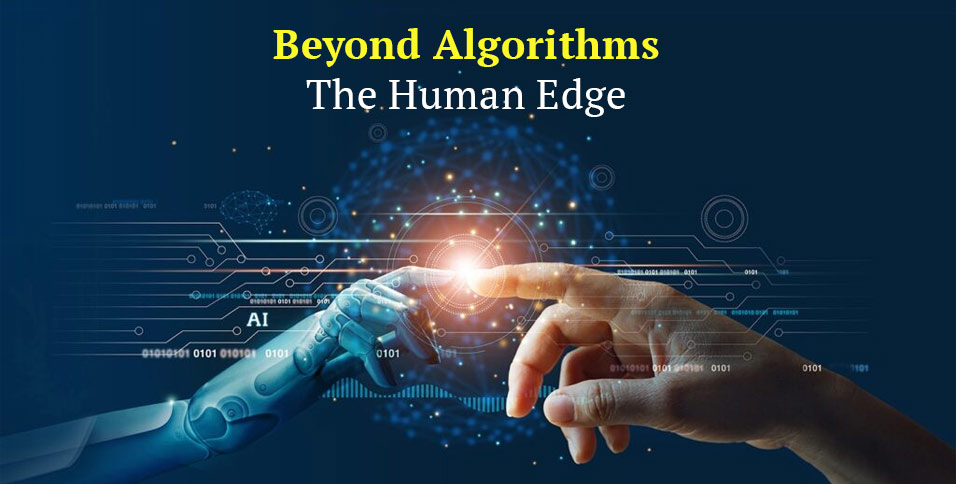
Since the mid-20th century, artificial intelligence has taken its cues from the human mind. Neural networks were inspired by brain architecture. Early algorithms were designed to “learn” from experience. The ambition was always to mirror how people think. And yet, even with today’s remarkable progress, AI still falls short of what defines human intelligence: emotion, nuance and self-awareness.
AI now plays a major role in how organisations assess and develop their people. Algorithms can analyse thousands of behavioural signals in a matter of seconds, giving businesses speed and scale they’ve never had before. But while AI can see patterns in the data, it can’t understand the person behind them.
At Awair GB, we see the future not as AI versus human judgement, but as a partnership. Scientific rigour supported by technology, brought to life through human insight.
AI: A Powerful Tool, Not a Psychologist
AI’s strength is pattern recognition. Give it enough data and it will detect links between personality traits and workplace outcomes that might be invisible to the human eye. But human behaviour is layered, shaped by context and emotion.
For example, an algorithm may link confidence to leadership potential. What it cannot determine is whether that confidence reflects:
- Genuine self-belief
- A dominant interpersonal style
- Or a protective response masking uncertainty
A psychologist can. Empathy, ethical reasoning and contextual understanding are human qualities no model can authentically replicate. AI’s role is to handle the heavy lifting in data processing. The psychologist’s role is to interpret, challenge, explore and help people make sense of what the data reveals.
The aim is not to automate judgement, but to elevate it.
Why Evidence Still Matters
Decades of research underpin the most effective assessments. Models like the Big Five framework remain fundamental because they’re validated across cultures, roles and industries. They provide the stability and scientific grounding that modern tools build upon.
AI can sharpen predictive accuracy, but it cannot replace the discipline of validated psychometrics. Without proper testing and safeguards, even the most advanced algorithms can amplify bias or generate inaccurate conclusions.
At Awair GB, we treat AI as the next chapter in psychometrics. Platforms such as AssessFirst and the Hogan assessment show what responsible integration looks like: AI provides additional insight, while interpretation stays rooted in evidence-based psychological theory.
The Human Element in Assessment
The most meaningful part of any assessment isn’t the report. It’s the conversation that follows.
Psychologists add value through:
- Turning results into practical, personalised insight
- Connecting data to real-world behaviour
- Helping individuals reflect on strengths, blind spots and potential
- Supporting leaders as they turn feedback into long-term development
AI can create text, but it cannot read a room. It cannot sense hesitation, cultural nuance, emotional readiness or the subtle shift in tone that signals someone needs support rather than challenge. Trust and growth come from human connection, not automation.
Looking Ahead
AI will continue to reshape how we gather and interpret data. But the heart of assessment will remain human. The key question is no longer whether AI will replace psychologists; it’s how effectively both can work together to create assessments that are ethical, accurate and genuinely transformative.
At Awair GB, we believe AI should enhance professional expertise, not substitute it. Because while technology can process information at extraordinary speed, only people can turn that information into meaningful, lasting development.