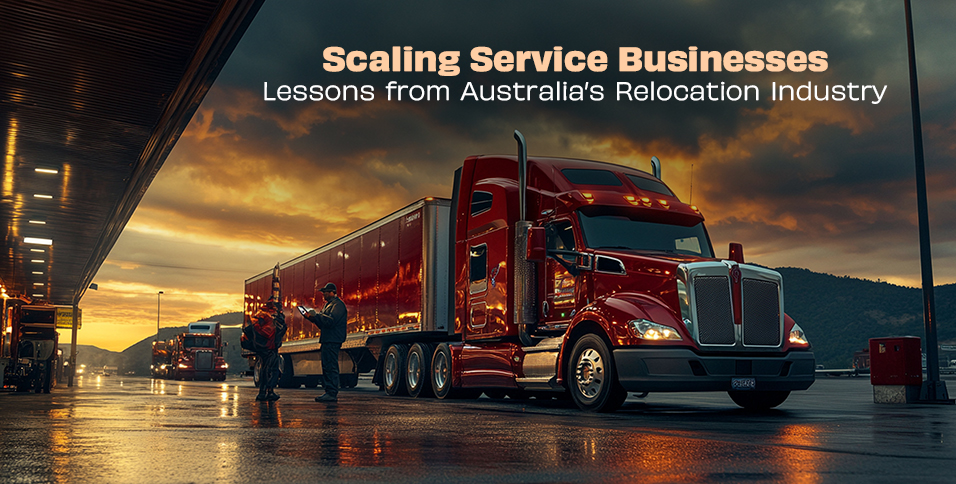
Big trucks, big insights
The image of a moving truck rumbling down a suburban street doesn’t immediately scream “innovation”. Yet the Australian relocation sector is a microcosm of the challenges and triumphs faced by service businesses looking to scale. From balancing growth with quality to adopting new technology, removalists are quietly demonstrating how to expand without losing the personal touch. Their experiences offer valuable lessons for any service-oriented company seeking sustainable growth.
Build systems before you build size
The logistics behind moving households are complex: inventory tracking, scheduling crews, managing warehousing and keeping clients informed. In the freight world, experts note that unified platforms connecting different management systems deliver real-time operational data and API-driven extensibility. For removalists, adopting integrated software that tracks bookings, routes and inventory is the foundation of scalability. Manual spreadsheets don’t cut it when you’re coordinating dozens of moves every week.
Smart operators invest in digital dashboards that provide a bird’s-eye view of all active jobs. They integrate GPS to optimise routes, reducing fuel costs and carbon footprints. They automate paperwork — quotes, invoices, insurance forms — freeing up staff to focus on customer service. According to small-business commentators, automation and digital tools are set to transform operations in 2025. By treating technology as a core asset rather than an afterthought, moving companies can scale up without chaos.
Embrace agile service delivery
Scaling a service business isn’t just about doing more of the same; it’s about doing it better. Agile methodologies, originally designed for software development, emphasise flexibility, collaboration and continuous improvement. Applied to relocation, agile could involve breaking each move into stages — packing, loading, transport, delivery — and conducting quick “retrospectives” after each stage to learn what went well and what didn’t.
This iterative approach allows businesses to experiment with new services, like specialised antique handling or eco-friendly packing, without committing to a full rollout. Agile also encourages cross-functional teams: packers learning basic administrative tasks, or customer service staff joining site visits to understand clients’ anxieties. By prioritising collaboration and adaptability, removalists can respond swiftly when clients change settlement dates or ask for last-minute storage.
Invest in people and create pathways
No service business can scale without a reliable, skilled workforce. As Australia’s gig economy grows, with 1.1 million independent contractors representing 7.5 per cent of the workforce in August 2024, moving companies face the same tension as other industries: how to balance flexibility with loyalty. Successful operators maintain a core team for quality control and culture while tapping into contract labour during peak periods. They offer ongoing training in lifting techniques, customer communication and digital tools to improve safety and professionalism.
Small-business trend watchers predict that remote and flexible work will be crucial for attracting talent in 2025. For moving firms, that might mean allowing administrative staff to work from home or offering variable start times for students and parents. By valuing staff well-being and providing pathways for skill development, businesses build a reputation that attracts both customers and future employees.
Content and community: build trust before you need it
Scaling isn’t only about operations; it’s about brand. One lesson from the relocation industry is the power of education. Moving can be stressful and confusing, so companies that share practical advice build trust long before a truck is booked. Blogs offering Moving tips & tricks — from decluttering guides to checklists for settling into a new city — position a company as a helpful partner rather than just a vendor. This kind of content marketing is cost-effective and establishes expertise.
Community involvement further strengthens relationships. Sponsoring local sports teams, supporting charities or partnering with real estate agents expands your network and generates referrals. Happy customers become ambassadors, recommending your services on social media and neighbourhood forums. For businesses of any kind, these organic endorsements are more powerful than paid advertising.
Diversify services without losing focus
As service providers scale, adding complementary offerings can boost revenue and resilience. Relocation companies have evolved beyond simple transport. They now offer secure storage, pet transport, cleaning and specialised packing for artwork or electronics. One rapidly growing segment is professional packing & unpacking. Clients short on time or nervous about wrapping fragile items are willing to pay for expert packers who bring materials, organise possessions logically and set up homes quickly. Providing such services keeps customers within your ecosystem rather than forcing them to hire multiple vendors.
The key is to ensure every new service aligns with your brand promise. A moving company known for care and precision shouldn’t dilute its reputation by offering unrelated side businesses. Likewise, other service businesses — think cleaners, tradespeople or IT consultants — should expand only into areas that complement their core competencies.
The long haul
Scaling is a marathon, not a sprint. The relocation industry teaches us that growth must be underpinned by systems, agility, people, content and strategic diversification. It also reminds us that every customer interaction counts. In a world where a single negative review can travel faster than a moving truck, excellence is non-negotiable.
For service businesses aspiring to grow, Australia’s movers show that it’s possible to handle increasing volume without sacrificing quality. By adopting smart technology, embracing agile principles, investing in staff and building trust through content and community, any service company can go the distance.
Also Read: Common Challenges and Solutions in Office Relocations