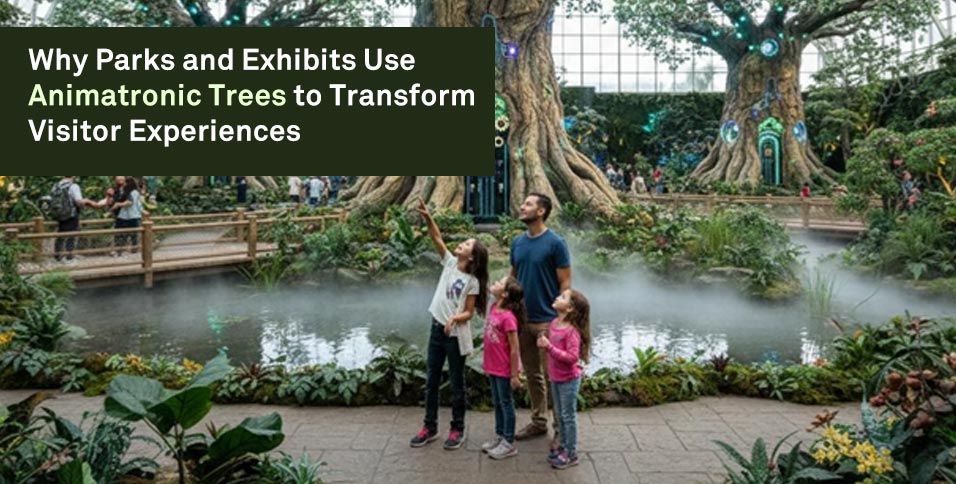
Across the world, parks, exhibits, malls, and family entertainment venues are working harder than ever to create experiences that feel alive and memorable. Visitors are no longer satisfied with traditional static displays—they are drawn to environments that stimulate curiosity, encourage interaction, and offer meaningful moments. This shift in expectations has led many attractions to explore innovative tools that blend art, engineering, and storytelling into their spaces.
One increasingly popular solution is the use of animatronic trees—mechanical, programmable tree sculptures that can speak, move, and respond to guests. As more venues consider whether to buy animatronic trees for themed zones or educational exhibits, understanding their technical capabilities and impact on visitor experience has become essential. These installations bridge the gap between design and interactivity, offering a fresh approach to immersive entertainment.
What Animatronic Trees Are and How They Work
Animatronic trees are engineered structures designed to mimic the appearance and behavior of living trees while incorporating mechanical systems capable of movement and sound. At their core, these installations typically include a steel internal frame for stability, layered materials such as silicone or fiberglass to simulate bark and texture, and programmable motors that control gestures like mouth movements, blinking eyes, swaying branches, or expressive facial animations. When combined, these elements allow the trees to function not just as decorative features but as dynamic characters within a space.
Many animatronic trees also incorporate audio systems that enable them to narrate stories, deliver educational content, or greet visitors with prerecorded messages. Some models can be programmed to respond to motion sensors, activating when people approach, while others rely on timer-based or remote-control systems. This versatility makes them adaptable to a wide range of environments, from indoor exhibits to large outdoor attractions.
Enhancing Atmosphere and Immersion
Enhancing atmosphere and immersion is one of the strongest reasons attractions choose to buy animatronic trees.
- They transform ordinary spaces into immersive, story-rich environments.
- Moving, speaking, or responsive trees make settings feel alive, surprising, and emotionally engaging.
- They enhance themed environments such as fantasy forests, nature-based exhibits, and children’s zones.
- Interactive elements—sound, motion, and expression—help shape visitor perception.
- Animatronic trees can act as guides, storytellers, or ambient characters that support the overall theme.
- They can introduce exhibits, narrate cultural stories, or explain ecological concepts.
- Their blend of atmosphere and storytelling helps unify and strengthen an attraction’s narrative structure.
Together, these features make animatronic trees a powerful tool for creating memorable, immersive environments.
Improving Visitor Engagement Through Interactivity
In recent years, audience expectations have shifted toward exhibits that invite active participation rather than passive observation. Animatronic trees support this need by offering a form of interactivity that feels both intuitive and delightful. When a tree smiles, speaks, or moves in response to a visitor’s presence, it creates a moment of personal connection—a reaction that often encourages guests to explore more deeply or spend additional time in the space.
Such interactions also tend to produce memorable, shareable moments. People are naturally drawn to surprising or whimsical features, and animatronic trees provide ideal opportunities for photos and videos. Families, in particular, are often captivated by talking trees or expressive characters that engage their imagination. This added layer of memorability helps attractions stand out in a competitive entertainment landscape, contributing to repeat visits and word-of-mouth interest.
Practical Advantages for Long-Term Use
Beyond their visual and emotional appeal, animatronic trees offer several practical advantages for operators. Because they are built with durable internal structures and weather-resistant materials, many can be installed in outdoor environments where they must withstand rain, sun, or temperature fluctuations. Their construction typically includes waterproof components and UV-resistant finishes, enabling year-round use in a variety of climates.
Additionally, animatronic trees offer flexible operational options. Some models can be programmed to follow a daily schedule, activating automatically during visiting hours. Others are equipped with infrared sensors that trigger movement or sound only when guests approach, making them ideal for high-traffic zones or surprise encounters. This adaptability allows attractions to integrate animatronic trees into existing visitor flows without needing major structural changes.
Where Animatronic Trees Are Most Effective
Animatronic trees are most effective in environments where storytelling, ambiance, and guest interaction play a central role.
- Theme parks use them to anchor storytelling zones and enhance character-driven areas.
- They complement attractions by adding animated elements that deepen immersion.
- Museums and educational exhibits rely on them as playful interpreters for natural science or cultural topics.
- Shopping centers and resorts incorporate them to elevate ambiance with low-maintenance entertainment.
- Children’s play areas use friendly, animated tree characters to spark exploration and imaginative play.
- Their cross-age appeal makes them suitable for nearly any public-facing venue.
Because of this versatility, animatronic trees can enrich a wide range of settings and visitor experiences.
Should Parks and Exhibits Buy Animatronic Trees?
For many attractions, the decision to buy animatronic trees comes down to whether the installation aligns with their goals for visitor engagement and storytelling. Venues that prioritize immersive experiences, family appeal, or interactive learning often find that animatronic trees deliver meaningful value. They offer an affordable way to introduce character-driven elements without building large-scale rides or complex interactive exhibits.
However, it is important to consider practical factors before investing. Maintenance requirements vary depending on the complexity of the tree’s movements, the environment in which it is placed, and the frequency of use. Operators must ensure that technicians can access mechanical components for routine upkeep. Additionally, the design of the animatronic tree should align with the aesthetic and thematic goals of the space to avoid visual inconsistencies.
Tips for Venues Considering an Investment
When exploring whether to add animatronic trees, parks and exhibits benefit from starting with a clear creative vision. Understanding how the tree fits into the broader narrative of the environment can help guide decisions about appearance, movement, and audio programming. Some trees are designed to serve as quiet, atmospheric elements, while others act as major storytelling anchors—knowing which role is needed will shape the final design.
It is also helpful to evaluate the physical space where the tree will be installed. Indoor locations may allow for more intricate design features, while outdoor placements require greater durability. Planning for maintenance access is equally important, ensuring technicians can reach control boxes, motors, or audio systems without disrupting operations. Considering these factors early increases the long-term success of the installation.
A Comparison of Key Considerations
| Factor | Why It Matters | What to Evaluate |
| Theme Alignment | Ensures the tree blends naturally with surroundings | Visual design, character style, color palette |
| Environment | Impacts durability and maintenance | Indoor vs. outdoor conditions |
| Interactivity Level | Determines guest engagement | Sensor activation, audio scripting, movement complexity |
| Maintenance Needs | Affects long-term performance | Access points, replacement parts, seasonal checks |
Conclusion
Animatronic trees have emerged as a powerful tool for attractions seeking to create environments that feel vibrant, interactive, and emotionally engaging. By combining artistic design with mechanical motion, they enrich themed spaces, enhance storytelling, and encourage deeper visitor involvement. Whether used in parks, exhibits, shopping centers, or educational environments, these installations offer a unique balance of entertainment and functionality.
As visitor expectations continue to evolve, many venues are exploring whether to buy animatronic trees as part of their long-term strategy for immersion and engagement. When thoughtfully planned and maintained, these animated installations can transform ordinary spaces into lively, memorable experiences that resonate with guests of all ages.