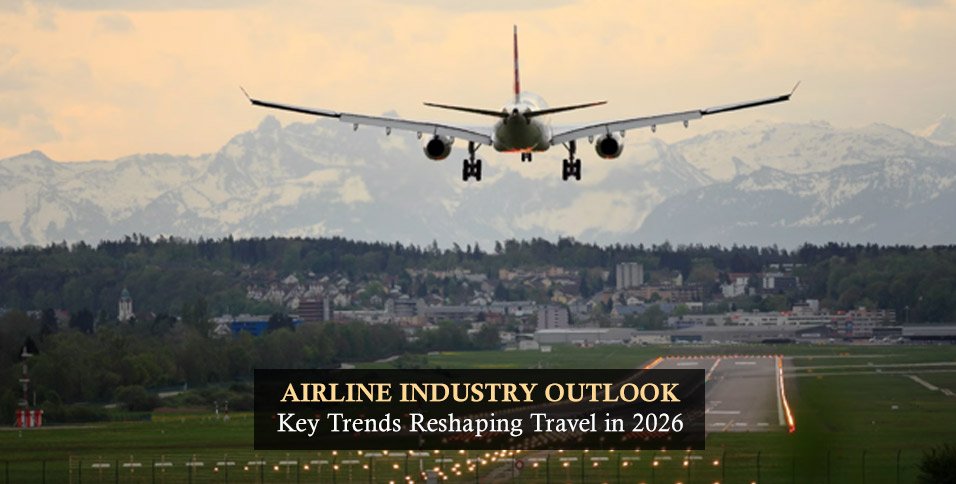
Air travel remains profitable in 2026, but margins are thin. Carriers are making money, yet a small shift in fuel prices, delivery timing, or flight paths can quickly reduce profit.
Demand is still growing, though more slowly than in the past two years. New aircraft are arriving, but not as quickly as order books suggest. Travelers are also gaining stronger consumer protections, which changes how airlines handle refunds and schedule changes behind the scenes.
If you plan budgets, routes, or travel programs, here is a plain-English look at what changed at mid-year and what to watch through the rest of 2026
The mid-year reset on profits and costs
One of the biggest updates came in June. IATA’s June 7, 2026 outlook cut the industry’s net profit forecast to $23 billion, with a net margin of just 2.0%. In simple terms, airlines are expected to keep about two cents of every dollar they take in.
Fuel is the main pressure point. IATA projects jet fuel at roughly 31.4% of airline operating costs in 2026 and expects the jet fuel crack spread to average about $57 per barrel, a historic high. The crack spread is the added cost of refining crude oil into jet fuel, and it remains unusually expensive.
In practice, this limits pricing flexibility, pushes airlines to be careful with capacity, and makes contingency planning more important.
Demand and pricing: slower growth, selective strength
Growth has not stalled, but it has cooled. The FAA projects U.S. carrier system passenger growth of about 2.4% in 2026. Globally, BCG’s base case expects air travel demand to rise about 5.8% in 2026, after roughly 6% in 2025.
The strength is uneven. Premium cabins and long-haul travel are holding up better, while some leisure markets are softening depending on the region. For planners, this means demand should be read by segment, not as one blended number.
Revenue mix to watch
With fuel eating into margins, expect airlines to rely more on ancillary revenue such as seat selection, bags, and bundles. These add-ons can help offset costs without a broad fare increase, but airlines still need to balance revenue goals with customer tolerance.
What U.S. refund rules change
The Department of Transportation’s final rule now requires automatic refunds and defines a significant schedule change as three or more hours for domestic flights, or six or more hours for international flights. When a change crosses that line and a traveler declines the new option, the refund should happen automatically.
For travelers, that removes friction. For airlines, it means refund logic and back-office systems need to handle these cases cleanly instead of treating them one by one.
Fleets and capacity: long-range narrowbodies meet supply limits
Demand for new aircraft is clear. Airbus delivered 793 aircraft in 2025 and reported a record year-end backlog of 8,754. That backlog signals strong appetite, but it also shows how long waiting times have become.
One important shift is the rise of long-range narrowbodies. Saudia became the first operator of the A321XLR in the Middle East and Africa on May 25, 2026. Aircraft like this can help carriers open thinner long-haul routes without committing to a full widebody. On longer thin routes, cabin mix can shape premium airline revenue as much as raw seat count.
On the Boeing side, the company says the 737-7 and 737-10 are expected to certify in 2026, with first deliveries in 2027. Certification timing and parts bottlenecks mean near-term capacity growth stays capped, even when order books look strong. For a sense of where global connectivity concentrates, this overview of the 10 busiest airports in the world offers useful context on hub dynamics.
Network planning takeaways
- Consider using long-range narrowbodies on secondary long-haul routes where widebody demand may be too thin.
- Protect aircraft utilization, because fleet availability is one of this year’s main constraints.
- Build schedule buffers for air traffic control delays, maintenance issues, and IT disruptions.
Stay current without drowning in headlines
The outlook keeps moving, so it helps to follow a steady feed rather than reacting to one alarming number. For day-to-day updates on fleet moves, routes, and carrier strategy, you can browse this roundup of airline industry news and analysis as a general reference point for weekly developments.
Through the rest of the year, a short watchlist can keep the noise manageable:
- Fuel trajectory: the single biggest swing factor for airline margins.
- Delivery cadence: whether manufacturers hit certification and delivery timelines.
- SAF policy and capacity: any real movement in supply, mandates, or pricing.
- Consolidation steps: how integrations such as Korean Air and Asiana progress.
Sustainability in practice: mandates versus supply
The gap between policy goals and available fuel supply remains wide. ReFuelEU requires a minimum 2% sustainable aviation fuel blend at EU airports from 2025, rising toward 70% by 2050. Meanwhile, IATA estimates global SAF production at around 2.4 million tonnes in 2026, about 0.8% of total aviation fuel, costing airlines roughly $4.3 billion.
So mandates are increasing while supply is still scarce and expensive. CORSIA also continues in phases: a pilot phase from 2021 to 2023, a first phase from 2024 to 2026, and a second phase from 2027 to 2035. For procurement teams, the practical takeaway is to plan for cost and availability limits rather than assuming a sudden jump in SAF volumes this year.
Passenger experience signals to watch
Two trends are worth tracking. First, newer aircraft bring fresh cabin choices, including seating and range options tied to long-range narrowbodies such as the A321XLR. Second, digital identity and smoother border processes continue to develop, which can reduce time at the airport. Expectations should stay grounded, since these changes roll out gradually and vary by airport.
What to plan for next
The year is profitable but fragile, and much of the risk sits outside any single carrier’s control. Three moves make sense for most leaders now. Build fuel hedging and contingency plans that assume volatility. Calibrate product and add-on revenue carefully so cost pressure does not alienate customers. Keep sustainability procurement realistic by planning around limited SAF supply rather than optimistic timelines.