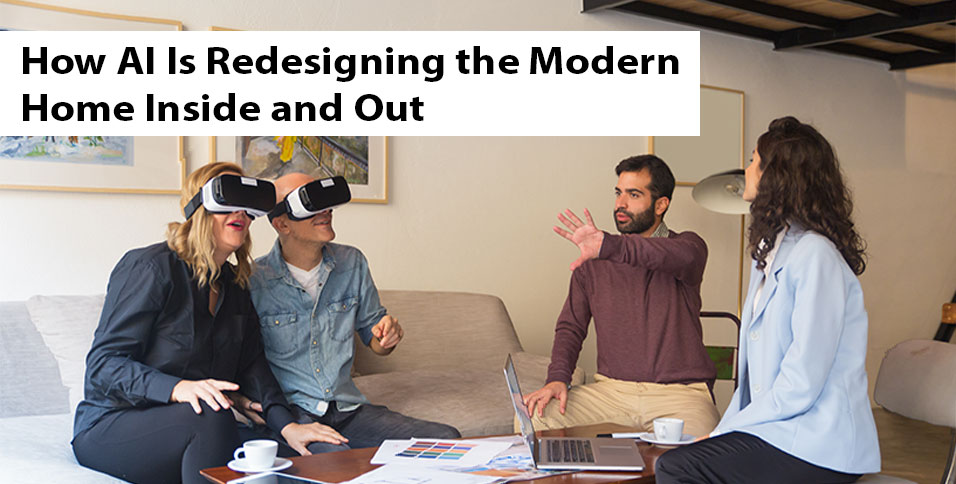
Artificial intelligence entered modern homes without a dramatic announcement. The shift happened gradually as small devices began automating tiny pieces of daily life. Smart thermostats learned heating habits, digital assistants responded to basic commands, and security cameras sent notifications to smartphones. None of these features looked transformative in isolation, yet each one introduced a new behavioral pattern that reshaped expectations for how a home should respond.
AI does not sit on top of home systems; it sits inside them. Developers now build homes assuming occupants expect automated lighting, integrated climate control, and seamless voice access to information. Builders prewire rooms differently, place outlets in higher-density clusters, and create recessed spaces for hubs and routers. The home’s bones quietly adapted to an era where connectivity is as foundational as running water.
The shift deepened when AI-driven platforms began linking devices into unified ecosystems. Heating, cooling, lighting, security, and entertainment began speaking to one another. Instead of isolated actions, homes now analyze patterns. They record when occupants leave, which rooms they frequent, how long meals take to prepare, and when energy demand peaks. AI interprets this data and adjusts systems with precision. It selects lighting scenes at night, preheats ovens, lowers blinds, and suggests maintenance tasks before small issues escalate.
This evolution moved AI from a novelty to an expected standard. Younger homeowners see intelligent features as baseline requirements. Developers and architects responded by planning AI-ready homes from the earliest blueprint stages. They design mechanical rooms differently, embed sensor paths into walls, and prepare layouts for upgrades that will arrive long after construction finishes.
Smart homes no longer belong to early adopters. They have entered the mainstream by reshaping how homes are designed, built, and lived in from the first day of occupancy.
Interiors Built Around Intelligence, Not Layouts
Interior design used to begin with static considerations: room size, lighting orientation, and furniture placement. AI disrupted this approach by introducing dynamic behavior into each room. Interiors now adapt to patterns in movement, noise, temperature, and lighting preferences. This shift forced architects and designers to rethink how spaces should function when home systems react continuously to daily routines.
AI influences kitchen design more than any other interior space. Ovens track cooking patterns and suggest times and temperatures. Refrigerators identify items, recommend recipes, and help reduce waste by flagging expiration dates. Ventilation adjusts in response to heat and humidity spikes. These capabilities reshape cabinetry layouts and appliance placement. Designers now integrate vertical sensor panels, create hidden compartments for automated waste systems, and build surfaces that work with embedded sensors. The kitchen becomes a workspace where AI guides motion flow and reduces repetition.
Living rooms evolved as well. Lighting systems track natural daylight and adjust tones that support alertness, relaxation, or media viewing. Climate control zones follow human presence rather than uniform house-wide settings. Speakers and entertainment systems respond to voice, gesture, or occupancy signals. These behaviors shift how designers plan seating, window placement, and lighting circuits. The goal is not to follow trends but to coordinate environments that adjust in real time.
Bedrooms incorporate AI-driven circadian lighting, sleep tracking, and noise analysis. Designers shape these rooms around routines rather than static nighttime assumptions. Beds communicate with ventilation systems to adjust temperature gradients. Window treatments sync with sunrise patterns and user preferences. The growth of health-related home technology changed expectations for once-simple spaces.
Bathrooms integrate AI-driven water use tracking, humidity control, and personalized settings for showers, tubs, and mirrors. The introduction of sensors requires thoughtful placement behind tiles and surfaces. Designers consider maintenance access, airflow patterns, and high-moisture behavior when incorporating AI.
Privacy influences interior layouts more than before. Homes filled with microphones, cameras, and data-collecting sensors force architects to consider zones where occupants expect digital silence. This balance between convenience and privacy creates new floorplan logic. Designers carve out sensor-free corners for reading, meditation, or confidential conversations. AI shapes not only convenience but psychological comfort.
Material choices shift as well. Surfaces that interact with sensors must avoid interference. Transparent materials around embedded lighting, durable finishes for high-touch panels, and noise-dampening materials for voice-controlled rooms become common. AI influences color palettes, acoustics, airflow, and even cleaning routines.
Interiors built around intelligence support prediction and adaptation. Homes become living systems that read human behavior and adjust environments with subtle, continuous actions.
Furniture, Fixtures, and Objects That Think For Themselves
AI’s influence on interiors reaches beyond architecture and enters the world of furniture and fixtures. Modern pieces collect data, modify posture, adjust support levels, and react to stress or fatigue. This evolution blends ergonomics with machine learning, creating objects that participate actively in daily routines.
Beds analyze sleep cycles using pressure maps, respiration data, and movement patterns. Some models adjust firmness during the night to relieve pressure points. Others raise the upper body at signs of snoring or breathing irregularities. These features require integrated mechanical systems hidden within the frame. Designers account for motor placement, weight distribution, and cable management while maintaining visual simplicity.
Desks and chairs adapt to posture changes. Sensors track slouching or uneven weight distribution and nudge users to correct their stance. AI systems adjust desk height, suggest standing intervals, and optimize lighting for long work sessions. These features reshape the size and construction of frames, joints, and surfaces. Workspace furniture becomes a silent collaborator in supporting well-being.
Sofas integrate occupancy detection, adjustable armrests, heating elements, and vibration feedback for entertainment systems. Their structure supports embedded speakers, airflow channels, and micro-adjustment mechanisms. Even the upholstery selection shifts, with fabrics chosen to accommodate embedded wiring and higher durability.
Storage solutions evolve with AI-driven inventory tracking. Closets use sensors to track what clothing is removed or returned. Cabinets notify occupants when supplies run low. Kitchens feature drawers that guide organization through lighting cues and automated dividers. These systems influence drawer geometry, rail selection, and internal layouts.
Lighting fixtures incorporate AI-driven behavior as well. Ceiling panels adjust color temperatures, pendant lights coordinate with circadian rhythms, and wall fixtures shift intensity based on occupancy and time of day. Wiring diagrams and mounting brackets adapt to support advanced drivers and integrated microcontrollers.
Surfaces carry new responsibilities. Tables, counters, and shelves increasingly include wireless charging pads, touch interfaces, and micro-sensors that track temperature, weight distribution, or spills. Material thickness and reinforcement strategies adapt to the added hardware. In some high-traffic spaces, designers introduce materials typically seen in commercial settings, such as finishes found in commercial furniture, to accommodate the added hardware and daily wear.
Fixtures also evolve. Faucets track water usage and temperature preferences. Mirrors analyze skin conditions and provide grooming suggestions. Toilets track hydration indicators. These updates influence plumbing paths, access panels, and installation methods.
As objects gain intelligence, designers balance functionality with visual restraint. Hardware must disappear while still supporting complex behavior. Furniture and fixtures function less as static objects and more as interactive nodes in a larger intelligent ecosystem.
The Exterior Transformed, From Street View to Rooftops
AI reshapes the exterior of modern homes just as strongly as it reshapes interiors. Exterior design now considers sustainability, security, energy management, weather shifts, and long-term maintenance. Each of these areas benefits from AI’s ability to interpret patterns and respond in real time.
Landscapes transform through AI-driven irrigation and plant-care systems. Sensors analyze soil moisture, shade patterns, rainfall, and seasonal changes. Irrigation systems distribute water in targeted volumes instead of using fixed schedules. This precise approach influences plant selection and garden layout. Designers position shrubs, trees, and ground covers based on microclimates created by AI-generated data. Lighting along pathways also shifts dynamically, adjusting brightness based on moonlight levels or human presence.
Security systems move beyond cameras and motion detectors. Homes integrate AI that recognizes familiar faces, tracks unusual movement patterns, and monitors deliveries. These capabilities influence placement of windows, doors, fencing, and outdoor lighting. Designers create subtle visual lines that guide security cameras while maintaining aesthetic appeal. Exterior materials also adapt to support hidden wiring, solar-powered security nodes, and insulated communication channels.
Façades adapt to environmental conditions through smart materials. Electrochromic windows adjust transparency based on sunlight and heat levels. Shading panels shift position throughout the day. Roofs incorporate solar tiles that communicate with home energy systems. These features change how architects plan roof slopes, soffits, insulation layers, and drainage paths. AI plays a central role in optimizing how the home interacts with temperature changes, storms, and seasonal shifts.
Neighborhood planning also adapts. Developers use AI to analyze traffic flow, pedestrian behavior, and environmental data. This analysis influences street placement, lighting design, and public-space layout. Residential communities incorporate shared AI systems that coordinate energy distribution, waste management, and local transportation. New construction zones integrate AI-ready infrastructure before homes are even built.
Exterior maintenance receives an upgrade as well. AI-driven sensors detect early signs of cracking, leaks, or structural movement. Roof systems track wear from wind and UV exposure. Exterior paint and siding include coatings that report degradation levels. These tools help homeowners address issues before they expand, protecting both structure and long-term value.
AI does not treat the exterior as a shell. It treats it as an interactive membrane that coordinates energy use, climate response, safety, and daily movement patterns.
The Human Factor, the Friction, and the Tradeoffs
As AI weaves itself into daily life, its influence raises questions about autonomy, privacy, and comfort. Homes that predict behaviors introduce new expectations for how people live, communicate, and relax inside their own spaces. These shifts create both opportunities and tensions.
Daily routines adapt to the rhythm of intelligent systems. When lighting adjusts automatically, occupants stop reaching for switches. When climate systems learn preferences, manual adjustments decline. When kitchens recommend meals, grocery habits evolve. These changes streamline tasks but also reduce spontaneity. Some homeowners appreciate this consistency; others feel monitored or nudged toward predictable patterns.
Data collection presents the clearest friction. AI systems require detailed information about movement, usage, voice patterns, and schedules. This data enables convenience, but it also raises concerns about storage, access, and long-term ownership. Architects and developers must design clear zones where homeowners can control or limit sensor activity. Not all rooms need to participate equally in the home’s intelligence.
Family dynamics shift when systems respond to individual preferences. One person’s preferred temperature or lighting scene may override another’s comfort. AI attempts to balance competing profiles, yet these negotiations reveal how technology influences social interactions. Homes become shared digital environments, not just physical spaces.
AI changes how people think about maintenance and responsibility. Systems that predict issues or automate repairs require trust in algorithms and remote monitoring. Homeowners must learn to interpret sensor reports, update firmware, and manage digital access for service providers. The skill set for home ownership expands beyond traditional maintenance tasks.
There is also an emotional dimension. Some occupants enjoy the sense of a responsive environment, while others feel unsettled by automated adjustments. Not every homeowner wants a home that anticipates behavior. Designers and builders must consider psychological comfort when determining how much automation to include in base models.
Despite these tradeoffs, AI continues to shape living patterns because it alters the fundamental relationship between people and their homes. Instead of passive shelter, the home becomes an active participant that influences daily routines and long-term lifestyle choices.
What Comes Next: Homes That Rewrite Themselves
The next era of smart homes moves beyond reacting to behavior and begins shaping the physical structure of the home. AI will not stop at lighting automation or predictive climate control. It will influence renovations, expansions, energy systems, and long-term architectural decisions.
AI-driven design tools already create optimized floorplans, ventilation routes, and lighting paths based on household behavior. These systems learn from how occupants use each room and suggest layout changes that match emerging needs. Families with young children may receive recommendations for new partitions, safety features, or storage additions. Adults working remotely may receive guidance for reshaping spare rooms into focused work environments.
Renovations become more modular as construction materials evolve. Prefabricated wall systems, micro-utility pods, and self-contained smart modules allow homes to expand or contract based on AI recommendations. Over time, a home might adjust from an open plan to a more segmented structure as family needs change.
Robotics will join AI in shaping the future of home maintenance. Autonomous painting systems, cleaning robots, garden drones, and mini-inspection bots will become standard. These tools help reduce the physical workload for homeowners and extend the lifespan of materials.
Energy systems grow more intelligent as well. Homes will adapt energy schedules based on real-time market pricing, weather predictions, and personal habits. AI will decide when to charge electric vehicles, store solar energy, or power energy-intensive appliances. These capabilities require redesigned electrical panels, new battery systems, and advanced grid communication.
Structural monitoring becomes continuous. AI systems will detect foundation shifts, moisture levels behind walls, or slight changes in window alignment. These signals guide maintenance decisions long before humans detect problems. Over decades, AI will influence how homes age and how remodeling strategies evolve.
Looking farther ahead, AI could shape entire housing markets. Developers may rely on predictive models to design neighborhoods based on demographic trends, climate forecasts, and transportation patterns. Homebuyers may receive AI-generated assessments of future renovation needs before committing to a purchase. Homes may even adapt layouts before a new family moves in, based on inferred preferences from previous occupants.
Artificial intelligence shifts the purpose of domestic architecture. Homes no longer freeze a moment of design in time. They move, adapt, upgrade, and respond over years. They become dynamic environments aligned with human behavior, climate realities, and technological evolution.
Smart homes are not a forecasted trend. They are present and shaping living spaces in ways that influence interiors, exteriors, behaviors, and long-term planning. The transformation continues as AI becomes woven into every layer of design, construction, and daily life.