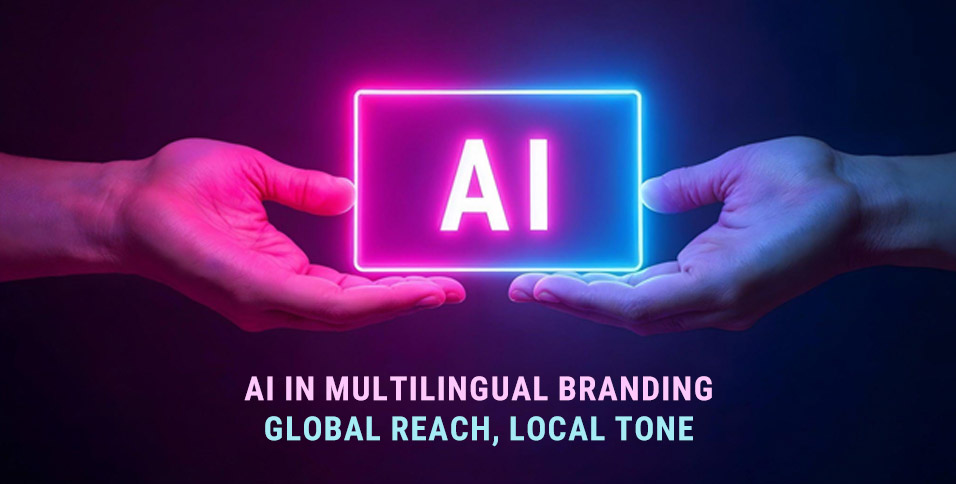
Brand communication isn’t just about translation—it’s about resonance, especially in the online world. As companies expand across borders, the challenge lies in maintaining a consistent brand identity while adapting to diverse linguistic and cultural nuances. This is where AI steps in, not just as a translator, but as a strategic branding partner.
Increasingly, AI is also being integrated into brand strategy workshops, helping teams ideate tone profiles and value hierarchies tailored to regional audiences. This includes creating linguistic moodboards or tone archetypes for specific markets—tools that once took weeks, now built in hours.
Beyond Translation: The Rise of AI Language Localization
Traditional translation methods often fail to capture tone, intent, or local relevance. That’s why leading brands are shifting toward AI-powered localization strategies. Modern tools are powered by neural machine translation (NMT), multilingual natural language generation (NLG), and sentiment analysis engines that assess the emotional context of content.
These platforms go beyond literal translation to craft culturally attuned messages. For example, AI systems can distinguish between formal and informal tones in Spanish across different Latin American countries or interpret subtle shifts in humor and idiomatic expressions in German-speaking regions. This nuance ensures messaging feels native, not mechanical—and builds trust with local audiences.
The nuance goes even deeper with dialect detection and slang calibration. AI localization engines are now trained to adapt regional slang in real time—for instance, switching between Egyptian Arabic and Levantine Arabic in mobile push notifications—reducing friction and boosting engagement.
Building Brand Voice Across Borders
Multilingual branding isn’t just about words—it’s about maintaining a cohesive brand voice that speaks to different cultures without diluting core values. AI tools are increasingly being used to generate everything from localized website copy and social media content to advertising slogans and customer service scripts.
Platforms trained on both brand guidelines and regional linguistic datasets can produce customized, on-brand content for dozens of markets simultaneously. For global teams, this means less reliance on manual rewriting or third-party agencies—and more control over tone, cadence, and consistency.
Some platforms also offer versioning features that generate A/B tested copy variations optimized for different demographics, enabling marketers to analyze performance across geographies before going live. One such tool is Produkto.io, a tool that helps entrepreneurs and startups build brand assets with the assistance of AI. While its main strengths lie in visual identity—logos, websites, and color schemes—it also generates brand names and taglines that align with local market expectations. This blend of creative generation and localization ensures brand identity travels well, even when crossing linguistic boundaries.
Adapting Brand Design for Global Audiences
Language is just one layer of branding—visuals matter too. AI-powered design platforms are now capable of adapting imagery, layouts, and even color palettes to better suit regional preferences. In countries where color symbolism differs (think white as purity in the West versus mourning in some parts of Asia), AI can auto-adjust design elements to maintain cultural relevance without compromising brand cohesion.
Even typography and iconography are being localized through AI. Fonts and symbols are auto-matched to linguistic scripts and cultural associations, ensuring that a brand’s digital presence feels intuitive—whether in Hangul, Cyrillic, or Devanagari Tools like Adobe Firefly and Canva’s AI-assisted branding suite are starting to integrate localization features that let designers preview campaigns across different regions. As this technology matures, expect branding workflows to include adaptive design pipelines that generate market-specific versions with minimal human intervention.
Feedback Loops: Real-Time Refinement
Another major advantage of integrating AI into multilingual branding is the real-time feedback it provides. By analyzing online reviews, social media activity, and user-generated content, AI sentiment tools can determine how a brand is perceived across different markets.
Brands can then refine their messaging dynamically. If a campaign slogan is misinterpreted in one region, or a tone feels off, AI platforms can flag these inconsistencies and suggest alternatives. These adaptive loops make global branding more agile and responsive—something manual workflows can’t match. This feedback mechanism extends to voice interfaces as well—AI can monitor and adapt spoken-brand interactions in voice assistants or call centers, capturing regional tone preferences and refining responses through conversational AI training loops
Hyper-Personalized Localization: The Next Frontier
Looking ahead, the future of multilingual branding lies in hyper-personalization. AI tools are increasingly capable of adjusting not just language and visuals, but emotional tone, delivery channel, and even storytelling structure. In some cases, machine learning models can analyze local buying behavior and social trends to tailor content in real time.
Imagine a clothing brand launching in Southeast Asia. Instead of creating one general campaign, the AI could generate dozens of micro-campaigns, each tailored to specific cities, dialects, shopping habits, and cultural values. Headlines, visuals, and messaging would shift automatically, guided by a combination of data and brand rules.
This isn’t far-off—it’s already in development. AI content engines like Persado and Phrasee are experimenting with this level of granular customization, and global retailers are beginning to test localized product pages that reflect everything from regional fashion trends to linguistic quirks.
Retailers are also experimenting with AI-powered “culture maps,” tools that index regional sentiment trends and purchase behaviors. These maps guide product naming, launch timing, and influencer alignment, making localization more data-driven and less reactive.
Challenges Ahead: Quality, Ethics, and Control
Of course, with automation comes responsibility. Over-localization can dilute brand consistency. Poor translation—especially from tools lacking strong context models—can lead to offensive or misleading messaging. And there’s the growing concern of algorithmic bias creeping into branding decisions.
That’s why human oversight remains essential. AI should augment multilingual branding workflows, not replace them. Clear brand guidelines, cross-functional feedback loops, and regional review processes are key to keeping messaging aligned and culturally sensitive.
Conclusion
AI is no longer a back-end function—it’s shaping brand narratives, visuals, and voices across continents. The ultimate goal isn’t just translation—it’s transformation. A brand that speaks 20 languages but sounds like one cohesive voice. Global reach, local tone—and AI is what makes it possible.
Also Read: From Manual Tasks to Smart Automation: The Rise of AI Assistants