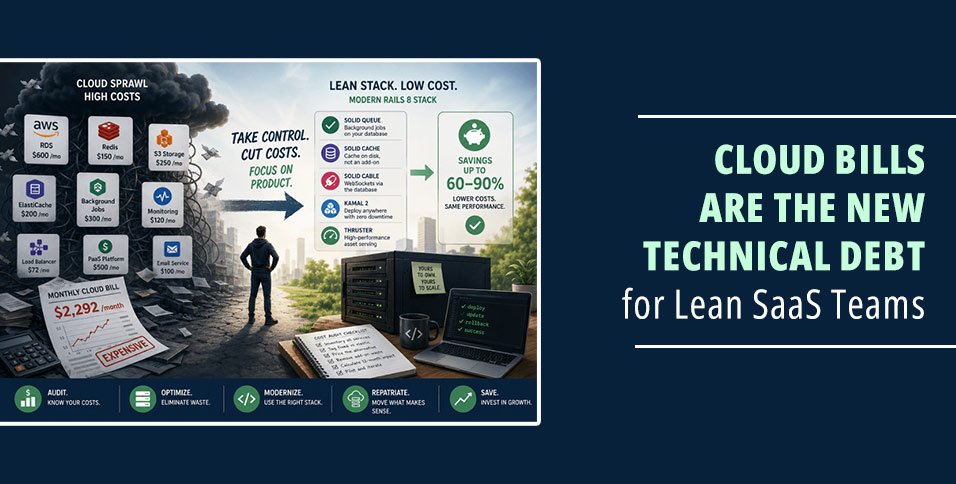
For lean SaaS teams, cloud computing has made it possible to build, launch, and scale products without investing heavily in physical infrastructure. But there is a growing challenge behind that flexibility: cloud costs can quietly become the new form of technical debt.
Just like outdated code creates future development problems, unmanaged cloud infrastructure can create financial problems that become harder to fix as a company grows.
What Makes Cloud Costs a Form of Technical Debt?
Technical debt happens when a company chooses a quick solution today that creates additional costs or complexity later. Cloud spending can follow exactly the same pattern.
A development team might quickly launch extra servers, databases, storage, or third-party services to meet an immediate need. At first, the additional expense may seem insignificant. However, unused resources, inefficient architectures, and poorly monitored workloads can accumulate over time.
Eventually, the company may be paying for infrastructure that no longer provides meaningful business value.
Why Lean SaaS Teams Are Especially Vulnerable
Startups and small SaaS companies usually prioritize product development, customer acquisition, and growth. Infrastructure optimization may not receive the same attention.
Developers often focus on making applications reliable and fast rather than constantly reviewing cloud invoices. Meanwhile, cloud platforms make it extremely easy to create new resources.
A temporary testing environment can remain active for months. A database can be oversized because the team expected rapid growth. Logs and backups can consume large amounts of storage without anyone noticing.
Individually, these expenses may look small. Together, they can significantly increase the monthly burn rate.
The Hidden Costs of “Scale First”
Many SaaS businesses adopt infrastructure designed for future growth before that growth actually arrives. While preparing for scale can be useful, overprovisioning can become expensive.
For example, a startup with a few thousand users may not need infrastructure designed for millions. If the business pays for maximum capacity instead of actual usage, cloud expenses can grow faster than revenue.
The problem becomes even more serious when architecture becomes complicated. Moving away from unnecessary services later may require engineering time, migrations, testing, and potential downtime.
That is why cloud decisions should be treated as long-term business decisions – not just technical choices.
How to Prevent Cloud Debt
The first step is visibility. SaaS teams should know exactly where their cloud budget is going.
Regularly reviewing infrastructure costs can reveal unused resources, unnecessary instances, expensive data transfers, and storage that is no longer required.
Teams can also establish basic cost-management practices:
- Remove unused development and testing environments.
- Set spending alerts and budgets.
- Monitor resource utilization.
- Choose infrastructure based on actual workload requirements.
- Review database and storage sizes regularly.
- Automate shutdowns for temporary environments.
- Track cloud costs by product, team, or project.
- Consider reserved or committed pricing when usage is predictable.
Make Cost Optimization Part of Engineering
Cloud cost management should not be treated as a finance department responsibility alone. Engineers influence many of the decisions that determine infrastructure spending.
Including cost considerations during architecture reviews can prevent expensive mistakes before they happen. A simple question such as, “What will this feature cost to operate at our current scale?” can change how teams design systems.
This does not mean choosing the cheapest infrastructure in every situation. Reliability, security, performance, and developer productivity still matter. The goal is to find the right balance between technical requirements and business value.
The Bottom Line
Cloud infrastructure is one of the biggest advantages available to modern SaaS companies, but flexibility without discipline can become expensive.
For lean teams, uncontrolled cloud spending can slowly turn into technical debt – reducing margins, increasing operational complexity, and limiting the money available for growth.
The best approach is not to avoid cloud spending. It is to make every infrastructure decision intentional, measurable, and aligned with actual business needs.
When SaaS teams treat cloud costs as part of product engineering rather than an unavoidable expense, they can scale more efficiently and build a healthier business for the long term.
Also Read: 16 Terms Used About Debt In The UK