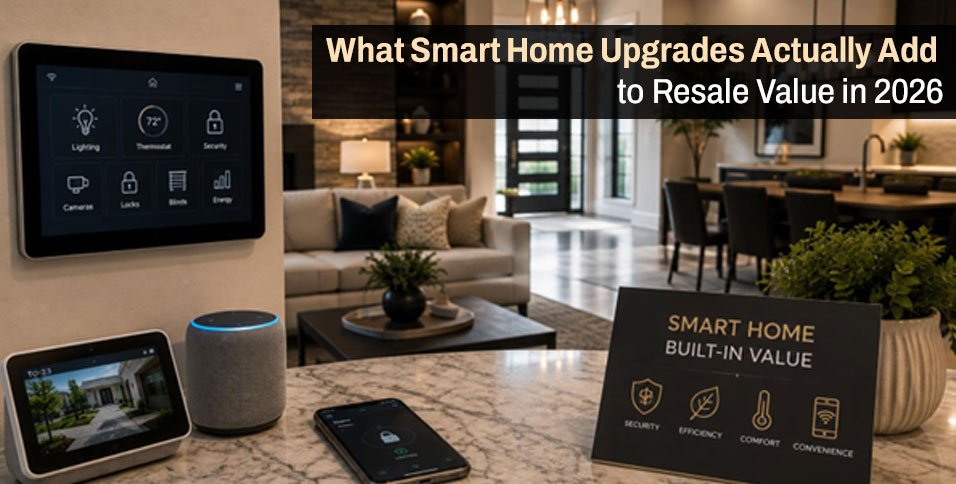
Property investors have spent the past several years pouring money into smart home features on the assumption that “smart” automatically means valuable. Appraisers and buyers have not been nearly as generous. In 2026, the upgrades that actually move a sale price are narrower and more specific than the marketing around smart homes suggests, and the difference matters to anyone deciding where the next renovation dollar should go.
The ROI Question Every Investor Should Be Asking First
The mistake most property owners make is treating “smart home” as a single category of spend. In practice, buyers respond very differently to a smart thermostat than they do to a smart doorbell, and differently again to whole-home lighting control versus a single voice assistant hub. Appraisers, for their part, still lean heavily on comparable sales and physical condition, which means a smart feature only adds measurable value when it also reads as a quality upgrade to the underlying systems, not as an add-on gadget bolted onto an otherwise dated house.
That distinction is why the strongest resale returns in 2026 are coming from integrated electrical and lighting upgrades rather than standalone devices. A house with modern wiring, quality electrical hardware, and centralized lighting control reads as renovated throughout. A house with a smart plug in the kitchen and nothing else reads as unrenovated with a gadget on top.
Smart Systems That Buyers Actually Pay For
Buyers and appraisers are responding most consistently to three categories: energy management, integrated lighting and climate control, and security systems tied into the home’s core electrical infrastructure rather than standalone Wi-Fi devices. Smart thermostats and zoned HVAC controls continue to show up in appraisal comparables because they translate directly into a lower operating cost buyers can quantify. Whole-home lighting control, wired into the switches and dimmers rather than added through smart bulbs, reads as a permanent system rather than a feature that leaves with the seller’s app account.
This is also where the underlying hardware quality starts to matter more than most sellers expect. Investors renovating for resale are increasingly specifying electrical and cabinet hardware made of brass throughout kitchens, primary suites, and entryways, because solid hardware photographs well, holds up through the inspection period, and signals a full renovation rather than a surface-level refresh, which is exactly the kind of detail that supports a higher comparable valuation.
- Smart thermostats and zoned climate control, valued for quantifiable energy savings
- Wired lighting control systems, valued as permanent infrastructure rather than removable devices
- Integrated security and access systems, valued when tied to the home’s electrical panel rather than battery-powered add-ons
The Upgrades That Underperform on Resale
Not every smart feature pulls its weight, and property investors chasing every trend often end up spending on upgrades that buyers barely notice during a walkthrough. Standalone voice assistants, smart plugs, and app-controlled light bulbs rarely show up as a factor in comparable sales because they are easily removed, easily replaced, and not tied to the physical structure of the home. Appraisers generally will not credit a feature that a buyer could simply unplug and take with them.
Smart locks and video doorbells sit in a middle ground. They are popular with buyers during a showing, which can help a listing get more attention, but they rarely move the needle on an appraised value the way a wired system does. The practical lesson for investors is to separate spending that helps a listing show well from spending that actually shows up in the appraisal, since a renovation budget built around the former can end up with a house that photographs well but does not appraise ahead of comparable listings.
This is also where over-automation becomes a liability rather than an asset. A house with a dozen disconnected smart devices from different manufacturers can read as cluttered and confusing to a buyer who has to learn five different apps just to operate the lights, which is the opposite of the polished, move-in-ready impression that drives a strong offer.
Why Small Hardware Details Move Appraisals
Looking closer at how these upgrades get evaluated on a walkthrough, a lot of the actual signal comes down to details most buyers could not name but notice instinctively. Coordinated finishes across switches, plates, and dimmers register as a deliberate design decision rather than a checklist item, and that perception carries weight. Research into how buyers respond to finish-level details on home tours has found that a matched brass dimmer plate reads as a deliberate hardware choice rather than a utility item, which is a small but telling example of how much perceived intentionality factors into a buyer’s read on a property, well before they get to the inspection report.
For investors, that finding has a practical implication: the return on finish-level hardware is disproportionate to its cost relative to major systems work. A full lighting control retrofit or panel upgrade can run into the thousands, but consistent, quality hardware across the same rooms often costs a fraction of that while still contributing meaningfully to how finished and considered the home feels during a showing.
Building a 2026 Renovation Budget That Actually Pays Back
The practical takeaway for executives and property investors planning renovation spend in 2026 is to prioritize systems over gadgets. Wired lighting control, zoned climate systems, and integrated security tied to the home’s electrical infrastructure are the categories most consistently showing up in appraisals and comparable sales data. Standalone smart devices can support a stronger showing but rarely move the appraised number on their own.
Layered on top of that systems-first approach, finish-level details deserve more budget attention than they typically get. Quality hardware across switches, plates, and fixtures is a relatively small spend that reinforces the impression that the rest of the renovation is equally considered, which is often the difference between a listing that gets a full-price offer and one that sits while buyers wonder what else might be cutting corners.
FAQs
Do smart home upgrades actually increase a home’s appraised value?
Some do. Systems that are wired into the home’s core infrastructure, such as zoned climate control and whole-home lighting, are more likely to show up in comparable sales data than standalone devices like smart plugs or bulbs, which appraisers typically do not credit as permanent improvements.
Which smart home features give the best return on investment in 2026?
Energy management systems, particularly smart thermostats and zoned HVAC, consistently show measurable returns because buyers can quantify the operating cost savings. Wired lighting control and integrated security systems tied to the electrical panel also tend to perform better than app-controlled standalone devices.
Are smart locks and video doorbells worth installing before selling?
They can help a listing show well and attract more interest during viewings, but they rarely have a measurable effect on the appraised value since they are easy to remove or replace and are not considered part of the home’s permanent systems.
Why do finish details like switches and hardware matter for resale?
Buyers form an impression of how thoroughly a home was renovated based on small, visible details, not just major systems. Coordinated, quality hardware throughout a home signals a complete renovation rather than a surface-level update, which can influence both buyer interest and comparable valuation.
Can too many smart devices hurt a home’s resale appeal?
Yes, when the devices are from different manufacturers and require separate apps to operate. Buyers touring a home with a fragmented smart system often find it confusing rather than impressive, which can work against the polished impression that supports a strong offer.