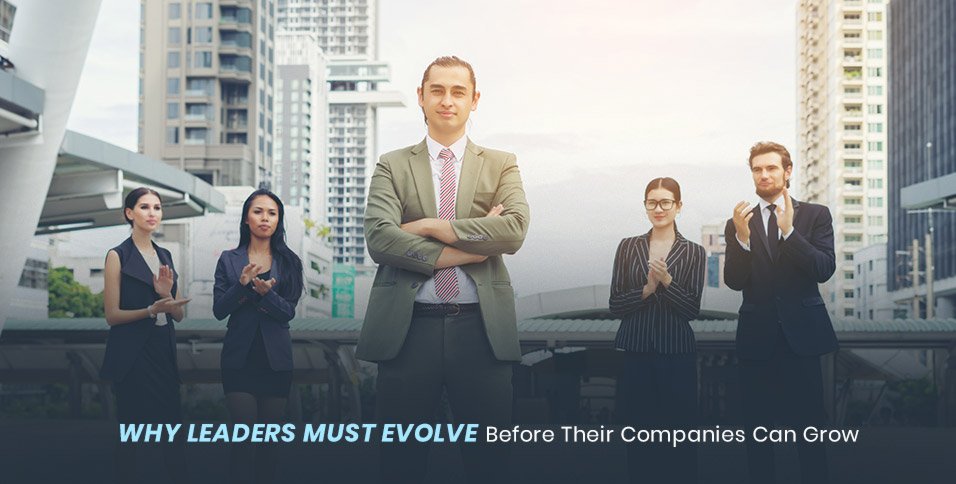
Companies rarely outgrow the quality of their leadership for long. A business may have a strong product, a clear market opportunity and a capable team, but growth eventually exposes how the organisation is being led.
In the early stage, leadership often depends on speed, instinct and direct involvement. The founder or senior leader knows the customers, understands the problems and can make decisions quickly because they are close to almost everything. That style can create momentum.
As the company grows, the same leadership style can begin to create pressure. More people need direction. More decisions need consistency. More managers need trust. More customers expect reliability. The leader can no longer rely only on personal energy, urgency or control.
This is where growth becomes more than a commercial challenge. It becomes a leadership challenge. The company may need better systems, stronger hiring and clearer processes, but it also needs a leader who is willing to change how they think, decide, communicate and respond under pressure.
Business growth often asks a leader to give up the version of themselves that made the first stage possible. That can feel like losing control, status or identity. If the leader does not evolve, the company may eventually start to organise itself around their limits.
Growth Changes What Leadership Requires
A small company often rewards closeness. The leader can speak to every important customer, check every detail, approve every decision and personally correct many mistakes. That level of involvement may be necessary when the business is young and fragile.
At five people, speed can matter more than structure. Everyone knows what is happening. Communication is informal. The founder can explain priorities in a single conversation. If something goes wrong, it can often be fixed quickly because the business is still simple enough to absorb it.
At fifty people, the same approach becomes harder. The leader cannot be in every conversation. Informal communication starts to break down. Decisions made quickly in one part of the business can create confusion somewhere else. People begin to need standards, not just access to the founder.
At five hundred people, leadership changes again. Culture, decision-making, communication, management quality and accountability all carry more weight. The leader’s role is no longer only to solve problems. It is to build the conditions in which other people can solve the right problems without waiting for permission.
That shift can be difficult because it often happens while the business is still moving quickly. The leader may be trying to protect revenue, serve customers, hire people, manage risk and keep the original energy alive. There is rarely a quiet moment when the company announces that a new leadership style is now required.
Yet the requirement changes anyway. Growth asks the leader to move from personal control to organisational clarity. It asks for stronger communication, clearer delegation, honest feedback and consistent standards. The leader who keeps trying to lead the larger company as if it were still a small team may eventually become the constraint they are trying to remove.
The Style That Built the First Stage Can Limit the Next One
The qualities that help a leader build the first stage of a company can become limiting at the next stage. Those qualities were not wrong. They were suited to a different version of the business.
A founder who was highly involved in every detail may have protected quality in the beginning. Later, that same involvement can slow decisions, weaken managers and teach the team to wait for approval. A leader who was always the expert may have created trust early on. Later, that identity can make it harder to develop other experts inside the organisation.
Speed can turn into impatience. High standards can become micromanagement. Strong conviction can become resistance to feedback. Personal ownership can become a refusal to let others carry responsibility. What once looked like commitment can start to look like control.
This is one of the most uncomfortable parts of leadership growth. The leader may not be failing because they lack effort. They may be working harder than ever. The issue is that effort is being applied through a style the company has started to outgrow.
Teams often feel this before leaders fully see it. They notice when decisions keep returning to one person. They notice when managers have titles but not real authority. They notice when feedback is welcomed in theory but punished in practice. They notice when the leader says they want growth but still behaves as if trust must be earned through constant oversight.
The next stage usually requires a different question. Instead of asking, “How do I stay close to everything?” the leader has to ask, “What must be clear enough that the business can move without me controlling every part of it?”
That is not a small adjustment. It is a change in leadership identity.
How a Growth Mindset Changes Leadership
Understanding how a growth mindset changes leadership helps explain why effective leaders do not only ask their companies to adapt. They also examine the assumptions, habits and reactions that shape how they lead.
In a leadership context, a fixed mindset does not always look like fear of learning. It can look like attachment to being right, being needed or being seen as the person with the answer. It can show up when a leader becomes defensive around feedback, avoids situations where they are no longer the expert or protects old methods because those methods once created success.
A growth mindset changes the leader’s relationship with discomfort. Feedback becomes information rather than a personal threat. Delegation becomes a way to develop capacity rather than a loss of control. Mistakes become signals to improve the system rather than proof that the leader should take everything back.
This matters because growing companies create new problems. The leader will face situations they have not handled before: larger teams, more complex finances, stronger competition, senior hiring, culture issues, operational bottlenecks and decisions with longer consequences. A leader who needs to feel fully prepared before evolving will usually move too slowly.
Leadership growth requires a willingness to be less attached to the old version of competence. At one stage, competence may mean knowing the answer. At another stage, it may mean asking better questions, building better people and creating clearer decision rules.
The leader’s mindset shapes whether growth feels like a threat to their authority or an invitation to expand their capacity. When leaders can learn without defending the past, the company has more room to mature.
Feedback Becomes More Important as the Organisation Grows
As an organisation grows, feedback becomes more important and more uncomfortable. In a small company, the leader can often sense what is happening through direct contact. They hear customer complaints, see delivery problems and notice team tension quickly because they are close to the work.
In a larger organisation, the leader is further away from the daily reality. Information travels through managers, meetings, reports and informal conversations. By the time a problem reaches the top, it may already have been filtered, softened or delayed.
That makes feedback essential. A growing company needs leaders who can hear what is true, not only what is pleasant, polished or politically safe. The higher a leader rises, the easier it becomes for people to tell them what they think they want to hear. Without deliberate feedback channels, the leader can start making decisions from a version of reality that no longer exists.
This is where mindset matters. A leader with a fixed view of their own competence may experience feedback as an attack. They may listen defensively, explain too quickly or look for reasons the feedback is incomplete. A leader with a growth mindset is more likely to treat feedback as information about the system they are responsible for improving.
That distinction changes the quality of leadership. Feedback is no longer only a comment on the leader’s personality or performance. It becomes a signal about communication, culture, process, trust, hiring, management or execution. The leader can still decide what to accept, reject or investigate further, but they do not have to protect themselves from every uncomfortable message.
The larger the organisation becomes, the more dangerous it is for feedback to depend on courage alone. People need to know that raising a problem will not be punished, ignored or turned into a political risk. Leaders create that expectation through their reactions. Every defensive response teaches the company what not to say next time.
Growth requires leaders who can make feedback safer, faster and more useful. That does not mean accepting every opinion as truth. It means staying open long enough to find the signal inside the discomfort.
Delegation Requires a Different View of Control
Delegation is often described as a time-management skill, but for many leaders it is really a control issue. A leader may say they want to delegate, yet still keep decisions, approvals and final judgement close to themselves. They may trust people with tasks, but not with ownership.
That approach can work for a while. It allows the leader to protect quality and maintain speed when the business is still small. But as the organisation grows, the same behaviour creates bottlenecks. Good people become dependent. Managers wait for permission. Decisions slow down. The leader becomes tired, frustrated and strangely convinced that no one else can carry enough responsibility.
The problem is not always the capability of the team. Sometimes the team has never been given the space to become capable. If the leader steps in too early, corrects too often or takes back authority at the first mistake, people learn to follow rather than lead.
A growth mindset changes how delegation is understood. Delegation is not only a way to remove tasks from the leader’s calendar. It is a way to build judgement, ownership and confidence across the organisation. That requires a leader to tolerate a period where other people may do things differently, more slowly or less elegantly than they would.
This can be difficult for high-performing leaders because they often built the company through personal standards. They know what good looks like and can see mistakes quickly. Holding on may feel responsible, but if the leader remains the only person allowed to define quality, the company cannot develop enough independent strength.
Delegation does not mean abandoning control. It means changing the form of control. Instead of controlling every action, the leader defines outcomes, standards, boundaries and decision rights. They create clarity so that other people can move with confidence.
That shift is one of the clearest signs of leadership evolution. The leader is no longer proving value by being involved in everything. They are proving value by building an organisation that can perform without constant personal intervention.
Leaders Grow by Rebuilding Their Role
Leadership growth often requires rebuilding the role itself. The leader may have to move from operator to architect, from problem-solver to standard-setter, from expert to developer of other experts.
This is not always obvious from the inside. Many leaders keep carrying work that once made sense because it still feels familiar and important. They stay involved in details that should now belong to managers. They answer questions that should be resolved by process. They make decisions that should be guided by principles already agreed across the business.
The leader may be busy every day and still not be leading at the right level. Activity can hide a role that has not evolved. If the leader spends most of their time rescuing, approving, correcting and reacting, the company may be relying on personal effort instead of organisational strength.
Rebuilding the role means asking harder questions. What should no longer depend on the leader? Which decisions need clearer ownership? Which standards need to be written, taught and reinforced? Which people need development rather than instructions? Which problems keep returning because the system has not been redesigned?
These questions move leadership away from constant reaction. They force the leader to think about leverage. The goal is not to become distant or detached. It is to spend more time shaping the conditions that allow the organisation to work properly.
At a certain stage, the leader’s highest value may no longer come from being the best individual contributor in the room. It may come from building the room itself: choosing the right people, setting the right expectations, creating the right rhythm and making sure the business can keep improving without waiting for the leader to personally push every part forward.
That can feel like a loss of identity for leaders who are used to being central. But it is also the path to a stronger company. The business grows when the leader stops needing to be the answer to every problem and starts building the structure that helps the right answers emerge.
The Company Can Only Outgrow the Leader if the Leader Keeps Learning
A company can only grow beyond its current limits if its leadership keeps learning. Markets change, teams expand, customers become more demanding and operational complexity increases. The leader who stops learning eventually becomes the ceiling.
This does not mean every leader must reinvent themselves constantly for the sake of novelty. It means they must stay honest about what the business now requires. A style that once created speed may now create confusion. A habit that once protected quality may now slow the team. A belief that once gave the leader confidence may now make feedback harder to hear.
Growth mindset in leadership is not positive thinking. It is the willingness to examine how one’s own habits, assumptions and reactions affect the company. It is the discipline to learn from feedback, adjust behaviour, develop others and rebuild the role before the business is forced to suffer the consequences of old leadership patterns.
The best leaders do not treat growth as something that only happens to revenue, headcount or market share. They understand that growth also has to happen inside leadership itself. The organisation changes, so the leader must keep changing with it.
When that happens, the company has more room to mature. People can take more ownership. Decisions can move closer to the work. Feedback can travel more honestly. Standards can become clearer. The leader no longer has to be the centre of every solution.
That is when leadership starts to scale: when the leader stops working harder at the old level and learns to lead from the level the company now needs.