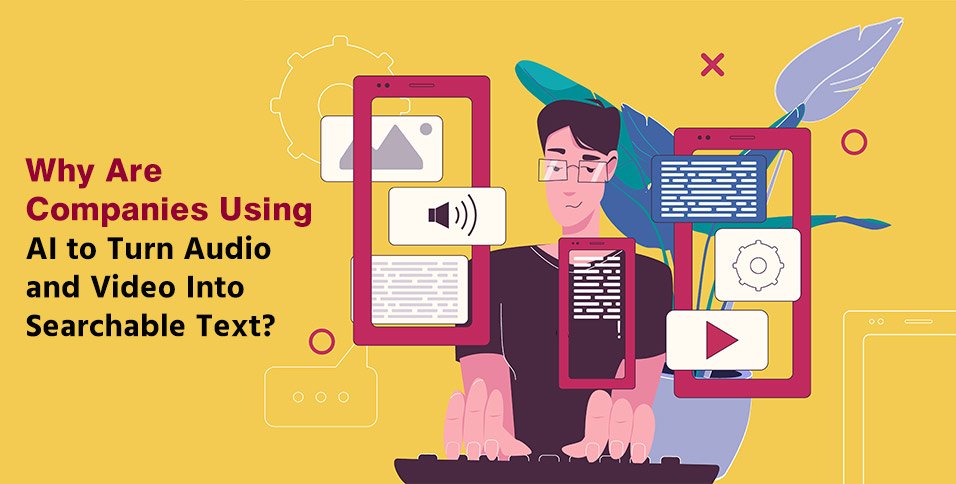
AI transcription tools convert spoken audio and video—including meetings, webinars, and podcasts—into accurate, searchable text. Businesses use this technology to improve productivity, streamline content workflows, and unlock knowledge from media files. Free tools like Soundwise AI now make MP4 to text free conversion accessible to organizations of any size.
Audio and video content now drives a significant share of business communication. Meetings happen on Zoom and Microsoft Teams. Webinars replace in-person training. Podcasts carry brand authority. Yet most of what’s said in these formats disappears the moment a recording ends—unsearchable, unindexed, and largely inaccessible.
That’s changing fast. AI transcription software is giving businesses a practical way to convert spoken content into structured, usable text—without the cost or delays of manual transcription. For organizations exploring MP4 to text free solutions, the technology is now powerful enough to handle real-world demands with speed and accuracy.
This post explains how AI transcription works, why businesses are adopting it, and where platforms like Soundwise AI fit into modern workflows.
Why Are Businesses Generating More Audio and Video Content Than Ever?
The numbers tell a clear story. According to SellersCommerce (2025), video content accounts for 82% of all internet traffic. Companies are producing more recordings than at any point in history—and the formats vary widely.
Internal meetings are recorded for team members across time zones. Training programs are delivered as video modules rather than printed manuals. Podcasts have become a standard marketing channel for thought leadership. Webinars generate hours of product education that often goes unused after the live session ends.
This surge in audio and video isn’t slowing down. According to Persistence Market Research, the global business transcription market is projected to grow from $3.4 billion in 2026 to $8.6 billion by 2033—a compound annual growth rate of 14.2%. The meeting transcription segment alone is forecast to grow from $3.86 billion in 2025 to $29.45 billion by 2034.
The implication is straightforward: as more business activity moves into spoken formats, the need to convert that content into text grows with it.
How Does AI Transcription Technology Actually Work?
AI transcription combines three core technologies: automatic speech recognition (ASR), natural language processing (NLP), and machine learning.
ASR converts spoken audio into raw text by identifying phonetic patterns in the audio signal. NLP then interprets context, sentence structure, and meaning—helping the system distinguish between similar-sounding words and apply correct punctuation. Machine learning allows the model to improve over time, adapting to different accents, speaking speeds, and domain-specific vocabulary.
The result is a system that can process an hour-long recording and return a structured transcript in minutes. Modern AI transcription tools also handle background noise, overlapping speakers, and multiple languages—capabilities that would take a human transcriptionist considerably longer to manage.
MP4 to Text Free Solutions: Why Businesses Are Taking Notice
For many organizations, the barrier to transcription has historically been cost and complexity. Professional transcription services charge per minute of audio. Enterprise software often requires contracts and IT integration. These factors kept smaller teams and startups from building transcription into their regular workflows.
MP4 to text free tools remove that friction entirely. By offering browser-based, no-registration access to AI transcription, these platforms allow any team member to convert a video file into usable text within minutes—no procurement process required.
The business case extends well beyond cost savings. When audio-to-text conversion is accessible and immediate, it changes how teams document decisions, share knowledge, and build content. A recorded client call becomes a summary document. A leadership town hall becomes a searchable archive. A product demo becomes the source material for a blog post.
Accessibility is another factor worth highlighting. Text transcripts make audio and video content available to employees or customers with hearing impairments, meeting both ethical standards and legal compliance requirements in many jurisdictions.
What Are the Key Business Benefits of Converting Audio and Video Into Text?
Transcription delivers value across multiple areas of a business:
Searchability and knowledge retrieval. Text can be indexed and searched; audio cannot. When meetings and presentations are transcribed, the information inside them becomes part of a searchable knowledge base rather than a buried recording.
Documentation and compliance. Regulated industries—finance, healthcare, legal—often require accurate records of conversations. AI transcription tools produce audit-ready documentation faster and more consistently than manual methods.
Collaboration across teams and time zones. Written transcripts allow colleagues who missed a meeting to review what was discussed without watching an entire video recording. This improves alignment and reduces the need for follow-up meetings.
Content repurposing. According to Shno.co (2025), systematic content repurposing boosts content reach by up to 300%. A single webinar transcript can generate a blog post, a LinkedIn article, a newsletter section, and social media snippets—multiplying the return on a single piece of content.
How Does AI Transcription Support Content Marketing and Knowledge Management?
For content marketers, transcription creates a repeatable production system. Spoken content—interviews, podcast episodes, expert commentary—contains genuinely original insights that resonate with audiences. Converting that content into text makes it accessible to a much wider audience and gives it a longer shelf life.
From a digital knowledge management perspective, transcribed content feeds directly into internal documentation systems, onboarding materials, and training libraries. Organizations using AI workflow solutions to transcribe and catalog content tend to build institutional knowledge that survives staff turnover and scales with growth.
Transcription also has direct SEO implications. Search engines cannot crawl audio or video—but they can crawl text. Publishing transcripts alongside recordings increases the volume of indexed content and creates opportunities to capture long-tail search queries.
How Do Soundwise AI Products Fit Into Modern Business Workflows?
Soundwise AI is a free-forever AI audio and video transcription platform designed for accessibility and ease of use. It supports over 90 languages, claims a 99.8% transcription accuracy rate, and requires no account registration for standard use. The platform processes files directly in the browser, supporting common formats including MP3, WAV, MP4, MOV, M4A, FLAC, AAC, and MKV.
For businesses looking to integrate video transcription tools without committing to enterprise software, Soundwise AI offers a practical starting point.
The basic workflow is simple:
- Upload your audio or video file directly in the browser—no account needed for free use
- Generate transcription using Soundwise AI’s AI-powered speech recognition engine
- Review and edit the output for accuracy, speaker labels, or domain-specific terminology
- Export or repurpose the transcript for documentation, content marketing, compliance records, or internal knowledge bases
For teams that need faster processing or cloud storage, Soundwise AI’s Pro plan offers 10x faster transcription speed and cloud sync capabilities.
What Should Businesses Look for When Choosing an AI Transcription Platform?
With a growing number of tools available, the right choice depends on specific workflow requirements. Here are the most important factors to evaluate:
Accuracy. Transcription accuracy varies significantly across tools and use cases. Look for platforms that publish accuracy benchmarks and test them against your specific audio conditions—background noise, accents, and technical vocabulary all affect results.
Language support. If your organization operates across multiple regions, multilingual support is essential. Soundwise AI supports 90+ languages, which covers most enterprise use cases.
Security and privacy. For sensitive business conversations, understand how the platform handles data. Browser-based tools that process files locally offer stronger privacy guarantees than cloud-dependent services.
Scalability. A tool that works for a single user may not suit a team of 50. Evaluate whether the platform can handle your volume of recordings without degrading speed or accuracy.
Ease of use. Adoption rates drop sharply when tools require technical setup. Browser-based platforms with drag-and-drop interfaces tend to see faster uptake across non-technical teams.
Integration capabilities. The most productive transcription workflows connect directly with the tools teams already use—document editors, project management platforms, or content management systems.
AI Transcription Is No Longer Optional for Competitive Businesses
Spoken content carries enormous business value—in client meetings, team discussions, training sessions, and marketing recordings. Without transcription, that value largely stays locked inside media files that few people will ever revisit.
AI transcription software closes that gap. By converting audio and video into accurate, searchable, and reusable text, businesses can recover knowledge, accelerate content production, and build more resilient documentation practices. Free MP4 to text free tools like Soundwise AI make this capability available without upfront investment—lowering the barrier for teams ready to start.
The organizations that treat transcription as a core workflow—not an afterthought—will be better positioned to manage knowledge, scale content, and stay competitive as AI-powered workflows become standard practice.