
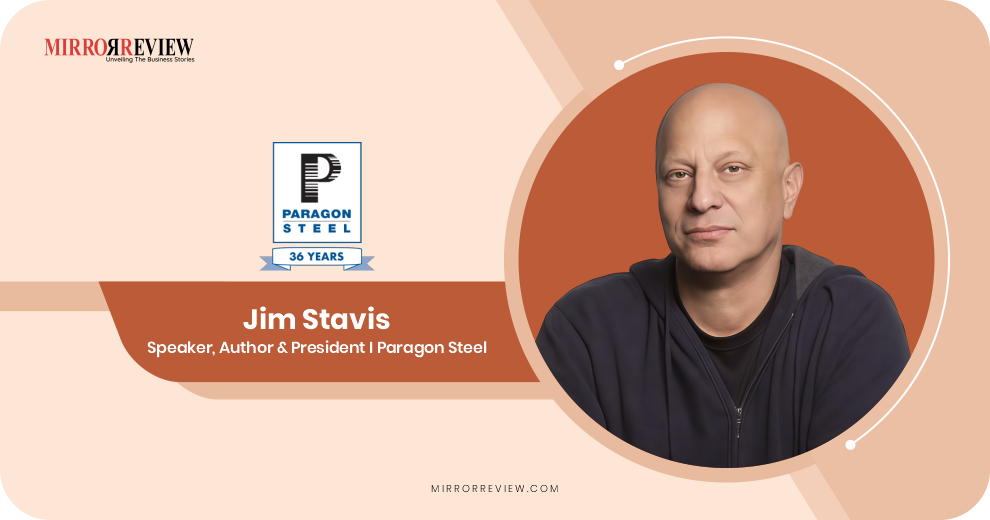
There is a particular kind of reckoning that arrives without warning, casting a shadow where everything that once felt certain becomes negotiable. For Jim, that reckoning came at seventeen years old, the age when most young men are weighing their futures with a kind of easy confidence. His future was handed to him differently.
It was 1971. The diagnosis was juvenile type 1 diabetes, and at the time, the medical outlook for diabetics bore very little resemblance to what modern treatment offers today. He was told he would most likely suffer kidney failure, heart disease, blindness, and possible limb amputations. He was told he would be lucky to live past fifty.
What the doctors did not account for was the way Jim would choose to receive that information. He decided, in the quiet and deliberate way that would come to define his character, that adversity was a beginning. It was something to be met with hope, endurance, and a refusal to treat defeat as inevitable.
He also carried a steady internal belief from those early years: medical science would eventually have an answer for him. All he needed to do was live long enough to reach it. He simply resolved to keep going until that moment arrived.
Building Something That Lasts
Before Jim Stavis built Paragon Steel, he forged a resilience tested early and tested hard. A devastating business fire early in his career took everything he had worked to create. He absorbed the loss and channeled it directly into his next venture.
In 1988, he co-founded Paragon Steel in Commerce, California. Now in its thirty-eighth year of operation, the company has become a trusted, dependable source of steel, aluminum, and stainless products for customers across Southern California. The team calls its standard of service the ‘Paragon Promise’, a tangible commitment to quality and reliability in everything the company does.
During an outdoor ropes course years later, Jim climbed a telephone pole alongside his closest friend, a man who had known him since the first week of junior high school. From the top, Jim called down: “I’ve never seen colors like this. This is the most beautiful thing I’ve ever seen.” Moments later, he murmured that the colors were fading to black and white, and then he slumped. His friend descended quickly, caught Jim as he was lowered down, and found his breathing slow and shallow. After administering CPR, Jim came back to life. His friend would later reflect that something far bigger had intervened that day.
That moment was a quiet signal of what was building beneath the surface of a life that looked like one of steady professional accomplishment.
Then I’ll Be the First
As the years passed, Jim’s body began to reflect the prognosis he had been given at seventeen. He was on dialysis three days a week before the age of fifty, his heart severely distressed, his organs failing in the sequence his doctors had long anticipated.
Before he could be considered for a transplant, a hospital social worker asked him a question during a mental health evaluation: “What is your source of hope?” It was an inquiry that would eventually shape his advocacy and give his future documentary its name.
His cardiologist at Cedars-Sinai Medical Center in Los Angeles, Dr. Shah, presented a highly unconventional plan. Jim needed a new heart, a new kidney, and a new pancreas. The combined triple transplant was an extraordinarily rare procedure, one with virtually no documented precedent.
Statistically, only a narrow fraction of deaths result in a situation where the deceased medically qualifies to donate their organs, and the national waiting list stands at over 120,000 people. The odds of receiving three matching organs were almost beyond calculation.
Jim looked Dr. Shah in the eye and said, “Then I’ll be the first.”
On November 3, 2005, Jim went into surgery. Twenty hours later, he had a new heart and a new kidney. A year later, in October 2006, he received a new pancreas. Of the three, he has described the pancreas as the most liberating. For thirty-five years, he had manually managed what a functioning pancreas does automatically, injecting insulin, monitoring blood sugar, and planning every meal with precision. When the new organ took hold, that entire dimension of his daily life simply lifted.
The Gift of a Stranger
Behind every transplant story, there is a quieter, more profound narrative. Jim’s donor was Brice, a dark-haired, athletic football kicker at Lompoc High School in California. On the evening of October 31, 2005, Brice had just kicked a 45-yard field goal and was already planning a record-breaking 55-yarder for the following week. He was full of the specific, restless energy of someone whose best years were mapped out brightly ahead of him. He was seventeen years old.
That evening, driving home from practice, Brice was involved in a fatal automobile accident. His family, navigating the sudden depth of their grief, made the decision to donate his organs so that others might live.
What happened in the hours after Jim’s surgery carries a detail that borders on the inexplicable. In the recovery room, slipping in and out of consciousness, Jim kept returning to the same distinct images: an accident involving three football players, and he kept insisting that one of them was a kicker. His family searched online and found the Lompoc accident. The details matched perfectly.
Jim understood immediately what it meant to receive the thoroughbred heart of a young athlete in peak physical condition. The physical transformation was sweeping and immediate.
Most transplant recipients never meet their donor’s family. Jim connected deeply with Brice’s relatives. During their first meeting, Brice’s mother, Dorine, placed her head on Jim’s chest to hear her son’s heartbeat. A photograph of Brice now hangs in Jim’s kitchen, serving as a daily reminder of the cost and the grace of his continued existence.
The families walk together each year in the Donate Life California 5K, and Jim rode on the 2016 Tournament of Roses Parade float sponsored by Donate Life, holding a photograph of Brice.
Jim frequently reflects on the heavy reality that someone needed to die in order for him to live. This weight keeps him honest, purposeful, and incapable of wasting the time he was given. The parallel is striking: Jim was seventeen when told his life would be cut short, and Brice was seventeen when his ended, giving Jim a second chance.
When Hope Is Your Only Option
Jim’s story naturally began to reach a wider audience through a monthly newsletter he wrote for Paragon Steel. Over twenty years, it has reached thousands of prospects and customers. As he shared his health journey in those pages, readers wrote back in remarkable numbers. People poured out stories of family members who had been donors and quiet confessions of their own grief and survival. That volume of vulnerable, profound response was a turning point. It made it undeniable that his experience carried a weight far beyond his own life, signaling that his survival was meant to be shared as a tool for others.
In 2014, he established himself as a national speaker, bringing his message of endurance and hope to audiences across the country. He is candid and deeply genuine on stage, connecting with people through the specific weight of his lived experience.
His book, ‘When Hope Is Your Only Option’, moves through the full arc of his life. First published in 2018 and recently reissued, it offers an honest look at fear and uncertainty. The core message is that hope is an active choice requiring thought, will, and a deliberate decision to move forward even when the path is obscured.
The Cause Behind the Survival
Jim’s advocacy with Donate Life and OneLegacy stems from a complete personal clarity about what organ donation means. He understands the staggering statistics of the national waiting list because they formed the precise conditions under which his own life was saved.
He channeled that understanding into his documentary, ‘Source of Hope’, which chronicles the medical journey of his triple transplant and the profound bond between the Stavis and Fabing families. It captures the ripple effect of one extraordinary act of generosity.
Registering as a donor requires nothing more than checking a box on a driver’s license application. As Brice’s family demonstrated, it is the definitive action that allows life to continue.
Bigger Than Just His Story
At seventy-one years old, Jim has far surpassed the dire predictions of his youth. He arrived at fifty on an operating table, received two organs from a seventeen-year-old athlete, and kept going with a resolute clarity of purpose.
His current focus revolves entirely around affecting change in people, using everything he has survived to help others face the hard moments in their own lives. The evidence of that purpose is visible everywhere: in thirty-eight years of leading Paragon Steel, in over a decade of public speaking, and in the enduring tribute of his book and documentary.
Somewhere in his chest, a heart that once belonged to a Lompoc kicker keeps beating through board meetings, advocacy walks, and quiet mornings.
He has said it himself, simply and without embellishment: “This has not really just been my journey. And that, to me, makes it bigger than just my story.”
It always was.
Quotes
Read more: Pioneers in Leadership and Inspirational Entrepreneurship to Watch in 2026


