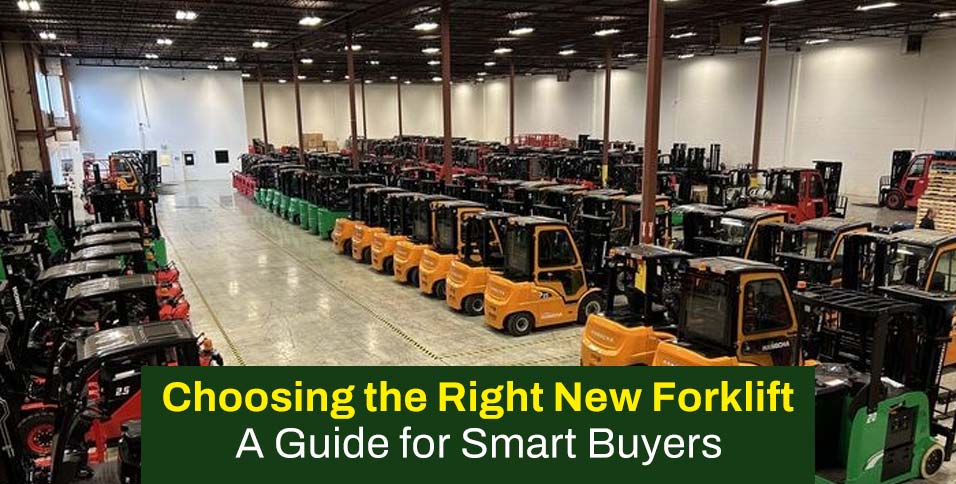
Investing in a new forklift is a major decision for businesses that rely on material handling every day. Whether you’re upgrading aging equipment, expanding operations, or equipping a new facility, selecting the right forklift can boost productivity, improve safety, and lower long-term operating costs.
With a wide range of models, specifications, and features available today, it’s easy to feel overwhelmed. This blog will walk you through the key considerations when exploring new forklifts for sale, helping you make an informed choice that aligns with your operational needs.
Understanding Forklift Types and Their Uses
Electric Forklifts
Electric forklifts are powered by batteries and are known for their quiet operation and zero local emissions. They are ideal for indoor use, especially in warehouses, distribution centres, and food-related facilities where air quality matters. These forklifts typically require less maintenance compared to internal combustion (IC) models, and they offer lower overall operating costs.
Internal Combustion Forklifts
Internal combustion forklifts run on diesel, LPG, or petrol and are often preferred for outdoor work or heavy-duty applications. They deliver strong performance on uneven surfaces and in rugged conditions. While they produce emissions, modern IC models are designed to comply with stricter environmental standards, and they remain a versatile choice for many industries.
Specialized Forklifts
Beyond the standard categories, specialized forklifts like high-reach trucks, pallet jacks, and narrow-aisle models serve specific functions. High-reach forklifts are perfect for accessing tall shelving in warehouses, while narrow-aisle models maximise space utilisation. Understanding your space constraints and workflow will help you determine if a specialised option is right for your operation.
Key Factors to Consider Before Buying
Load Capacity and Lift Height
One of the first decisions in selecting a forklift is determining your load capacity needs. Forklifts come with various load ratings, typically ranging from a few thousand kilograms to more than ten tonnes. Match the lift capacity to the heaviest loads your business routinely handles. Equally important is lift height — consider the vertical reach required in your facility, whether you’re stacking pallets or loading high racks.
Environment and Surface Conditions
The conditions where the forklift will operate should influence your choice. Smooth, level warehouse floors are well-suited for electric forklifts, while rough outdoor terrain may require more robust IC models with pneumatic tyres. Temperature extremes and moisture levels also affect performance — for example, electric models may need special battery considerations in colder environments.
Battery Life and Charging
For electric forklifts, battery life and charging infrastructure are critical. Evaluate how long a forklift can run on a single charge and whether your facility can support the necessary charging stations. Some businesses opt for additional batteries to allow continuous operation — one battery in use while another charges.
Operator Comfort and Safety Features
A comfortable operator is a productive operator. Modern forklifts offer ergonomic seats, intuitive controls, and excellent visibility. Safety features like automatic braking systems, stability controls, and advanced warning systems can significantly reduce workplace accidents. Investing in a model with robust safety features can protect your team and reduce liability.
Maintenance and After-Sales Support
Even new forklifts require regular maintenance. Look for brands and dealers that provide reliable after-sales support, including service plans, parts availability, and technician training. A good relationship with your supplier ensures minimal downtime and extends the life of your equipment.
Emerging Trends in Forklift Technology
Automation and Telematics
The forklift industry is embracing automation and telematics. Telematics systems collect data on forklift usage, performance, and maintenance needs, giving managers valuable insights to optimise operations. Automated guided vehicles (AGVs) and semi-autonomous forklifts are also gaining traction in warehouses seeking to streamline repetitive tasks and improve efficiency.
Eco-Friendly Innovations
With sustainability becoming a priority across industries, manufacturers are innovating with electric and hybrid models that reduce emissions and energy consumption. Some electric forklifts now feature fast-charging capabilities and enhanced battery technologies that extend operating time.
Conclusion
Selecting a new forklift is a strategic investment that influences efficiency, safety, and cost management. By understanding the different types of forklifts, assessing your operational needs, and considering key factors like capacity, environment, and support services, you can choose a model that enhances your workflow and supports business growth.
Whether you prioritise sustainability with electric models or require rugged performance from an IC forklift, today’s market offers options that meet a variety of demands. Careful planning and informed decision-making will ensure your new forklift serves your business well for years to come.