Water systems rarely fail at a convenient time. Demand spikes, pumps go down, and repairs drag on longer than planned. For councils and operators, storage acts as a practical buffer that keeps service steady.
This article explains why many public and commercial sites choose bolted tank solutions. You will see the drivers, the build approach, the standards buyers tend to specify, and the questions that shape long-term value.
Why Councils, Plants, and Estates Keep Adding Storage
Most projects start with a simple pressure point. A growing housing estate pushes peak demand past the comfortable margin. A plant adds a new process line and needs dependable make-up water. A council faces more frequent service interruptions and tighter resilience targets.
Storage reduces operational stress because it decouples supply from demand. A site can refill during off-peak hours, then draw down during peaks. If a main breaks, the stored volume buys time. If a pump station trips, the buffer helps maintain pressure and availability. In many cases, the fastest path to resilience starts with water storage tanks sized for real operating peaks.
Common triggers that bring a tank project to the top of the list include:
- Peak demand that outgrows existing mains or pump capacity
- Fire reserve requirements for public assets and commercial sites
- Process continuity needs that cannot tolerate downtime
- Growth plans that add buildings, residents, or production volume
- Risk reduction for drought restrictions and planned maintenance windows
What Makes Bolted Tanks Popular
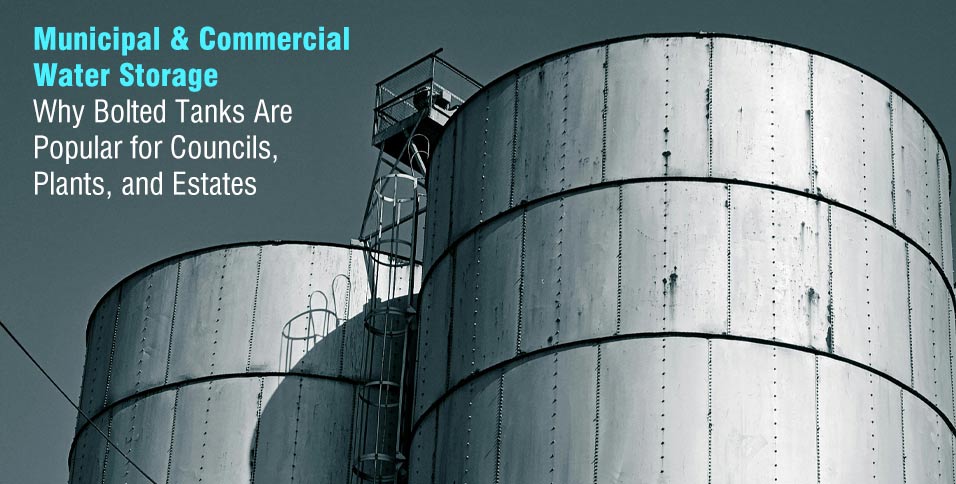
Bolted steel water tanks arrive as factory-made panels and are assembled on site. That format reduces field fabrication and lowers exposure to site constraints. Crews follow a defined sequence, tighten bolts to specified patterns, and verify alignment as the shell rises.
Panelised delivery can solve practical problems. Remote sites may have limited crane access. Urban builds may have restricted staging space. A panelised bolted steel tank spreads the load across smaller shipments and manageable lifts. It can also simplify repairs later, since crews can address specific components without major structural work.
Reasons decision-makers often favor bolted systems include:
- Shorter construction windows in locations with limited access
- Predictable build steps with fewer field variables
- Easier logistics for remote, tight, or phased sites
- Capacity planning that supports staged expansion
- Serviceability when components need replacement or upgrades
Standards and Water Quality Expectations
Municipal and commercial buyers tend to specify recognized benchmarks for design and quality control. That approach keeps approvals smoother and reduces surprises at commissioning. Many specs reference AWWA D103 bolted steel tanks for baseline requirements around design, construction, inspection, and testing.
Potable projects add another layer. Coatings, liners, and wetted components often need to align with NSF/ANSI 61 expectations in the specification set. Owners use these requirements to reduce risk and to document compliance during handover. That documentation matters for councils, estate operators, and plants that must satisfy internal audit standards.
What buyers often ask to see in writing:
- Design basis tied to site wind, seismic, and temperature conditions
- QA steps for coating application and inspection criteria
- Commissioning tests and acceptance thresholds
- Materials compatibility for potable and process applications
- Clear responsibility for as-built documentation and O&M guidance
Typical Municipal and Commercial Use Cases
Different sites use storage for different reasons. The core tank may look similar, yet the success criteria change. Hygiene and compliance lead in potable work. Uptime and corrosion resistance drive industrial decisions. Footprint and site integration shape estate projects.
Councils and Utilities
Councils often deploy storage to stabilize distribution and protect service during repairs. A potable water storage tank supports pressure management and reduces customer impact during interruptions. Hygiene details matter here, along with access controls and clean commissioning procedures.
Plants and Industrial Sites
Plants use storage to keep processes running through supply variability. An industrial water storage tank can serve washdown, make-up water, or equalization needs. Reliability and corrosion resistance carry weight, since downtime hits production and maintenance budgets.
Estates, Campuses, and Commercial Properties
Large estates and campuses value resilience for domestic supply and life safety. A fire protection water storage tank may run alongside domestic storage, depending on local requirements and risk planning. Here, owners often care about footprint, visual impact, and service access that does not disrupt occupants.
Common add-ons that influence daily operations:
- Level monitoring tied to site controls and alarms
- Overflows and drain routing that protect property and foundations
- Safe access platforms, ladders, and fall protection points
- Mixing or circulation where water quality control needs it
- Maintenance-friendly manways and inspection access
Ownership Lifecycle: Procurement Questions, Accountability, and Maintenance Planning
A tank delivers value over decades, not just at handover. Buyers get better outcomes when they align procurement, installation oversight, and inspection planning from the start. This is where many projects win or lose long-term reliability.
A short set of procurement questions helps keep the scope grounded:
- What is the guaranteed usable capacity across the operating level range?
- What site loads drive the design, including wind and seismic conditions?
- What coating system applies, and how will commissioning verify it?
- What inspection rhythm fits the stored water type and duty cycle?
- How will parts availability and service access work in year ten and beyond?
Installation accountability also matters. Clear roles help. One party should own field quality checks, torque verification, and commissioning documentation. Another party should own civil coordination and site readiness. When those responsibilities blur, small issues can linger until they become failures.
Maintenance planning does not need to feel heavy. A practical rhythm works well. Schedule external walk-arounds, check bolts and seams, review roof penetrations and vents, and watch for settlement indicators. Tie the internal inspections to the stored water type and site risk. In larger municipal and commercial programs, operators sometimes work with firms like Tarsco Bolted Tanks when they want continuity across supply, installation support, and long-term service planning.
Bolted solutions stay popular for a simple reason. They fit the realities councils and operators face: constrained sites, tight schedules, and high expectations after handover. If you size the tank to real demand, specify clear standards, and plan inspection routines early, storage becomes a stabilizer, not a recurring problem.