
The thing about bleeding is that it is the most urgent clock in the world. In the sterile quiet of a surgical theater or the chaotic dust of a roadside accident, the escape of blood from the body is a countdown that drowns out every other concern. It is a problem as old as biology itself. For centuries, we have tried to stop it with pressure, with cauterization, with gauze, and with hope. But in a small office in Cleveland, Georgia, a town better known for its mountain views than its medical breakthroughs, Steve Lazar is working on a solution that feels less like medicine and more like magic. He is holding a compound that can turn into a solid barrier the moment it touches a wound. A substance derived from the humblest of origins to solve the most violent of problems.
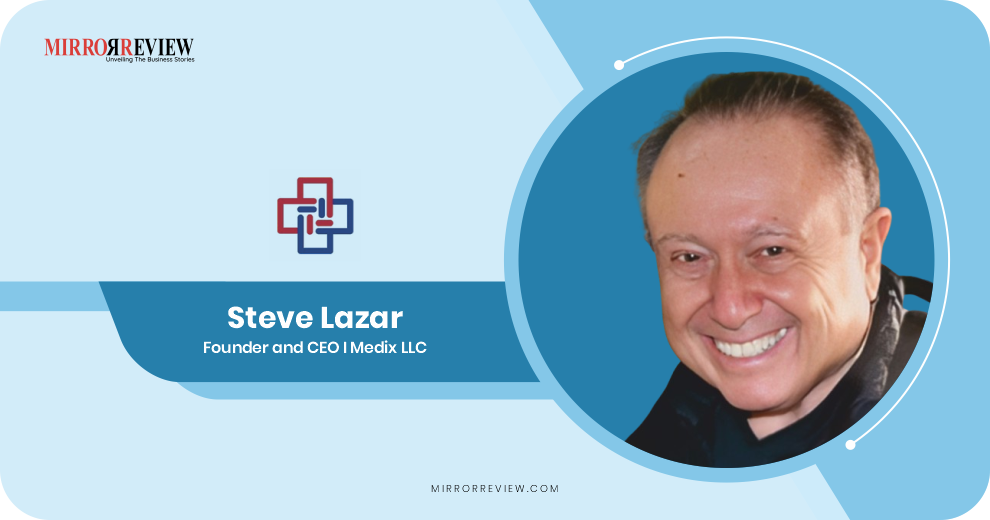
Steve Lazar is the Founder and CEO of Medix LLC, a biotechnology company that sits quietly at the vanguard of hemorrhage control. He is not a doctor. He is not a chemist. In fact, if you ask him about his college days, he will tell you with a self-deprecating chuckle that an understanding of chemistry “eluded” him, forcing a change in his career trajectory. Yet, here he is, steering a ship that relies on advanced polymer science, bringing a product called ProClot to a market that is desperate for it. He is a man who has spent forty years as an entrepreneur, a career that is less a straight line and more a series of navigations through the unpredictable waters of business. Now, in what might be the defining chapter of his life, he has found his mission not in a boardroom strategy, but in the molecular structure of a shrimp shell.
The Echo of a Mother’s Story
To understand why a man would dedicate the latter stages of his career to the gruesome reality of trauma wounds, you have to go back to the beginning. You have to go back to the stories. Steve grew up in a house where the boundaries of medical possibility were being pushed every day. His mother worked alongside the early pioneers in cardiology, the giants who were figuring out how to fix a broken heart before the world even fully understood how it worked.
She would come home and tell him stories of their work. These were not dry clinical recitations; they were tales of adventure, of high stakes, of the profound difference a single innovation could make between life and death. These stories planted a seed in young Steve. They gave him a reverence for the medical frontier. He wanted to be a part of that world. He wanted to pursue a career in medicine, to stand in the gap between patient and mortality.
But life, as it often does, had other plans. The chemistry classes in college became a wall he couldn’t climb, and so he pivoted. Steve entered the world of business. For four decades, he built companies, managed teams, and navigated the complexities of the market. He honed a different set of skills: the ability to spot an opportunity, the resilience to weather economic storms, and the leadership required to guide a vision from a napkin sketch to a bottom line. He became a master of the “how” of business, even if the “what” was constantly changing.
Then, a few years ago, the “what” changed for the last time. He learned about chitosan.
The Miracle in the Shell
Chitosan is a fascinating compound. It is derived from chitin, the structural element in the exoskeletons of crustaceans like shrimp and crabs. It is abundant, it is renewable, and it has a singular, almost miraculous property: it is positively charged. Human blood cells are negatively charged. When the two meet, they cling to each other with an elemental force, forming a clot that is robust and immediate.
Steve, with his entrepreneur’s eye, saw something in this compound that others had missed. He saw an opportunity. But he didn’t just see a product; he saw a way to finally fulfill that childhood ambition instilled by his mother’s stories. He saw a way to heal. “I recognized the opportunity,” he says simply. “This put me on the path I am on today. To develop the full potential of this amazing compound.”
The result is ProClot. Unlike other powders or gauze products which must be removed from the wound, often painfully and more often removing the clot causing more blood loss.ProClot is a true hydrogel. It is an innovative solution. Apply it to the wound, apply pressure and secure it in place. It extends the “golden hour” while you seek medical attention. People die after reaching a medical facility from the complications of blood loss. ProClot is biodegradable and biocompatible. It does not enter the bloodstream or have to be removed from the wound. ProClot works on people taking blood thinners and people with bleeding disorders and does Not affect people with shellfish allergies.
Steve talks about this technology not with the jargon of a scientist, but with the awe of a convert. He explains that they changed the company name from Medix ProClot to simply Medix because the vision has outgrown a single function. “We are much more than hemostasis,” he insists. He sees a future where this technology isn’t just stopping bleeding in trauma centers, but is treating chronic wounds, delivering drugs, and changing the standard of care across the board.
The Toddler Steps
Running a biotech company in a highly regulated environment is a grueling endeavor. It is a world of FDA submissions, safety trials, and the constant, grinding pressure of fundraising. When asked about his milestones, about the gold stars on his chart, Steve offers a metaphor that is both humble and revealing.
“I don’t consider what we are doing as having milestones any more than a toddler learning to walk,” he says.
It is a striking image. A toddler does not consider a single step a victory; the victory is the walking itself. The victory is the movement. Steve refuses to pat himself on the back for the intermediary steps. “Maybe the first step, forming Medix, was a milestone,” he concedes. “But until you win a gold medal or bring your product to market, I personally don’t think of the intermediary steps as ‘milestones.’ I could be wrong, maybe it’s a character flaw.”
This refusal to celebrate early is a hallmark of his leadership. It is born from forty years of seeing things go right and seeing things go wrong. He knows that in business, as in trauma, the situation can change in a heartbeat. He protects his team with this realism. He describes his primary responsibility as balancing strategic leadership with the relentless need for resources. “I am fortunate to have a very good fund-raising team that allows me to focus on innovation,” Steve says. He acts as a shield for his scientists and developers, absorbing the pressure of the market so they can focus on the pressure of the hydrogel.
The Weight of Responsibility
The shift from being a solo entrepreneur to leading a team of dedicated professionals has weighed on Steve in the best possible way. “The present is the most challenging time I have faced,” he admits. In the early years, when it was just him, a mistake was a personal tuition fee. He could absorb the cost, learn the lesson, and move on.
“Now I have a team,” he says. “I have more responsibility to the team and the company.”
The stakes are higher. The livelihoods of his people, and the potential lives saved by his product, rest on his decisions. His philosophy for dealing with this pressure is brutally simple: “Don’t make the same mistakes and work harder.” It is the mantra of a man who does not believe in shortcuts. He respects his team deeply, looking for individuals who are not just skilled, but who are unafraid to speak their minds. “Through discussion we find ideas,” Steve says, “ideas lead to innovation.”
Steve navigates the delicate balance of innovation and safety with a similar pragmatism. He is grateful that chitosan is naturally safe, which removes one major hurdle, but he remains wary of the regulatory labyrinth. He expresses a quiet hope that the post-COVID world might see a shift in how agencies operate, a move toward a “common sense” approach that prioritizes getting safe, effective treatments to the people who need them without unnecessary delay.
The View from Cleveland
Cleveland, Georgia, is a long way from the biotech hubs of Boston or San Francisco. But in a way, it is the perfect setting for Medix. It is a place that values substance over flash, a place where the work speaks louder than the hype. Steve fits in here. He is a man who enjoys the outdoors, who finds solace in fishing and art.
Currently, however, the fishing rod is gathering dust. “Currently there is no balance,” he says bluntly when asked about his work-life dynamic. “The scales are tilting heavily to work.” He does not say this with complaint, but with a sense of duty. He knows that he is in the middle of the sprint. He knows that the “toddler” is still finding its footing, and he cannot look away.
Steve’s vision for the future is not about a lucrative exit or a magazine cover. It is about completion. “God willing, I will be able to see chitosan fully developed,” he says. He wants to see Medix products on shelves, in ambulances, in soldier’s packs. He wants to know that when the clock starts ticking, on a bleed, his life’s work is there to stop it; essential 1st aid only works, if it is available.
A Universal Goal
Steve Lazar is a man of few pretensions. He does not claim to be a genius. He does not claim to have all the answers. He claims only to have recognized an opportunity and to have the stubbornness to see it through. He asks us to keep an open mind, to see things as they are, but to imagine what they could be.
“I believe our goals are universal,” Steve says. “Peace and health. If we can achieve that, everything else will follow.”
It is a simple philosophy from a complex man. He is the failed chemistry student who is revolutionizing wound care. He is the hardened businessman who is driven by his mother’s stories of healing. He is the leader who refuses to call a step a milestone until the journey is done. And in his hands, the humble shell of a shrimp is becoming a shield against the darkness, a way to buy time, to save a life, and to ensure that the clock, for one more patient, keeps on ticking.


