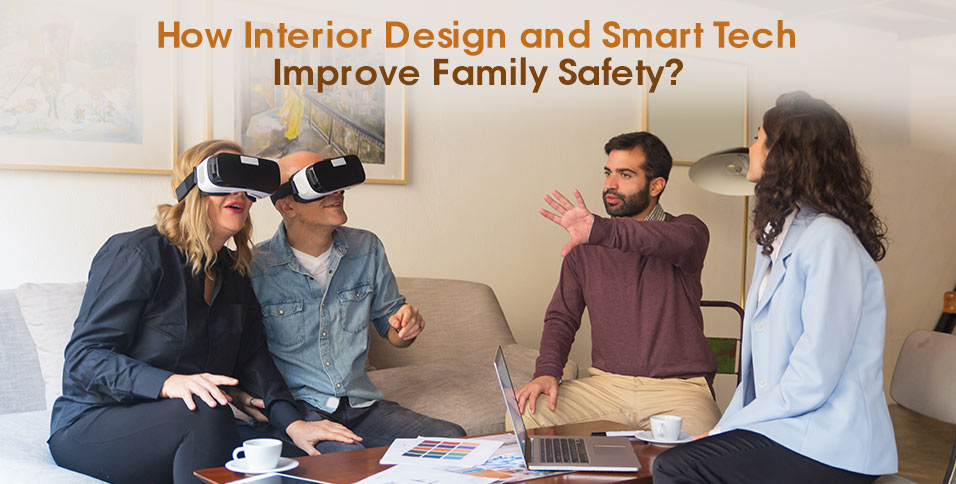
Modern family homes face a new kind of challenge: keeping children and pets safe in environments filled with movement, noise, and increasingly complex technology.
Safety today is no longer limited to locks and gates—it’s shaped by how spaces are designed and how smart technology quietly supports daily routines.
When interior design and smart tech work together, they reduce accidents, improve awareness, and lower stress for parents.
From slip-resistant flooring paired with motion lighting to air-quality sensors integrated into family living spaces, safety becomes proactive rather than reactive.
Four experts from safety training, home maintenance, parenting strategy, and smart technology share how thoughtful design and intelligent systems can meaningfully improve family safety—without turning homes into surveillance zones or sterile environments.
Designing Safety Through Awareness and Prevention
Mark McShane approaches home safety from a prevention-first mindset shaped by years of formal safety training. He explains that most household accidents don’t happen because families ignore safety—but because risks are built into layouts and daily habits.
According to McShane, interior design should guide behavior intuitively. Clear walkways, consistent flooring levels, and visible transitions between spaces reduce trips and falls, especially in homes where children and pets move unpredictably. Poorly placed furniture, uneven thresholds, and dark corners create hidden hazards that add unnecessary risk.
Smart technology enhances this awareness. Motion-activated lighting in hallways, staircases, and bathrooms ensures visibility at all hours, while smart sensors can alert parents when doors, gates, or restricted areas are opened unexpectedly.
McShane emphasizes that safety works best when it’s passive—when families don’t have to think about it constantly. Well-designed interiors paired with subtle smart alerts allow parents to stay informed without feeling overwhelmed.
Mark McShane – Founder, SSSTS Course
Hygiene, Air Quality, and Invisible Safety Risks
James Carter highlights a form of safety that often goes unnoticed: environmental health. In homes with children and pets, dust, allergens, bacteria, and chemical residues can quietly affect wellbeing long before visible problems appear.
From a design standpoint, Carter recommends surfaces that are easy to clean and resistant to moisture buildup. Seamless flooring, washable wall finishes, and proper ventilation reduce mold and bacterial growth—common triggers for respiratory issues in children.
Smart tech adds another layer of protection. Air-quality monitors, humidity sensors, and smart HVAC systems help families maintain healthier indoor environments. Parents can receive alerts when air quality drops or when filters need replacing, preventing issues before symptoms appear.
Carter also points out that smart vacuums and automated cleaning schedules reduce exposure to pet hair and allergens without increasing daily workload. In his view, safety isn’t just about preventing accidents—it’s about maintaining a clean, breathable, low-risk environment that supports long-term health.
James Carter – Founder, Dustbrook Cleaning
Supporting Safer Parenting Through Smarter Homes
Stephanie Edenburgh shares that smart technology has shifted home safety from constant supervision to quiet support.
She explains that smart tech makes home safety feel more hands-off for parents, which is exactly what many families need, especially during busy routines.
Motion sensors and automatic lighting in stairways and hallways help prevent nighttime tumbles while giving children and even grandparents more confidence moving around the home.
She adds that interior design plays an equally important role in reducing everyday risks. Rounded furniture edges, wider walkways, and thoughtful layouts minimize bumping, crowding, and frustration, while low storage solutions for toys and daily-use items help prevent climbing-related accidents. T
These design choices encourage independence without compromising safety.
Edenburgh also points out that connected security tools offer reassurance without creating anxiety.
Doorbell alerts and security cameras allow parents to monitor visitors without children answering the door, and smart locks provide peace of mind when parents are away or managing after-school chaos.
When technology and design work together seamlessly, she notes, they don’t just protect the household—they help parents breathe easier.
Stephanie Edenburgh – CEO, Bizzie Mom
Smart Tech as a Quiet Safety Partner
Daniel Mercer views smart technology as an invisible safety net woven into the home. When integrated thoughtfully, he explains, smart systems enhance safety without demanding constant interaction.
Mercer points to sensors that detect motion, temperature changes, or water leaks as examples of tech that prevents emergencies before they escalate. Smart plugs and appliance monitors can shut off devices left on accidentally, reducing fire risk in family homes.
Interior design plays a crucial role in making this technology effective. Devices need to be placed where they align with how families actually move and live. Poor placement—such as sensors blocked by furniture or cameras positioned in an awkward manner—can undermine their usefulness.
Mercer also emphasizes that smart tech should be simple and unified. A single dashboard or app reduces confusion during urgent moments. In his view, the safest smart homes are those where technology fades into the background but becomes instantly helpful when needed.
Daniel Mercer – Smart Technology Specialist, StarWhisper
Conclusion
Family safety today is shaped by more than locks and supervision. It’s built into the floors children run across, the air they breathe, the light that guides nighttime movement, and the quiet systems that alert parents before problems escalate.
When interior design prioritizes clarity, durability, and visibility—and smart technology is integrated thoughtfully—homes become safer without feeling restrictive.
The result is not constant vigilance, but confidence: a home that actively supports families as they live, grow, and move through everyday life together.