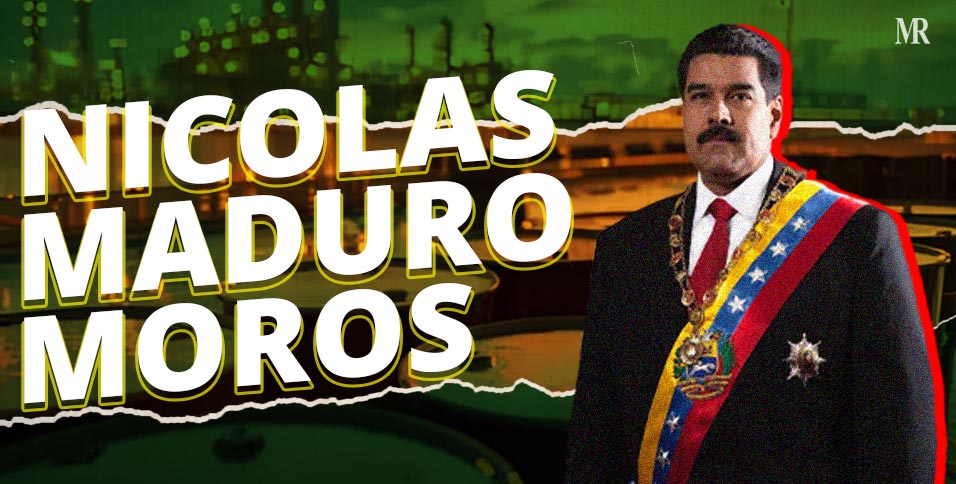
The world was stunned on January 3, 2026, when U.S. special operations forces conducted Operation Absolute Resolve, a surgical military strike in Caracas that resulted in the capture of Nicolas Maduro Moros and his wife, Cilia Flores.
As Nicolas Maduro awaits trial in New York on narco-terrorism charges, a central question remains: How did a former bus driver maintain an iron grip on a nation for over a decade?
The answer lies in Chavismo, a radical political ideology that transformed Venezuela from a wealthy oil powerhouse into a center of global geopolitical conflict.
What is Chavismo?
Chavismo is a left-wing populist political ideology. It is named after the late Venezuelan President Hugo Chávez.
At its heart, Chavismo is a mix of socialist policies, intense national pride, and a desire for “Latin American integration”. It is an idea that South American countries should unite to form a powerful block independent of Western influence.
Under Nicolas Maduro Moros, Chavismo evolved from a popular grassroots movement into a more rigid and controversial system of governance. While it began with the promise of giving power to the poor, it has become synonymous with the current state of the Bolivarian Republic of Venezuela.
How Nicolas Maduro Moros Adopted Chavismo
Nicolas Maduro Moros did not invent the Chavismo ideology; he was its most loyal student. To understand his governance, one must understand his journey from the streets to the presidency.
- From Bus Driver to “The Chosen One”
Maduro’s political identity is rooted in his time as a bus driver for the Caracas Metro.
As a prominent union leader, he developed the “man of the people” persona that would later define his public image.
His loyalty was forged in 1992 when he campaigned for Hugo Chávez’s release from prison following a failed coup.
Chávez rewarded this loyalty by appointing Maduro to high-ranking roles, including Foreign Minister and Vice President.
In his final televised address on December 8, 2012, a dying Chávez famously named Nicolas Maduro Moros his successor, instructing the nation to elect him as their leader.
- The “Son of Chávez” Strategy
Since winning a narrow election in 2013, Nicolas Maduro Moros has branded himself as the “Son of Chávez.”
He didn’t just lead the United Socialist Party of Venezuela (PSUV); he turned it into a vehicle for survival, using the “will of Chávez” to suppress internal power struggles and maintain military loyalty.
The Core Principles of Chavismo
Under Maduro, the theoretical “rules” of Chavismo were used to justify radical changes to Venezuelan life.
- Participatory Democracy (The Communal State)
Chavismo rejects traditional “representative” democracy as elitist. Instead, it promotes Participatory and Protagonistic Democracy.
Here, citizens are encouraged to join Community Councils to manage local projects.
- The Maduro Twist: Under Nicolas Maduro Moros, these councils became tools of social control. Membership is often tied to the CLAP system (government food bags), making political loyalty a requirement for basic nutrition.
- State-Led Economy (21st-Century Socialism)
Chavistas believe the state must control the “commanding heights” of the economy to ensure social justice.
- The Command Economy: Maduro’s government nationalized telecommunications (CANTV), electricity (EDC), and steel industries.
- The Economic War: When productivity plummeted, Maduro blamed “capitalist parasites” and “Yankee sabotage,” using this principle to justify strict price controls that eventually led to widespread shortages.
- National Sovereignty (Anti-Imperialism)
This is the emotional heart of the movement. It frames every internal failure as a result of “Yankee Imperialism.” It is based on the idea that the United States (the “Empire”) and the IMF are constantly plotting to steal Venezuela’s oil and destroy its revolution.
- Multipolarity: To counter U.S. influence, Nicolas Maduro Moros built a “Shield of Sovereignty” by strengthening ties with Russia, China, and Iran.
- The 2026 Defense: Following his capture, Maduro’s supporters have used this principle to claim his arrest is not a legal matter, but an “imperialist kidnapping” that violates international law.
The Golden Era of Chavismo
In the early 2000s, Chavismo was genuinely popular due to a massive oil boom. These policies created a short-term “spending bonanza” but built a fragile, single-resource economy.
- Sowing the Oil (Fundings from PDVSA)
The government used profits from the state-owned oil company, PDVSA, to fund massive social spending.
- The Impact: This created a Rentier State, where the government relied on selling oil rather than building a tax-paying middle class or a manufacturing sector.
- The Missions (Social Welfare)
The Bolivarian Missions were high-profile programs that delivered results in the short term:
- Mission Barrio Adentro: Brought Cuban doctors into poor neighborhoods.
- Mission Robinson: Aimed to eliminate illiteracy.
- Mission Mercal: Provided subsidized food at state-run grocery stores.
Impacts and Controversies: The Downfall
The transition from Chávez to Maduro saw the ideology collide with economic reality. The “Socialist Dream” quickly turned into a humanitarian issue.
- The Economic Collapse
- Hyperinflation: By 2019, inflation reached an astronomical 10 million %, rendering the Bolívar currency worthless.
- The Migration Crisis: More than 8 million Venezuelans (25% of the population) have fled the country, creating the largest displacement crisis in the Western Hemisphere.
- The Rise of Antichavismo
The opposition argues that the ideology is merely a mask for a kleptocracy, a government accused of widespread corruption.
- Human Rights Violations: Groups like Foro Penal have documented thousands of political prisoners and the use of torture to silence dissent.
Moreover, critics point to the high estimated Nicolas Maduro net worth of $2 million contrasting it with the population living in poverty.
Breaking Point of Chavismo: The January 2026 Capture
The international community’s patience with Maduro ended on January 3, 2026. According to a White House Fact Sheet, the mission, known as “Operation Absolute Resolve,” was a surgical strike designed to safeguard Venezuelan oil revenue for the benefit of the people.
In the early morning hours, more than 200 U.S. special operations forces surged into Caracas. They captured Nicolas Maduro Moros and his wife, Cilia Flores (often called the “First Combatant”), at their home on a military base.
No U.S. personnel were killed in the raid, though dozens of Maduro’s security team lost their lives.
Nicolas Maduro Moros was flown to New York to face a massive federal indictment. The charges include:
- Narco-Terrorism: Alleging he partnered with the FARC and other groups to “flood the U.S. with cocaine.”
- Weapons Charges: Possession of machine guns and “destructive devices” used to protect drug shipments.
Following the capture, President Donald Trump announced that the U.S. would oversee a transition in Venezuela until a “safe and proper” new leadership is established. While Maduro dismisses these as a“Yankee plot,” he now faces the prospect of life in an American prison.
Will Chavismo survive without Nicolas Maduro?
The survival of Chavismo without Nicolas Maduro Moros is the most pressing question in Latin American politics following the events of January 3, 2026.
While the head of the revolution has been removed, the body of the movement i.e., the military, the social programs, and the ruling party, remains largely intact, though under extreme pressure.
Whether Chavismo survives depends on three critical factors: institutional continuity, internal factionalism, and the U.S. transition strategy.
This institutional survival is currently centered on Delcy Rodríguez, who was sworn in as interim president on January 5, 2026, with the formal backing of the National Assembly and the Supreme Court.
While she represents an adaptive version of the movement that is more open to pragmatic negotiations with the US over oil and sanctions, she faces a volatile internal landscape.
Hardliners like Diosdado Cabello, who controls the pro-government colectivos, represent a militant faction that could fracture the movement if they perceive her cooperation with the U.S. as a betrayal.
Ultimately, the future of Chavismo may shift from a radical ideological crusade to a transactional regime that prioritizes elite preservation and resource extraction over the socialist fervor of the past.
Conclusion
The political ideology of Nicolas Maduro Moros was built on the promise of a “New Venezuela” that would lead the world in social justice. However, for many, that dream turned into a nightmare of hyperinflation and exile.
With the US capture of Maduro, the ideology of Chavismo faces its greatest test.
While the head of the revolution has been removed, the system he built, from community councils to the military-business alliance, remains in place.
The world now watches to see if Venezuela will return to a traditional democracy or if a “new Chavismo” will rise from the ashes.
Maria Isabel Rodrigues
FAQs
- What has Maduro done to Venezuela?
Under Nicolas Maduro Moros, Venezuela has faced its worst economic crisis in history. This includes hyperinflation, food and medicine shortages, and a massive migration wave. However, supporters argue he has defended the country against foreign “economic warfare.”
- Why did the U.S. capture Nicolás Maduro?
On January 3, 2026, the U.S. launched a military raid to arrest Nicolas Maduro based on indictments for narco-terrorism and drug trafficking. The U.S. argues his 2024 re-election was fraudulent and that he is an illegitimate leader.
- Who is running Venezuela now?
Following the U.S. capture of Nicolas Maduro, a “Transition Council” has been discussed, though Maduro’s Vice President, Delcy Rodríguez, initially claimed acting authority from within the country.
- Which countries support Maduro?
Key global allies of Nicolas Maduro include Russia, China, and Iran. In Latin America, countries like Cuba, Brazil, and Colombia have condemned the U.S. military action, calling it a violation of international law.