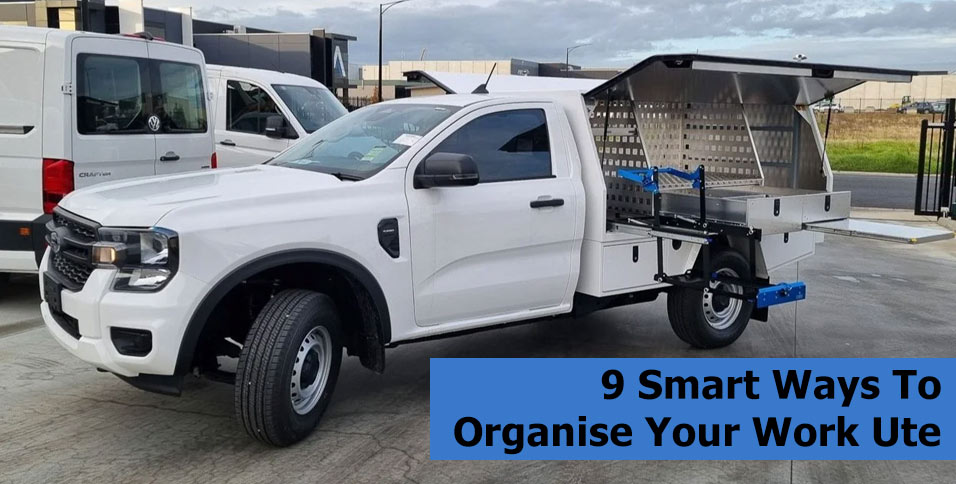
If you run a ute, van, or light truck, the right fit-out saves minutes on every job, cuts theft risk, and keeps you compliant. I have watched tradies lose hours each week hunting for tools buried under gear. This guide walks through nine practical setups that protect your crew and kit while speeding up retrieval.
You will see where each idea fits, what to check before buying, and how to install without creating compliance headaches. Use the checklists and examples to plan upgrades that match your jobs without adding downtime or rework.
Spend 30 Minutes Planning To Make Every Job Faster
Spending half an hour planning beats weeks of regret. List the tools you touch on 80 percent of jobs and decide what must be quick to reach, locked, or weather sealed.
Quick Checklist
- List tools you use on 80 percent of jobs and group by task.
- Measure length, width, height, and door openings.
- Set a weight budget from the GVM on your compliance plate.
- Decide what must lock and what can sit outside.
- Map retrieval order so most-used gear sits at hip height near doors.
Key Definitions
GVM is the maximum loaded mass the manufacturer allows. Confirm it at a public weighbridge with the vehicle fully loaded. GCM is gross combination mass and matters when you tow.
Knowing The Basic Rules Keeps Your Load Legal
Across Australia, driving with an unrestrained load is illegal. The Light Vehicles Guide says restraints must handle at least 80 percent of load weight forwards, 50 percent sideways and rearwards, and 20 percent upwards if the load is not fully contained.
State Differences
QLD, NSW, VIC, TAS, SA, and ACT reference the 2018 guide. WA and NT still apply the 2004 version, so check local requirements before crossing borders.
Cargo Barriers
WorkSafe Victoria advises fitting barriers that meet AS/NZS 4034 between cargo and people. Barriers contain gear but do not replace proper restraint. Use both when needed.
Solution 1: Modular Drawers Keep Tools Low And Balanced
Drawers put small tools low and forward, cutting tool-hunt time and reducing projectile risks during sudden stops. They suit electricians, plumbers, and mobile maintenance teams.
What to Look For
- Slide ratings of 125 to 250 kg per drawer.
- Positive latches and anti-rattle hardware for rough roads.
- Dividers and foam inserts to reduce movement.
Install Tips
Through-bolt to reinforced chassis points and use large washers to spread loads. Label each drawer and colour-code by task group to speed retrieval. Keep top drawers for lighter items.
Solution 2: A Sealed Canopy Protects Gear
A covered enclosure keeps gear clean, dry, and out of sight on dusty jobs. It also gives you a safer spot to charge batteries on site.
Specs to Check
- Canopy mass, roof-load rating, and door aperture height.
- Positive-pressure venting to reduce dust ingress.
- Internal tie points and a headboard for containment options.
If you need sealed, secure space for tools and small parts to add sheltered volume and keep dust and water out on your typical jobs, check the canopy mass plus any roof load still keeps you under GVM at the weighbridge with your usual gear loaded safely before ordering Caddy Storage’s ute canopies.
Solution 3: Roof Racks Carry Long Gear Safely
Select racks with a clear dynamic rating that matches your use. Add rollers for safer one-person loading of ladders and conduit.
Restraint Basics
Use two straps minimum, one at each end, with edge protectors where straps contact sharp edges. As strap angles become shallow, add more straps. Use flags in daylight and a red light at night on rear overhangs.
Solution 4: Cargo Barriers Shield People From Loose Gear
Barriers stop tools entering the cabin during sudden stops. Choose equipment tested to AS/NZS 4034 and mount to approved points.
Shelf Containment
Add 25 to 50 mm lips to shelves to stop containers sliding off. Bungee nets are not load restraint. Keep a rear escape route in vans and a fire extinguisher within reach.
Solution 5: Slide-Out Platforms Bring Heavy Cases To You
A slide-out brings heavy cases to you rather than climbing in, reducing manual handling strain. Pick slides with lock-in and lock-out positions.
Safety
Lock before travel and never exceed the slide rating. Add tie-down points on platform edges to restrain equipment during transport.
Solution 6: Built-In Points Make Restraint Fast And Repeatable
The right hardware makes restraint fast and repeatable. Airline tracks, recessed lashing rings, and headboards keep loads stable.
Strap Selection
Check AS/NZS 4380 tags for lashing capacity and keep them legible. Match strap width to the load and use edge protectors. Re-check after 15 to 30 km, then at each stop.
Solution 7: Planned Power Keeps Chargers Safe And Reliable
Plan loads by listing chargers, peak watts, and ventilation needs. Keep electrics off the floor and away from heat sources.
Electrical Requirements
Any 240 V setup must be done by a licensed electrician with RCD protection under AS/NZS 3000. Secure battery boxes to reinforced points and add fusing within 200 mm of the battery.
Solution 8: Under-Tray Compartments Free Up Tray Space
These compartments provide quick access for small parts, oils, and PPE while leaving the tray open for bulky loads.
What to Look For
- Seam-welded boxes with automotive dust seals.
- One-hand latches and keyed-alike locks for fleet convenience.
- Stainless hardware for corrosion resistance.
Mounting
Spread loads across multiple brackets and use load plates to protect rails. For quick access, theft-resistant compartments that don’t consume tray volume, look at Westoz Tools’ ute boxes. Mount heavier fasteners low and forward and use rated anchor points around the boxes.
Solution 9: Simple Security Layers Cut Theft Risk
Tool theft keeps climbing. In Victoria, more than 33 million dollars worth of tools were stolen in 2023, a 37 percent year-on-year increase. Victoria Police reported about one theft every two hours in early 2025.
Layers That Deter
Use visible locks, alarm systems, and GPS trackers. Remove high-value power tools overnight and park with CCTV coverage. Engrave tools and keep a serial list with photos for insurers.
Know Your Weight Limits Before You Bolt Anything Down
Start with a simple weight budget and install upgrades that save time and cut risk. Keep heavy gear low, restrain it correctly, and choose lockable spaces for valuables. Check at a weighbridge, re-check fixings after your first week, and update your maintenance habits regularly.
Clear Answers To Common Setup Questions
How Do I Work Out How Much Weight I Can Add?
Start with the GVM on your compliance plate. Subtract tare, driver, passengers, fuel, and materials. Confirm at a weighbridge with the vehicle loaded the way you operate daily.
Are Roof Racks Or A Canopy Better For Ladders And Small Parts?
Use racks for long items like ladders, secured with rated straps. Use a canopy for weather sealed, lockable space. Under-tray boxes and side compartments keep oils, fixings, and PPE close to hand without eating up valuable tray space. Many teams run both and add durable, lockable Westoz Tools’ modular steel ute boxes for high-theft items they need quick access to on busy sites.
Do I Really Need A Cargo Barrier In A Van?
If you carry loose items behind front seats, a tested barrier protects occupants during heavy braking. WorkSafe Victoria recommends barriers meeting AS/NZS 4034.
How Often Should I Re-Tension Straps And Check Fixings?
Re-check after 15 to 30 km, then at stops or after rough roads. Inspect drawer bolts and rack mounts monthly.