I have seen plenty of offices spend big on shiny gear that nobody touches. The issue is rarely the product itself. It is friction, poor placement, and a weak fit with how people actually work.
Most Workplace Gear Fights Daily Habits
Under Australian work health and safety (WHS) laws, businesses must eliminate or minimise psychosocial risks as far as is reasonably practicable. That makes environmental design part of legal compliance. In 2023-24, musculoskeletal injuries made up over half of serious workers compensation claims, and mental health conditions accounted for 10.5% and are still rising, so even small environmental nudges, such as placing a visible 5 litre water bottle in shared zones, matter.
The items below focus on simple changes that staff actually use. For each, you get quick setup steps, Australian budget bands, and easy metrics so you can report both WHS alignment and ROI.
Adoption First
If employees do not use an item daily, it cannot change outcomes. Prioritise removing friction over novelty. Adoption is easier to measure than long term results, so it gives faster feedback.
Clear Criteria Make Buying Decisions Easier
Products get used when they are visible, within arm’s reach, and need no training. Use the checks below before you buy anything.
Remove Friction
- Choose items that work out of the box with one-step operation
- Provide ready-to-grab access without complex booking systems
Default to Use
- Place along natural paths like kitchens and printers
- Use signage to normalise small, frequent interactions
Fit the Work
- Prioritise quiet items that do not interfere with calls
- Avoid trip hazards or clutter
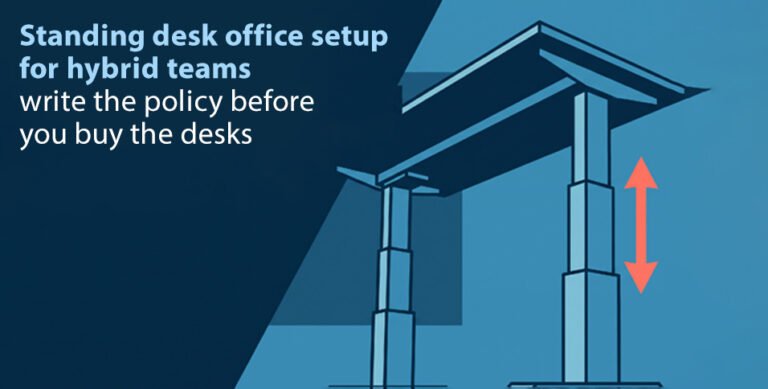
Desk Converters Make Standing Simple
Converters preserve existing desks and install quickly across whole teams. Research shows sit-stand workstations can cut workplace sitting by roughly 84 to 116 minutes per day.
Start with laptop users and provide external keyboards to maintain neutral wrist positions. Install cable clips and provide an anti-fatigue mat at each workstation. Budget AUD 300 to 700 per converter and track daily switch counts.
Good Task Chairs Reduce Everyday Strain
Chairs get used all day, so they are a visible investment. Run short fit sessions so staff learn adjustments and reduce poor postures.
Offer 10 minute fit sessions per team and tag levers for height, lumbar, and arm adjustments. Budget AUD 600 to 1,400 per chair. Track fit session completion and ergonomic ticket volume.
Screen Setups Protect Necks And Eyes
These give fast, low cost relief for neck and eye strain when paired with arms using a two stage gas spring. Match screen heights to avoid constant neck rotation. Budget AUD 120 to 350 per station.
Noise Controls Protect Focus At Work
Open plan offices with clear speech can see performance drop by about 7 percent. Reducing intelligibility through masking helps.
Deploy active noise cancelling (ANC) headsets via a simple checkout with hygiene covers. Use gentle masking in noisy areas. Budget AUD 150 to 350 per headset and track noise complaints.
Air Sensors And Filters Support Health
One sensor per zone shows CO2 and fine particle trends so teams can adjust ventilation. A randomised trial found portable high efficiency particulate air (HEPA) purifiers reduced indoor PM2.5 and lowered systolic blood pressure by about 3 mm Hg.
Place HEPA units away from walls and size them to room volume. Budget AUD 150 to 400 per sensor and AUD 300 to 900 per purifier. Track percentage time CO2 stays under 1000 ppm.
Hydration Setups Help People Drink More
Place refill points in every team zone, not only kitchens. Keep cups and bottle-cleaning brushes on hand for hygiene.
To make refills effortless in shared areas, place a compact dispenser and a large capacity bottle near stand up meeting areas, then track weekly refill tallies to confirm uptake.
Budget AUD 200 to 600 per station plus consumables. Track weekly refill counts and self-reported hydration habits via quick pulses.
Healthy Snacks Shift Daily Food Choices
Shift food defaults toward healthier options by placing better choices within arm’s reach. A workplace study found free fruit increased daily fruit intake by roughly 112 grams and reduced added sugar intake.
Place fruit bowls at eye level and restock midweek. Position sweets further from beverage stations. Budget AUD 2 to 4 per person per week and track restock counts.
Break Reminders Turn Pauses Into Habit
One randomised controlled trial found software prompts improved recovery from neck and upper limb complaints. Start with a 50 to 60 minute nudge for a 60 to 90 second movement routine.
Pre-load three office-safe moves like neck retraction and shoulder rotations. Many tools are free. Track prompt completion rates.
Strength Corners Build Resilience To Desk Work
Enable brief, strength-focused movement snacks that ease common aches. Workplace trials suggest about one hour per week of neck and shoulder training can reduce pain for office workers.
To cut friction and boost use, stock a compact rack with ready-to-grab options like hex dumbbells near meeting rooms so teams can rotate through five-minute sets between calls. Provide a simple three-move circuit such as goblet squats, banded pull-aparts, and suitcase carries. Budget AUD 350 to 900 for a starter rack and bands.
Quiet Spaces Let Brains Reset Properly
Focus pods help staff manage cognitive load and reduce distractions. Recovery nooks with soft light support psychosocial health and help meet WHS obligations.
Aim for one bookable focus pod per 20 to 30 people. Ensure ventilation targets and set clear booking guidelines. Track bookings and perceived focus scores in monthly pulses.
Simple Playbooks Keep Rollouts On Track
Pilot quickly, measure adoption, and adjust. Use this practical 90 day timeline.
Days 0 to 30
Choose 5 items aligned to top pain points. Run safety checks and set baselines. Brief team leads and schedule short inductions.
Days 31 to 60
Roll out, run weekly checks, and share early wins like air charts and refill counts. Adjust placement based on observed patterns.
Days 61 to 90
Scale items that hit adoption thresholds. Lock in maintenance cadence and publish a one-page policy covering use and hygiene.
Short Answers Remove Common Adoption Barriers
How do I get staff to actually use new equipment?
Remove friction by placing items along natural paths. Choose gear that works out of the box with minimal setup. Model usage by having team leads go first.
What should I measure to prove value?
Start with adoption metrics like refill counts, sit-stand switches, and booking logs. These give faster feedback than health outcomes and are easier to report.
How much should I budget for a pilot?
Start with AUD 2,000 to 5,000 for 5 to 8 items covering hydration, task lighting, noise control, and a small movement zone. Scale based on uptake data.
How do these products support WHS compliance?
Quiet spaces, noise control, and ergonomic chairs directly address psychosocial and musculoskeletal risks that duty holders must manage.