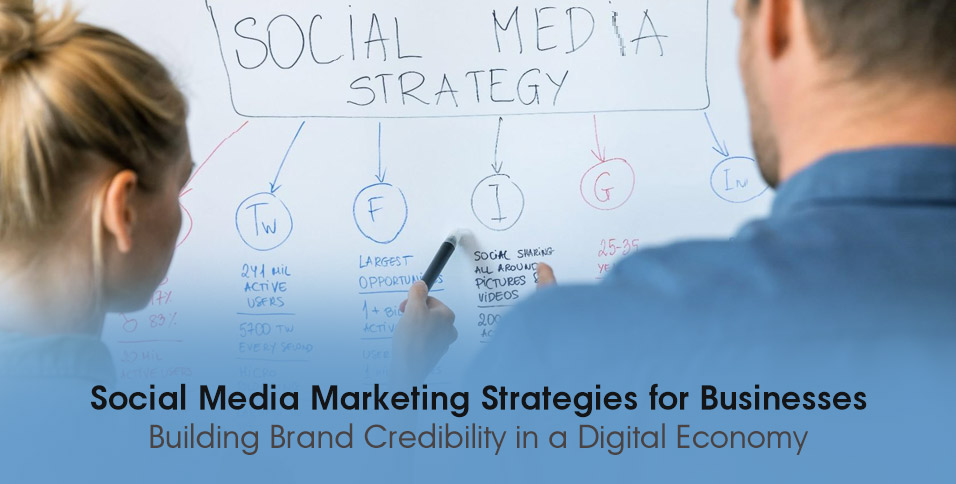
In the current digital economy, businesses face a growing credibility crisis as audiences become more selective about who they trust online. Social media marketing is no longer about sheer reach or posting frequency; it is about value, transparency, and meaningful customer interactions.
As digital marketing matures, brand awareness is increasingly earned through consistent content creation, authentic engagement, and reliable customer experience. In this emerging trust-based economy, a well-defined social media marketing strategy prioritizes credibility over volume, transforming social media platforms into long-term relationship channels rather than short-term promotional tools.
Define Your Social Media Marketing Strategy
A successful social media marketing strategy begins with alignment. Your social media plan should not exist in isolation. It must directly support your broader marketing plan, business goals, and customer experience objectives. This starts with thorough audience research to understand who you are targeting, where they spend time online, and what type of social content builds trust and relevance.
From there, businesses must define clear key performance indicators (KPIs) that go beyond vanity metrics. Engagement rate, conversion rates, and customer interactions provide more meaningful insights than follower counts alone. By combining audience insights with analytics tracking and performance data, brands can focus on marketing strategies that deliver measurable value, strengthen brand loyalty, and ensure every social media post contributes to long-term credibility rather than short-term visibility. A social media agency can help your business with this.
Gain Consumer Trust
Trust on social media is built by design, not by chance. Effective social media marketing depends on moving beyond random social media posts toward a structured content strategy grounded in clearly defined content pillars. These pillars (e.g., education, credibility, community, and promotion) provide a framework that guides content creation while ensuring brand messaging remains consistent across social media platforms.
A well-planned content calendar transforms strategy into execution. By organizing content formats, promotional posts, and visual content in advance, businesses maintain a reliable posting schedule that audiences can expect and trust. This level of social media management reduces inconsistency, supports brand awareness, and improves engagement rate over time. When every piece of social content aligns with strategic pillars, brands replace noise with clarity and build lasting digital credibility.
Leverage Human-Centric Social Content
In a trust-based digital economy, human-centric social content outperforms highly polished brand messaging. User-generated content has become the gold standard for brand awareness because it reflects real customer experience, not scripted promotion. Reviews, testimonials, and shared customer stories create social proof that traditional social media advertising cannot replicate.
As audiences grow more skeptical of overly curated visuals, brands are shifting content creation toward authenticity. This means encouraging customer interactions, resharing community posts, and highlighting real-world use cases across social media platforms. Human-driven social content strengthens audience engagement, supports brand loyalty, and improves engagement rate by making brands feel relatable and transparent. Today, credibility is earned when businesses listen, respond, and allow their customers to become an active part of their social media presence.
Utilize Strategic Social Media Management and Tools
As social media ecosystems grow more complex, strategic social media management becomes essential for maintaining consistency and scale. Modern social media management software allows businesses to streamline content creation, schedule social media posts, and manage customer interactions across multiple social media networks from a single dashboard. Scheduling tools and social listening tools also help teams respond faster and maintain a reliable posting schedule.
Nowadays, AI-powered analytics elevate workflow efficiency by turning performance data into actionable content recommendations. By analyzing audience insights, engagement rate, and platform analytics, brands can scale social content without sacrificing quality. This data-driven approach enables smarter content scaling, improved resource allocation, and more resilient social media marketing strategies.
Assume a ‘Social-First’ Customer Experience
Customer service and marketing are no longer separate functions; they converge on social media. A social-first customer experience recognizes that every comment, message, and mention is a public customer interaction that shapes brand credibility. Social media platforms have become frontline Customer support channels, where speed, empathy, and consistency directly influence brand loyalty.
Social listening tools play a critical role in this shift. By monitoring conversations, sentiment, and feedback in real time, businesses gain valuable audience insights that go beyond direct inquiries. This proactive approach allows brands to address concerns early, refine messaging, and improve the overall customer experience. When social listening informs both service and strategy, social media marketing becomes a trust-building engine rather than just a promotional channel.
Make Use of Paid Advertising
Paid advertising is most effective when it complements, rather than interrupts, organic social media growth. Instead of broad, disruptive messaging, successful paid ads are integrated into a cohesive social media marketing strategy that prioritizes relevance and timing. When aligned with strong social content, paid advertising amplifies credibility rather than undermining it.
Targeted ad campaigns now rely on precise audience research, platform analytics, and performance data to deliver value-driven messaging. By focusing on specific customer needs, paid ads support lead generate quality leads and improve conversions. Tools like Predis.ai can also help businesses create engaging ad creatives for targeted campaigns.
Navigate the New Discovery Landscape
Social media networks function as powerful discovery engines, reshaping how audiences find brands, products, and expertise. Platforms are no longer just places to share content; they now rival traditional search engines in influence and intent. Tools like TikTok Creator Search highlight this shift, enabling users to discover trusted voices and relevant content through behavior-driven recommendations rather than keywords alone.
To remain visible, businesses must optimize social content for discovery by aligning with platform algorithms and user intent. Strategic use of content recommendations, searchable captions, and consistent content formats increases reach organically. In this new landscape, discoverability is earned through relevance, not repetition, reinforcing trust at every touchpoint.
Measure Impact and Credibility
In a trust-based economy, credibility must be measured, not assumed. Interpreting performance data allows businesses to move beyond intuition and validate what truly builds brand loyalty. Metrics such as engagement rate reveal how audiences connect with social content, while conversion rates show whether that trust translates into meaningful action.
By integrating social media analytics with tools like Google Analytics, brands can track the full customer journey from social media posts to conversions. This holistic view connects audience engagement to long-term value, helping refine marketing strategies with confidence. When data informs decisions, social media marketing evolves from activity-driven posting into a measurable system for sustained credibility and growth.
Conclusion
As the digital economy continues to evolve, credibility has become the defining currency of sustainable growth. Strategic social media management, rooted in audience research, authentic content creation, and data-driven decision-making, enables brands to move beyond short-term visibility toward long-term relevance.
Businesses that treat social media as a trust-building ecosystem, not a posting channel, will strengthen brand loyalty, adapt faster to change, and remain resilient in a digital-first world where value always outperforms volume.
Author Bio: Gary Curtis writes in the technology and digital marketing space for more than 5 years. Oftentimes, he is working from home in Plymouth, PA. When not researching or creating content, he checks out Italian and American-cuisine restaurants with his wife and son.