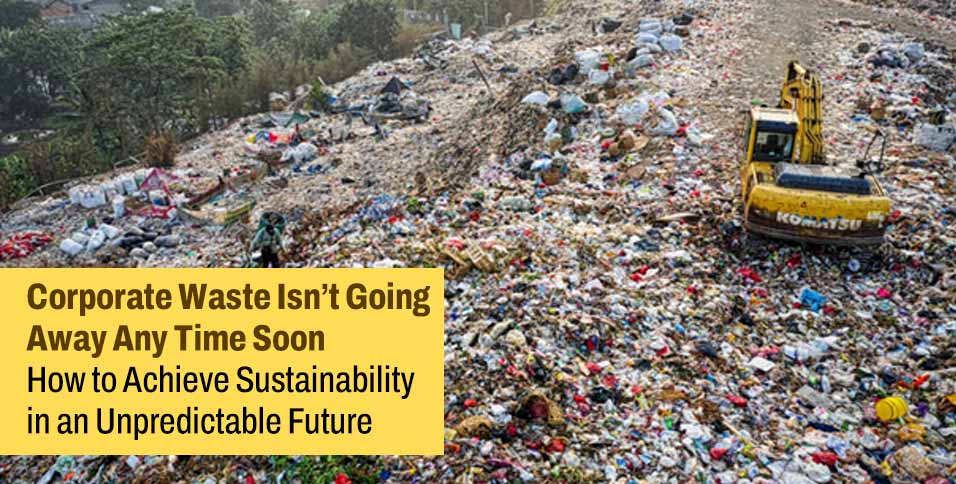
You are operating in a decade where waste volumes keep climbing even as sustainability decks improve. Regulation tightens, raw materials swing in price, and global supply chains continue to generate surplus, scrap, and stranded stock.
If you want sustainability that survives the next shock, offsets and isolated pilots are not enough. You need systems that hold when rules change, that reduce waste before it hits a bin, and that give you room to move when disruption arrives.
Treat Waste As A Strategic Risk, Not Just An Operational Mess
Every packaging choice, supplier contract, and product refresh either locks in future waste or cuts it off at the source. If you keep treating waste as something to “handle later”, you are betting that regulators, customers, and investors will stay patient.
Once you name waste as a strategic risk, you can design it out instead of sweeping it aside. The core question shifts from how cheaply you can move waste off‑site to how rarely materials reach the point of becoming waste at all.
Fold Waste Into Enterprise Risk
You already run playbooks for currency swings, cyber incidents, and geopolitical shocks. Map where extended producer responsibility (EPR) rules, landfill bans, or packaging restrictions could hit current products and markets. Include scenarios where disposal routes close or fees double.
When you attach probabilities and cost ranges to those scenarios, the board begins to view waste as something that can impact earnings just as easily as a failed launch. Rethinking design, contracts, or formats then stops looking optional and starts looking like basic risk management.
Put Waste Metrics Next To Money Metrics
If you can see revenue by region in seconds but need a special project to find last quarter’s waste, you are flying blind. You need the same reflexive visibility for waste that you expect for sales and margin—current numbers, broken down by product, site, and supplier.
Dashboards that place disposal cost, EPR fees, and material loss alongside revenue create different conversations. A category manager suddenly realizes how much value is lost due to damage and oversized packaging.
Align Incentives With Material Efficiency
If you want different behaviour, code it into incentives. Link a slice of bonuses to metrics such as material intensity per unit, packaging waste per order, or EPR cost per million in revenue.
You do not need a massive ESG scorecard. Two or three sharp, auditable indicators are enough. Once leaders feel that signal in their compensation, design and procurement teams will adjust course.
Build Waste-Resilient Supply Chains Instead Of Chasing The Lowest Immediate Cost
A supply chain optimized only for the lowest unit cost and fastest lead time looks efficient on a slide and brittle in reality. One export restriction on waste, a facility shutdown, or a jump in carbon pricing can erase those savings.
Trace Where Waste Actually Starts
Look at spoilage, damage, over‑packaging, obsolete inventory, and returns. Hotspots often sit in contract manufacturing, third‑party logistics, or downstream distribution rather than in flagship plants.
Once you see those hotspots, you can hire reliable waste services that provide granular reporting and then target interventions with multiple benefits. Reducing secondary packaging may cut breakage, lower freight emissions, and shrink EPR fees in one move.
Avoid Single-Point Dependence At End-Of-Life
If all residual materials go to one type of facility, one region, or one specialized technology, you are exposed. Landfill bans, export rules for waste, and stricter contamination limits are already shifting where you can legally send different streams.
Maintain relationships with more than one recycler, refurbisher, or recovery option for key materials. Periodically test alternative routes, so you are not improvising under pressure when a primary outlet fails.
Instrument The Supply Chain For Materials, Not Just Finished Goods
Invest in tools—product passports, upgraded ERPs, or dedicated circularity platforms—that follow materials through the full loop. Link that data to cost, risk, and carbon models. When planners can see which choices raise waste exposure and which ones lower it, they can optimize for resilience, not just immediate price.
Design Products And Packaging For A Circular, Heavily Regulated Future
If your products and packaging combine multiple plastics, metallic inks, and glued‑on extras, even the best sorting technology struggles. In a world where regulators move faster than many companies expect, you should assume that tomorrow’s rules will penalize complexity and reward circularity.
Ask how current designs will perform in markets where eco‑modulated EPR fees, packaging taxes, and bans on certain formats are standard. That question forces you to look at materials, formats, and revenue models with a colder eye.
Cut Material Complexity Wherever You Can
Every additional resin, laminate, or decorative flourish makes end‑of‑life harder and compliance more expensive. Simplifying your material set reduces waste and shrinks the number of future regulatory headaches.
Work with suppliers to converge on materials that are widely and economically recyclable in your key regions, not just technically recyclable on paper. Run packaging through real‑world sorting and recycling trials.
Pilot Reuse And Refills Where The Logic Already Exists
If your model depends only on single‑use formats, you are out of sync with regulation and consumer expectations. Reuse, refill, and take‑back systems are harder to run, but they stabilize material flows and unit economics.
Start where the logistics stack is friendly: B2B supply chains, subscription offers, closed campuses, or dense urban zones. Use these pilots to learn which incentives move behaviour, what return rates are realistic, and where cleaning and refurbishment make economic sense.
Let Regulation Inform The Design Brief From Day One
Packaging rules now dictate which sizes, materials, and formats you can profitably use. Instead of tacking compliance on at the end, pull legal, sustainability, product, and operations into early concept meetings. Treat upcoming rules on recyclability, labelling, minimum recycled content, and deposit systems as design inputs.
Prioritize Real Waste Reduction Over ESG Theatre
The market is saturated with sustainability statements and ratings. Regulators, investors, and major customers now ask for evidence that waste is falling in absolute terms, not just in ratios that can be massaged.
Set Targets That Bite, Not Targets That Spin
Targets framed only as “improve X by Y% from baseline Z” invite endless arguments about the baseline. You get more traction with measures that are hard to fake: kilograms of waste per unit sold, share of products that are repairable or recyclable, proportion of materials coming from closed loops.
Operations can own scrap and process loss—procurement can own packaging complexity and take‑back provisions in contracts—product teams can own design outcomes. When everyone knows which numbers they influence, waste reduction stops being a vague ambition.
Invite Third Parties Into The Room
If all verification happens inside your own systems, stakeholders assume you are grading your own homework. Independent audits, credible certifications, and transparent methodologies protect your reputation and stress‑test your internal view.
Treat those external voices as part of your sensing system. When auditors or partners highlight inconsistencies or blind spots, use that input to adjust your roadmap before regulators or customers force your hand.
Track The Side Effects That Matter To The Business
Waste initiatives rarely move just one needle. They influence energy bills, transport reliability, product quality, worker safety, and brand preference. If you measure only tonnes diverted from landfill, you miss most of the value.
Document where waste‑focused projects also cut lead times, stabilize supply, or open revenue streams such as repair services or refurbished offers. These secondary benefits make it easier to defend investments that do not pay back within a single budget cycle.
Build Sustainability As A Capability, Not A Campaign
If your sustainability push is anchored in a single five‑year plan or one champion, it will stall. To stay credible in a volatile decade, you need sustainability to behave like a capability: persistent, adaptable, and embedded into decision‑making.
A capability mindset accepts that regulations, technology, and expectations will keep shifting and that your organization must update its playbook without resetting to zero.
Bake Waste Questions Into Every Gate
Build waste and material questions into default checklists for product development, capital projects, and supplier selection. Make it standard to ask how each choice affects waste generation, recovery options, and regulatory exposure across the product’s life.
When those questions sit alongside cost, safety, and quality, people stop seeing them as optional. You get better designs because waste has become part of the engineering brief.
Upgrade People, Not Just Platforms
Software, traceability tools, and consultants can accelerate progress, but they do not replace internal judgment. You still need people who understand materials, regulations, and circular models well enough to challenge old assumptions.
Train engineers, buyers, product managers, and supply chain leaders to read regulatory trends, interpret waste data, and design for reuse and recovery. When the people making everyday decisions understand these dynamics, your sustainability strategy reinforces itself instead of relying on constant top‑down pressure.
Refresh Strategy From The Ground Up, Not Just From The Podium
Some waste streams will grow, others will disappear as technologies change, and new rules will arrive faster than old ones sunset. You need feedback loops that bring frontline information into strategy, not just strategy down to the frontline.
Set a regular rhythm where local teams, partners, and data feed into an updated view of waste risks and opportunities. Use that input to adjust priorities, retire initiatives that no longer matter, and double down where you see leverage.
Conclusion
Corporate waste will not vanish in the next planning cycle, no matter how ambitious your public commitments sound. You are operating in systems built on high throughput and short product lives, and those systems will take time to change.
What you can do now is design your business so that waste hurts you less and creates more room for intelligent innovation. When you treat waste as a strategic risk, design for circularity, build resilient supply chains, focus on real reductions, and embed these ideas as a lasting capability, you buy that room.