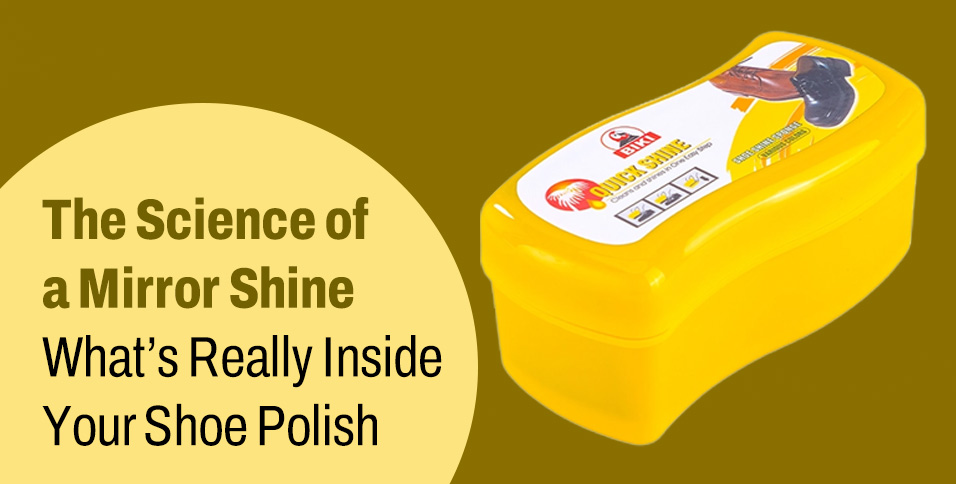
A lot of people can get a mirror shine on shoes, but they still ask the same question: what is actually in that polish? Also, the labels can feel confusing, so it’s hard to tell what makes one polish better than another.
This article breaks it down in simple words. You’ll learn the main parts inside shoe polish, what each part does, and why buffing changes everything. And yes, we’ll talk about the waxes and liquids in the mix, without turning this into a boring school lesson.
By the end, you’ll know what to look for if you want a strong shine that lasts. Plus, you’ll finally understand why some polishes feel smooth, while others feel like they want to glue your fingers together.
Quick answer first: what shoe polish is made of
Most shoe polish is a mix of waxes, a liquid that helps it spread, and color. The wax is the part that gives shine and leaves a thin protective layer. The liquid helps the wax go on smoothly, and then it dries. The color helps bring back the shade and can help hide small scuffs.
Here’s the simple way to remember it: wax = shine, liquid = spread + drying, color = looks cleaner. If one part is too much or too little, the polish can feel weird or look uneven.
What a “mirror shine” really is
A mirror shine happens when the shoe surface gets very smooth, so light bounces back evenly. First you lay down thin layers of polish, and then you buff, because buffing smooths that layer even more. As a result, the shine looks sharp instead of cloudy.
Also, this is why thin layers matter. If you slap on a thick layer, it can dry unevenly, and then buffing feels like you are polishing a sticky candy wrapper.
Ingredient Group #1: Waxes (the shine and protection layer)
Waxes are the main reason shoe polish can look glossy. They sit on top of the leather and form a very thin film. Because of that, they help shoes look cleaner, and they also add a bit of protection from light water and dirt.
Here are common waxes you may find in polish:
- Carnauba wax: a harder wax that can give a sharper shine when you buff well.
- Beeswax: a softer wax that can help the polish feel smoother and easier to spread.
- Paraffin wax: a common wax that can change how firm the polish feels and how it applies.
- Montan wax: often used to add more hardness and better water resistance in some mixes.
Quick way to think about it is simple: harder wax can help shine more, while softer wax can help spread better. So, many good polishes use more than one wax.
| Wax type | Main job | What you notice |
| Carnauba | Helps higher shine | A more glassy look after buffing |
| Beeswax | Helps smooth application | Softer feel, easier buffing |
| Paraffin | Controls texture and cost | Can feel firm or waxy |
| Montan | Adds hardness and resistance | Can feel more protective |
Ingredient Group #2: Solvents (the “carrier” that makes polish usable)
Waxes are solid, so polish needs a liquid part to make the mix spread on shoes. That liquid is often called a solvent. It helps the wax move across the leather in a thin layer. Then, after you apply the polish, that liquid slowly dries, and the wax stays behind.
Different solvents can change how a polish behaves:
- Some make the polish dry faster, so the shine step is quicker.
- Others dry slower, so you get more time to spread it evenly.
- Also, the solvent can affect smell, so one polish may smell much stronger than another.
This is why two polishes can feel very different, even if both say “wax polish” on the label. One may spread like butter, while the other feels thick and takes longer to dry.
Ingredient Group #3: Oils and conditioners (the comfort for leather)
Leather is skin, so it can dry out over time. That’s where oils and conditioners come in. They help keep leather softer, so it bends better and looks less “tired,” especially in dry weather.
However, oils are not the same as wax. Wax mostly sits on top for shine and a light barrier, while conditioners are meant to soak in a bit more. So, if a polish has more conditioning ingredients, it may feel smoother, but it might not give the hardest mirror shine compared to a wax-heavy polish.
Ingredient Group #4: Dyes vs pigments (how color comes back)
Color in polish is usually there for two reasons. First, it helps the shoe look fresh again. Second, it can help small scuffs blend in so they don’t stand out.
Here’s the simple difference:
- Dyes can soak in more and can change the color tone more strongly.
- Pigments sit more on the surface and can help cover marks better.
| Type | Where it sits | Best for | Common issue |
| Dye | More inside the leather | Restoring color tone | Can look uneven if overused |
| Pigment | More on the surface | Hiding light scuffs | Can build up if layered thick |
If you want safer results, go thin and build slowly. Also, test on a small hidden area first if you are unsure about color change.
How it all works together (step by step)
When you apply shoe polish, the liquid part helps everything spread out in a thin layer. The wax and color move across the leather instead of clumping in one spot. After that, the liquid dries, and the wax layer stays on the surface.
Then buffing does the real magic. Brushing and buffing smooth the wax layer, so light reflects evenly. As a result, the shine looks cleaner and stronger. If you keep layers thin and buff well, the shine builds up without looking heavy.
What makes a high-quality polish (without overthinking it)
A high-quality polish usually feels “balanced.” It spreads easily, dries in a reasonable time, and buffs to a clean finish. Also, it gives steady results, so one tin does not act totally different from the next tin.
Here are simple signs of a better polish:
- Good wax balance: hard wax for shine, plus softer wax for easy spreading
- Clean color payoff: helps cover light scuffs without looking patchy
- Smooth texture: not gritty, not sticky
- Consistent results: same feel and finish across batches
If a polish leaves streaks every time, you often have either too much product or a formula that is not working well for your shoe type. So, use thin layers first, and then judge the product fairly.
Retailer and brand angle
If you sell shoe care products, this ingredient knowledge helps you guide customers faster. When someone says, “I want shine,” you can point them to a wax-heavy option. Meanwhile, if they say, “My leather feels dry,” you can guide them toward a creamier, more conditioning option.
You can also make shelf choices clearer with simple labels:
- More wax: stronger shine and surface protection
- More oils/conditioners: softer leather feel
- More pigment: better scuff hiding
This makes buying easier, so customers stop guessing. And when customers stop guessing, they stop blaming the store for their own “I used the wrong product” moment.
Ingredient logic reference: shoe polish chemical formula
If you want to see the formulation thinking in more detail, this reference is helpful: shoe polish chemical formula. It explains how makers think about balancing wax, liquids, and color so the polish spreads well, dries properly, and gives a steady finish.
Also, it’s a good reminder that “shine” is not just one ingredient. It’s the way the whole mix works together, plus how you apply and buff it.
Next step for retailers and brands: work with a reliable partner
If you are building a shoe care line, polish quality needs to be consistent, not lucky. So, it helps to work with a supplier that can keep formulas stable, support packaging, and deliver the same results across reorders.
If you want to explore product options or private label plans, start with biki shoe care. You can request a catalog, ask about MOQ, and discuss packaging choices that fit your market. This makes it easier to offer polishes that customers trust and keep buying.
Common questions people ask about what’s inside polish
Does carnauba wax always mean better shine?
It often helps, because it’s a harder wax. However, the full mix matters too, because a polish still needs to spread well and dry right.
Why does one polish feel “wet” longer than another?
Usually, it’s the liquid part. Some mixes dry faster, while others take longer, so the surface may feel tacky for a bit.
Why do I get cloudy shine sometimes?
Most times, the layer is too thick, or you did not buff enough. So, use less product, let it set a little, and then brush and buff again .
Can polish damage leather?
If you use the wrong product or apply it too often without cleaning, buildup can happen. Also, if you keep piling on thick layers, the finish can look rough.