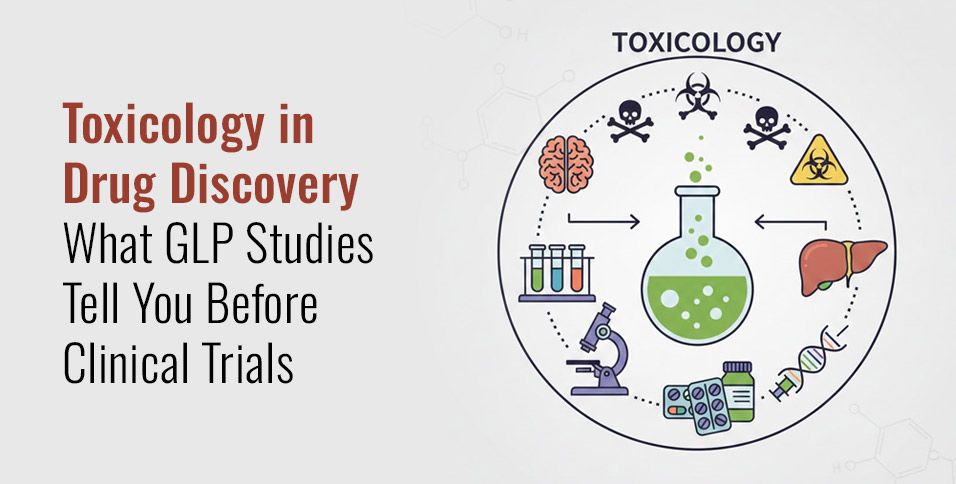
The transition from preclinical discovery to human testing is one of the most pivotal, and heavily scrutinized, moments in drug development. While early research identifies promising compounds, it is toxicology that determines whether these candidates are safe enough to advance. Among toxicology approaches, GLP toxicology studies (Good Laboratory Practice toxicology studies) stand at the center, providing the scientific and regulatory evidence needed to protect patients and secure approval for first-in-human trials. According to a report from S&S Insiders, the European Medicines Agency (EMA) announced that 95% of all toxicology data submitted for drug approvals in 2024 were from GLP-certified studies, up from 88% in 2022. The projected market size for the Toxicity Testing Outsourcing Market is USD 8.28 Billion by 2032.
This article breaks down what GLP toxicology studies are, what they measure, and why they’re essential in the journey from discovery to clinic.
What Are GLP Toxicology Studies?
GLP Tox studies are structured safety assessments conducted under Good Laboratory Practice regulations. These standards, enforced globally, ensure that data is reliable, reproducible, and acceptable to regulatory agencies like the FDA, EMA, or PMDA.
In practice, GLP toxicology studies expose animals to a drug candidate under carefully controlled conditions. Researchers then observe and record how the compound affects biological systems, documenting any adverse effects across different doses and exposure durations.
Without this data, regulators will not allow a compound to move into human trials.
Key Endpoints Evaluated in GLP Tox
Toxicology isn’t just about identifying harm, it’s about understanding how, when, and why adverse effects occur. GLP studies typically examine:
- Acute toxicity: Short-term effects after a single or limited dose.
- Repeat-dose toxicity: Impact of prolonged exposure at various dose levels.
- Genotoxicity: Whether the compound damages DNA, potentially leading to mutations or cancer.
- Reproductive and developmental toxicity: Effects on fertility, embryonic development, or offspring health.
- Carcinogenicity: Long-term potential to cause tumors.
- Safety pharmacology: Impact on vital systems such as cardiovascular, respiratory, or central nervous system function.
Together, these endpoints provide a comprehensive safety profile.
Why GLP Tox Matters Before Clinical Trials
Clinical trials place human volunteers at the center of research. Regulators and sponsors need assurance that risks are minimized. GLP toxicology studies deliver this assurance by answering key questions:
- What is the safe starting dose for first-in-human studies?
- Which organs or systems are most vulnerable to toxicity?
- How do toxicity risks vary with dose, frequency, and duration?
- Are toxic effects reversible or permanent?
These insights not only support regulatory filings but also guide clinical trial design, helping researchers monitor the right safety markers during early studies.
Regulatory Role of GLP Toxicology
Regulatory agencies require GLP-compliant toxicology data in Investigational New Drug (IND) or Clinical Trial Applications (CTA). Data integrity is critical: without adherence to GLP standards, results may be rejected.
Agencies also expect toxicology results that align with the intended clinical program. For example, a drug meant for chronic use in patients may require longer repeat-dose studies compared to a drug designed for short-term therapy. GLP studies ensure this alignment, providing regulators with confidence in the scientific and ethical foundation of clinical trials.
The Impact on Drug Discovery Decisions
Toxicology isn’t just a regulatory hurdle, it’s a decision-making tool for developers. By revealing dose-limiting toxicities, safe exposure levels, and organ-specific risks, GLP toxicology allows companies to refine compounds or discontinue high-risk candidates before investing heavily in clinical trials.
For instance, if liver toxicity is detected at therapeutic doses, developers might reformulate the compound, adjust dosing strategies, or shift focus to safer alternatives. These choices save time, resources, and protect patients down the line.
Outsourcing to a reliable GLP Tox service provider ensures that studies are conducted under rigorous regulatory standards, generating high-quality data that supports informed decision-making throughout the drug development process.
Emerging Trends in GLP Toxicology
Advancements are reshaping how toxicology data is generated:
- In vitro assays: Complement animal studies with cell-based systems that detect genotoxicity or cardiotoxicity earlier.
- In silico modeling: Computer-based simulations predict toxic outcomes based on molecular structure.
- Biomarker development: Sensitive markers of organ injury, such as kidney or cardiac biomarkers, allow earlier detection of toxicity.
- Alternative models: Ethical considerations are driving adoption of non-animal testing where feasible, supported by regulatory acceptance in specific cases.
These innovations enhance the predictive power of GLP studies while supporting more humane research practices.
Final Thoughts
Toxicology may not always get the spotlight in drug discovery, but it is the gatekeeper between promising science and clinical reality. GLP toxicology provides the data that regulators, sponsors, and patients rely on to ensure safety before human testing begins.
By rigorously evaluating toxicity endpoints, guiding dose selection, and aligning with regulatory requirements, GLP studies help transform a molecule into a viable therapy. As drug discovery grows more complex and personalized, toxicology remains essential, protecting patients while accelerating the delivery of safe, effective medicines.
In the end, GLP toxicology isn’t just a box to check. It’s a foundation of trust that underpins every new therapy entering the clinic.