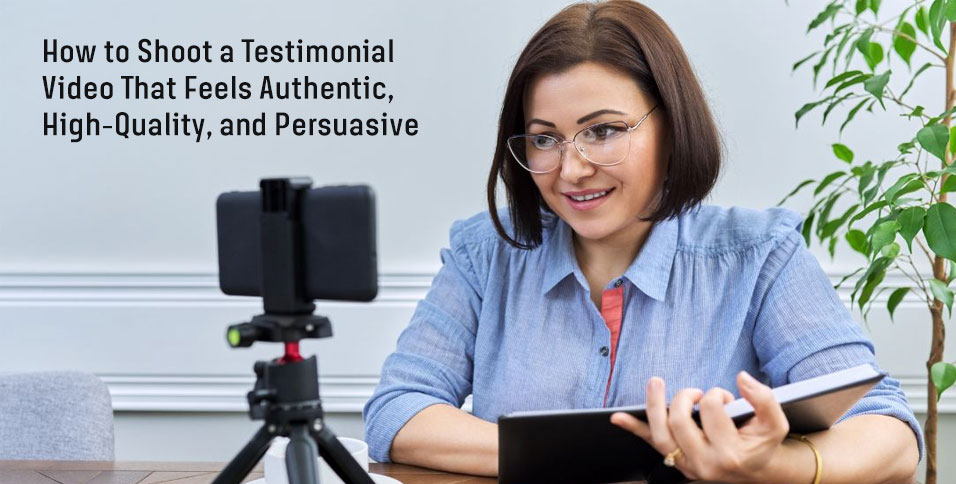
Shooting a testimonial video is one of the most effective ways to build trust today. People no longer respond to polished brand claims—they respond to real stories told by real humans. But while the idea sounds simple, the process can get complicated: lighting, audio, framing, questions, performance anxiety, and post-production all play their part.
Whether you’re handling testimonial video production in-house or planning to capture stories for clients, this guide breaks everything down step-by-step—plus offers a modern shortcut for brands that want studio-level results without hiring a full crew.
Start With the Story, Not the Equipment
Before you think about lighting, location, or lenses, focus on the story you want to capture. A testimonial video works only when the narrative feels honest, relevant, and emotionally clear.
A strong story typically answers:
- What problem did the customer face?
- Why did they choose your brand?
- What changed after using it?
- What would they tell others considering it?
These elements give your testimonial direction and depth.
Once the story foundation is in place, it becomes much easier to design the visual and technical setup. Instead of shooting blindly, you’re shaping the entire video around what truly matters: the customer’s transformation.
Prepare Your Interviewee for a Natural Performance
Most customers aren’t used to being on camera, and that’s completely normal. The secret is in guiding them—not scripting them.
Help them feel comfortable by:
- Sharing the question list in advance
- Encouraging them to speak conversationally
- Avoiding memorized lines
- Letting them pause, think, and restart anytime
- Reminding them it doesn’t need to be perfect
Your goal is authenticity, not Hollywood acting.
Once your interviewee feels at ease, the next step is creating an environment that makes them look and sound their best—because even the most genuine story can fall flat if the setup feels distracting.
Choose the Right Location and Background
A testimonial should be visually clean but also personal. Great locations include:
- A well-lit office corner
- A customer’s workspace
- A neutral background with depth
- A setting connected to the service or product
Avoid clutter, background noise, harsh shadows, or anything that might steal attention from the speaker.
With the location set, it’s time to lock in the technical details that take your testimonial video production from amateur to professional.
Master the Three Pillars: Lighting, Audio, and Framing
Lighting
Soft, indirect light works best. Natural window light or a simple softbox angled at 45° can dramatically improve the look.
Audio
Audio is more important than video quality. Use a lavalier mic, shotgun mic, or—at the very least—record in a quiet room.
Framing
Keep the subject slightly off-center (rule of thirds), maintain eye level, and allow space for captions or branding elements.
Once the interview begins, your focus shifts from the technical setup to the flow of the conversation—this is where the real magic happens.
Guide the Interview, Don’t Control It
The best testimonial videos feel unscripted and human. Ask open-ended questions such as:
- “Can you walk me through how things were before using our product?”
- “What surprised you the most?”
- “How has this impacted your life or business?”
Let the customer tell their story in their own words. If they say something powerful, ask them to repeat it more clearly.
Capturing strong raw footage is important—but shaping it into a compelling final asset is where the real value emerges.
Edit for Emotion, Clarity, and Flow
Trim dead air, remove irrelevant tangents, tighten phrasing, and add captions. Subtitles are essential, since most viewers watch with the sound off. Add light background music only if it enhances the emotional tone.
Always aim for:
- Authenticity
- Conciseness
- Visual consistency
- Fast hook within the first 3 seconds
But let’s be honest: this whole workflow can be overwhelming for brands without a full production team. That’s why many companies now look for streamlined methods that simplify testimonial collection from start to finish.
Shooting Great Testimonial Videos Without a Crew
Not every brand has the time, equipment, or skill set for full-scale production. And even when they do, customers often don’t want to set up cameras or coordinate schedules.
This is where modern tools step in.
Platforms like Vidlo, a video testimonial collection software, let you gather studio-quality testimonials without shooting anything yourself. Instead of handling lighting setups, camera gear, or editing software, you simply send a link—your customer records directly from their phone or laptop, guided by built-in prompts, and the platform handles the rest.
For many brands, this has become the most efficient approach to testimonial video production because:
- Customers record in minutes
- Quality is automatically enhanced
- Captions and layouts are generated
- Everything is centralized and ready to publish
It’s not a replacement for full production when cinematic quality is required—but it’s absolutely a game-changer for scalable, authentic testimonial content.
Still, even with tools that simplify the process, understanding where to place and how to use these videos is what ultimately maximizes their impact.
Use Your Testimonial Videos Where They Influence Decisions
A strong testimonial shouldn’t sit hidden on one page. It should live wherever trust matters most:
- Landing pages (above the fold)
- Product pages
- Sales decks
- Email sequences
- Paid ads
- Social reels and TikToks
Each placement reinforces credibility at a different stage of the buyer journey.
Now that you understand the full process—from story, to shooting, to distribution—you’re ready to apply these principles to your next testimonial project.
Final Thoughts
Shooting a testimonial video doesn’t need to be complicated or intimidating. When done right, it’s one of the most persuasive assets a brand can have. The key is combining authentic storytelling with intentional production choices—and using modern tools when a full crew isn’t realistic.
Whether you’re capturing footage with professional gear or collecting it through AI-assisted platforms like Vidlo, the goal remains the same:
real customers, real stories, real impact.