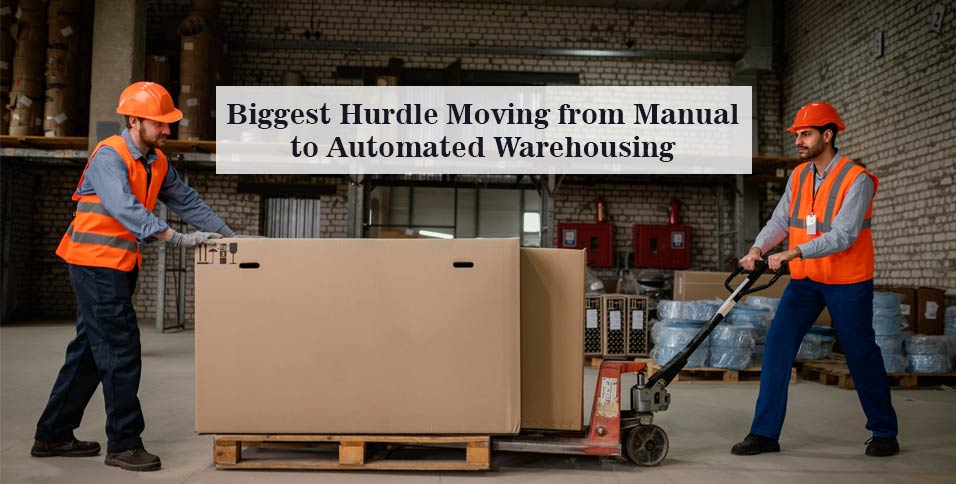
Transitioning to warehouse automation offers huge benefits: higher throughput, fewer errors and lower labor costs, but it is far from a plug-and-play process. Industry surveys show that while most businesses plan to increase automation, they cite major barriers like high costs, integration complexity, and lack of skilled personnel. Initial investment in automated systems can be expensive and that warehouse staff may struggle and may resist using new approaches” after years of manual routines. In short, the biggest challenge is often not the hardware itself but the change management around it, aligning new technology with existing systems and people.
Integrating New Technology with Legacy Systems
A common challenge is fitting new automation into existing infrastructure. Many warehouses still rely on legacy WMS/ERP systems and manual processes, so incompatibility often delays projects. A recent report found that 42% of companies consider integrating new automation their biggest hurdle. Another survey revealed that 54% of managers cite outdated systems as the primary cause of delays. Vendors stress that new machines – such as conveyors, robots, and sorters, and software must integrate properly and seamlessly with existing warehouse management systems, which requires meticulous planning. Without careful preparation, data mismatches and workflow disruptions can easily occur, leading to inventory errors or costly downtime.
Workforce Readiness and Change Management
People are another major challenge. Automation represents a significant cultural shift, and many workers worry about job security. A McKinsey study found that nearly 60% of warehouse employees fear automation will negatively impact their roles. In reality, staff with years of experience in manual processes often approach new technology cautiously. This makes clear communication, training, and active employee involvement essential. Experts recommend investing in hands-on training programs and adopting a phased rollout so teams can adapt gradually. For example, combining e-learning with workshops and step-by-step implementation helps employees build confidence and skills. Addressing concerns openly and emphasizing the safety and efficiency benefits of automation can turn resistance into engagement.
Cost, ROI and Planning
Upfront cost is one of the most common barriers. Warehouse automation solutions, ranging from automated storage systems to robotics, can require investments from hundreds of thousands to several million dollars. For smaller operations, justifying the ROI is especially critical. The good news: McKinsey data shows that automated operations typically recover their investment within 18–36 months. Building a strong business case means showing how reduced errors, lower labor costs, and higher throughput offset the expense. Starting with pilot projects and phased budgeting can also help mitigate risk. Ultimately, careful planning is essential: identify which processes truly need automation, audit inventory and workflows in advance, and choose technologies that match your scale to avoid costly surprises.
Overcoming the Biggest Hurdles
In short, the largest challenge in moving from manual to automated warehousing is managing the change, technically and culturally. Integration headaches and workforce adaptation top the list of obstacles. Overcoming them requires a structured approach. Key strategies include:
Thorough Assessment: Audit your current processes, data accuracy and layouts to see where manual steps create bottlenecks. Identify specific tasks (like picking or sorting) that automation should address.
Plan Integration: Choose flexible systems (modern WMS or cloud platforms) that integrate well. Map data flows between new machines and existing software. Engage IT or integrators early to bridge legacy gaps.
Engage Employees: Communicate the vision and involve staff from day one. Provide training on new tools well before go-live. Emphasize how automation reduces tedious tasks, improving safety and job satisfaction.
Phased Rollout: Start small (for example, add one automated station or use pick-to-light systems first). Test and refine each phase, gathering employee feedback. This gradual approach reduces disruption and builds confidence.
Monitor and Adapt: Use real-time metrics to catch issues early. Be prepared with backup processes (manual overrides) while systems stabilize. Adjust your plan as needed.
By planning carefully and prioritizing people as much as technology, mid-size warehouses can smooth the shift to automation. In the end, the biggest challenge isn’t a single fault, it’s orchestrating many pieces at once. But with an informed strategy (and realistic timeline), companies can surmount integration and change-management hurdles and unlock the efficiency gains that automation promises.