Bone marrow is a soft, spongy tissue inside our bones. It is found mainly in the pelvis, ribs, and sternum. It is crucial for the production of blood cells, including RBCs, WBCs, and platelets. It also contains hematopoietic stem cells.
Stem cells help differentiate RBCs, WBCs, and platelets, depending on the body’s needs. On the other hand, blood cells help:
- Transport oxygen and nutrients
- Remove waste products
- Protect the body from infections
- Form clots during injuries
- Regulate body temperature, pH balance, and fluid levels.
Together, blood and bone marrow keep the body working properly. However, genetic mutations, genetic disorders, and exposure to radiation and a toxic environment can disrupt the normal blood cell production.
The bone marrow starts to produce abnormal white blood cells. These cells grow uncontrollably. They crowd out healthy blood cells. This reduces the body’s ability to fight infections, carry oxygen, and stop bleeding. This disease is called leukemia.
Since it is a life-threatening disease, it is crucial to diagnose it at an early stage. Here is where human monoclonal antibodies come into play.
What are Human Monoclonal Antibodies?
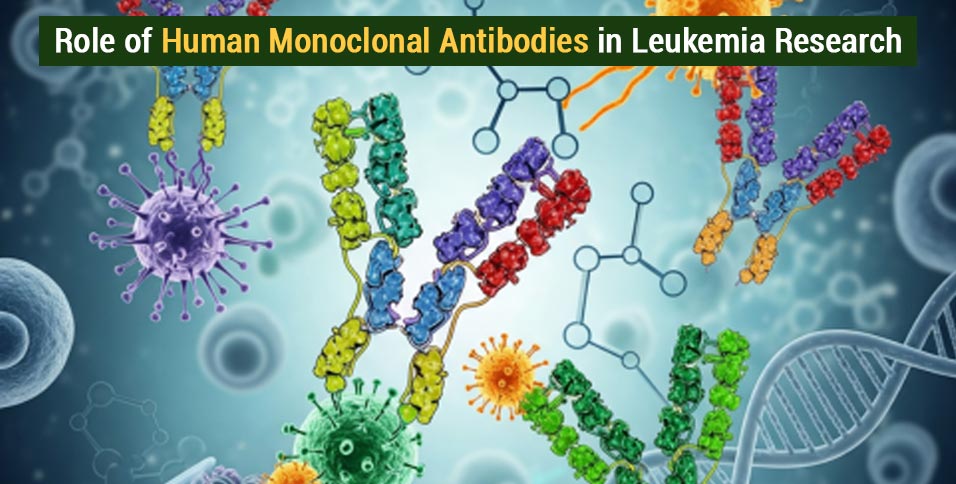
Monoclonal antibodies are lab-made antibodies. They are designed to target specific molecules called antigens. Human monoclonal antibodies come from human B-cells or are made using genetic engineering. They mimic the human immune system. They are safer and less likely to cause side effects.
Human monoclonal antibodies can help in leukemia research and treatment. They can:
- Detect leukemia cells.
- Trigger cancer cells to die.
- Help deliver drugs directly to cancer cells.
- Block signals that make cancer cells grow.
For instance, the anti-BIRC5 antibody is widely used in leukemia research. BIRC5, also called survivin, is a protein that helps leukemia cells survive. It also makes them resistant to chemotherapy. High BIRC5 levels are linked to poor prognosis in leukemia patients.
The anti-BIRC5 antibody binds to leukemia cells that have survived. This helps the cancer cells die through apoptosis (programmed cell death). It also makes chemotherapy more effective. In studies with animals, anti-BIRC5 antibodies reduced leukemia cell growth and improved survival.
How Human Monoclonal Antibodies Aid in Leukemia Research?
Identify Leukemia Cells
Leukemia begins when abnormal white blood cells start multiplying uncontrollably in the bone marrow. These cancerous cells often express unique proteins, known as antigens, on their surface. Human monoclonal antibodies are designed to detect and attach to these antigens with high accuracy.
By binding specifically to leukemia cell markers, such as CD19, CD33, or CD123, researchers can easily distinguish cancerous cells from healthy blood cells. This helps in:
- Diagnose leukemia early by detecting even small numbers of abnormal cells in the blood or bone marrow.
- Classify leukemia types based on which antigens are present.
- Isolate leukemia cells in the lab to study their behavior, growth rate, and genetic mutations.
Based on the results, scientists can identify the ideal treatment for the patient.
Understand Disease Mechanism
Human monoclonal antibodies also help researchers explore how leukemia cells grow, survive, and resist treatment. When an antibody binds to a specific protein on a leukemia cell, it can block or activate signaling pathways inside the cell. Observing what happens next provides valuable clues about the role of that protein in cancer development.
For example:
- If a monoclonal antibody binds to a growth receptor and stops cell division, it means that the receptor was promoting cancer cell growth.
- If blocking a protein like survivin (BIRC5) triggers cell death, it shows that the protein was preventing apoptosis.
This study helps researchers discover new therapeutic targets—proteins or genes that can be blocked to stop leukemia progression.
Develop Targeted Therapies
Traditional chemotherapy affects both healthy and cancerous cells. As a result, it causes serious side effects like fatigue, hair loss, and a weakened immune system. On the other hand, human monoclonal antibodies make treatments more precise and safer.
These antibodies:
- Directly attack leukemia cells
- Block essential survival pathways.
- Mark them for destruction by immune cells.
- Deliver toxic substances directly to them.
For instance, Antibody-Drug Conjugates (ADCs) are monoclonal antibodies linked to chemotherapy drugs or radioactive isotopes. The antibody acts like a guided missile—it travels through the bloodstream, finds leukemia cells, and releases the drug only where it is needed. This increases the treatment’s effectiveness while protecting healthy tissues.
Boost the Immune System
Human monoclonal antibodies can activate the body’s immune system against leukemia. Usually, cancer cells can evade the immune system by altering or masking their surface proteins. However, monoclonal antibodies help expose these cells so that the immune cells can recognize and destroy them.
When an antibody binds to a leukemia cell, it attracts immune cells, such as natural killer (NK) cells and macrophages. These immune cells then kill the tagged cancer cell through a process called Antibody-Dependent Cellular Cytotoxicity (ADCC).
Some antibodies also activate a process called Complement-Dependent Cytotoxicity (CDC). In this process, the proteins in the blood work together to punch holes in the leukemia cell membrane and kill the cells.
Through these mechanisms, monoclonal antibodies not only attack cancer directly but also help the immune system “remember” the cancer. As a result, this reduces the chances of relapse.
The Bottom Line
Human monoclonal antibodies have completely changed how leukemia is studied and treated. They help identify leukemia cells, reveal disease mechanisms, enable targeted therapies, activate immune responses, and support precise diagnosis and monitoring. However, when using human monoclonal antibodies (mAbs) for your research project, ensure they are sourced from a reliable supplier.