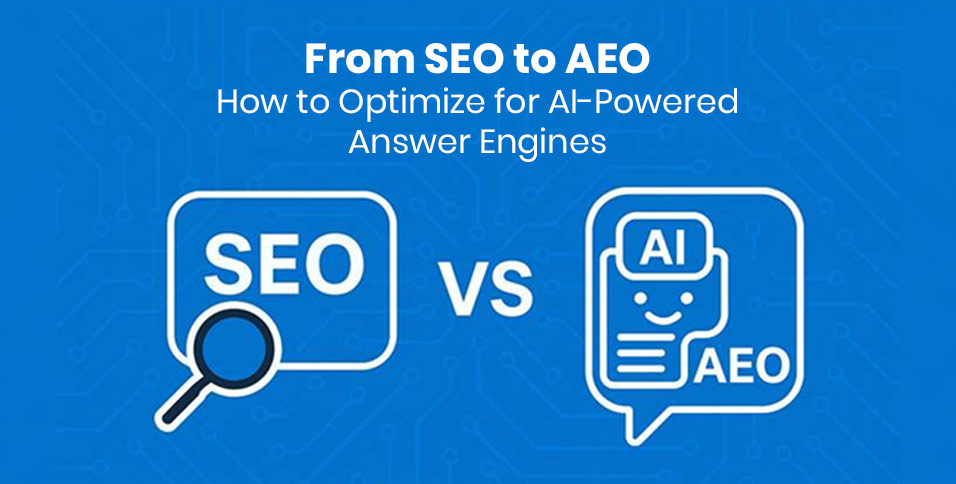
Search has changed more in the past two years than it did in the previous ten. Not long ago, if you wanted to show up online, the rules were clear: pick your keywords, optimize your meta tags, build some links, and pray to the Google gods. But now? Search isn’t just about blue links on a page anymore.
Enter Answer Engines – the AI-powered systems behind tools like ChatGPT, Google’s AI Overviews, Perplexity, and countless others. These aren’t just search engines. They’re conversational platforms designed to deliver direct, contextual, and human-like answers to users.
For businesses and marketers, that means we’re not just optimizing for SEO anymore. We’re moving into the era of AEO – Answer Engine Optimization. And if you want your brand to stay visible, trusted, and chosen, you can’t afford to ignore it.
What Exactly Is AEO?
Answer Engine Optimization (AEO) is the practice of optimizing your digital content so it can be found, understood, and surfaced as an answer by AI-powered systems.
Instead of showing ten links and leaving the user to decide, answer engines deliver a single summarized answer – sometimes citing sources, sometimes not. That means if your brand isn’t included in that answer, you’re invisible to the user.
Where traditional SEO asks, “How do we rank higher on the search results page?”, AEO asks, “How do we become the answer itself?”
Why AEO Is the Future of Search
Here’s why marketers everywhere are paying attention:
- AI Overviews Are Already Live
Google is rolling out AI Overviews that summarize the top answers on a page before showing traditional listings. Bing and DuckDuckGo already integrate AI summaries. - Chatbots as Search Gateways
Platforms like ChatGPT, Perplexity, and Anthropic’s Claude aren’t just productivity tools; they’re becoming default search engines for millions of people. - Changing User Behavior
Gen Z and Millennials increasingly prefer conversational search. They don’t want to scroll; they want an instant, personalized answer.
In short: SEO still matters, but AEO will increasingly decide who gets seen.
How AEO Differs From SEO
To really understand the shift, here’s a simple comparison:
| Aspect | SEO (Traditional) | AEO (Answer Engines) |
| Goal | Rank higher on SERPs | Become the answer AI cites |
| Focus | Keywords, links, on-page factors | Context, clarity, structured data |
| Content Style | Broad, keyword-optimized pages | Concise, direct, question-answer formats |
| Success Metric | Clicks & traffic | Citations, visibility in AI responses |
| Search Behavior | Users scan results | AI delivers one synthesized response |
Notice something? SEO is about competing with other sites for attention. AEO is about earning the trust of the AI engine so it chooses you as the source.
If this all sounds exciting but overwhelming, you’re not alone. The rules are evolving fast, and keeping up requires both strategy and execution. That’s where Dignitas Digital comes in, a leading SEO Agency from Philly that can help your business spread beyond SEO into AEO, so you don’t just show up in searches; you become the answer.
The Pillars of AEO: How to Optimize for Answer Engines
So, how do you actually optimize for AI-powered answer engines? Here’s a roadmap:
1. Understand Search Intent in Conversation Mode
Keyword research is still important, but instead of just targeting “digital marketing services Philadelphia,” think about questions users would ask an AI assistant.
Examples:
- “What’s the best digital marketing agency in Philadelphia for small businesses?”
- “How can I grow my online store with SEO in 2025?”
AI thrives on natural language queries, so your content should mirror that conversational tone.
2. Structure Content for Clear Answers
AI models pull answers from well-structured, scannable content. That means:
- Use FAQ sections with direct answers.
- Write short, crisp paragraphs that answer one question at a time.
- Add how-to guides, lists, and tables (AI loves structured info).
Pro tip: The easier it is for a human to skim your page and get the answer, the easier it is for an AI to lift your content.
3. Invest in Schema Markup & Structured Data
Schema markup is your backstage pass to AEO. By tagging your content with FAQPage, HowTo, Product, Review, and Organization schema, you’re essentially telling AI:
“Here’s what this page means, not just what it says.”
That structured clarity increases the likelihood that your site is chosen as a citation.
4. Prioritize Authority and Accuracy
AI engines are increasingly tuned to reward credible, authoritative content. That means:
- Citing reputable sources in your content.
- Publishing expert-written articles (with author bios).
- Keeping data fresh and updated.
If your content looks trustworthy to humans, it’s more likely to be trusted by AI.
5. Optimize for “Zero-Click” Value
In the world of AEO, clicks aren’t guaranteed. Sometimes, the AI gives your answer without sending traffic. Sounds scary, right? But being cited builds brand recognition and authority.
The playbook:
- Make sure your brand is named in the content so if it’s quoted, your identity travels with it.
- Balance concise answers with deeper insights that encourage users to still click through.
6. Expand Beyond Google
AEO isn’t just about search engines. Think about optimizing for:
- ChatGPT plugins (soon to be key discovery channels).
- Perplexity and AI chat apps that link sources.
- Voice assistants like Alexa and Siri.
The future of search is search everywhere, and your content should be discoverable across platforms.
Common Mistakes to Avoid in AEO
Just as with SEO, there are pitfalls:
- Over-Optimizing for Keywords Instead of Questions: AI won’t care if you stuffed a phrase ten times. It cares if you give a clear, human-friendly answer.
- Ignoring Schema: Without structured data, your chances of being cited drop dramatically.
- Forgetting Authority: Low-trust content (thin, salesy, or vague) rarely makes it into AI-powered answers.
- Not Updating Content: AI engines want fresh data. Outdated content = less visibility.
The Human Element: Why Storytelling Still Matters
It’s easy to think AEO is purely technical. But here’s the twist: AI is trained to mimic human communication. That means human-friendly writing, stories, and examples still matter.
For instance, if you’re a fitness brand answering “What’s the best workout routine for busy professionals?”, including a quick story about a real client who found success makes your answer stand out, to both humans and AI.
What This Means for Your Business
The shift from SEO to AEO isn’t about abandoning one for the other. It’s about layering AEO strategies on top of your SEO foundation. For businesses looking to master both, resources like https://seo-agentur.koeln/ provide expert guidance to optimize for AI-driven search.
Think of it this way:
- SEO gets you ranked.
- AEO gets you chosen.
And in 2025, being chosen by AI assistants is what drives visibility, credibility, and ultimately, growth.
Final Thoughts: From Optimizing Pages to Optimizing Answers
We’re entering a new chapter in digital marketing. AEO is no longer optional, it’s the evolution of how people find information, products, and services.
If you want your brand to thrive in this AI-driven world, you need to ask yourself:
- Are we structuring our content for answers, not just rankings?
- Are we giving AI the clarity it needs to trust and cite us?
- Are we ready to meet customers where they’re searching, whether that’s on Google, a chatbot, or a voice assistant?
The brands that embrace this shift now will be tomorrow’s leaders.
Take the Next Step
Search isn’t waiting for anyone. The businesses that adapt will own the spotlight. The ones that don’t will quietly fade from the conversation.
Let Dignitas Digital guide you through this shift. From SEO foundations to AEO strategies, we’ll help you compete in today’s digital world and grow your business online with Boost Corovic.