Mirror Review
September 22, 2025
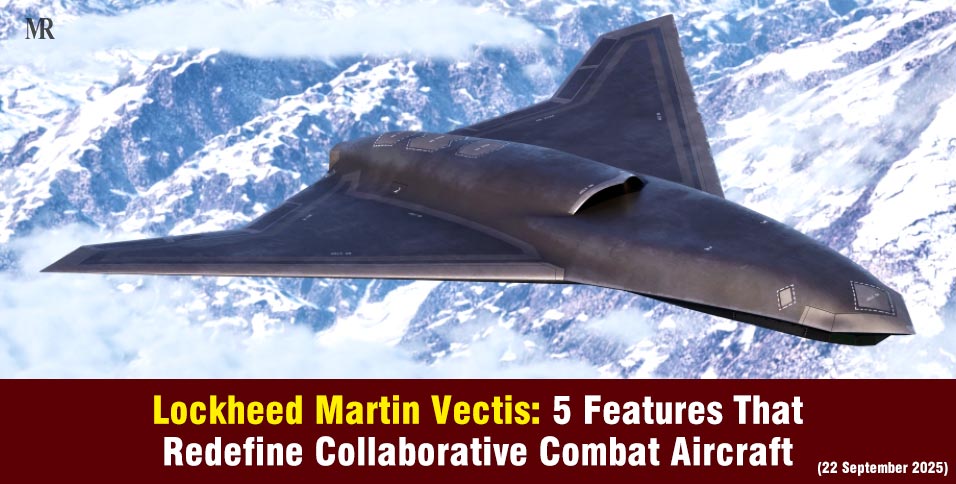
Lockheed Martin Skunk Works Vectis is the company’s newest Group-5 collaborative combat aircraft (CAA) aimed at giving U.S. and allied forces a survivable and reusable drone that can fly alongside 5th-gen fighters.
The design blends stealth, autonomy, and open mission systems to perform ISR, strike, electronic warfare, and air-to-air missions.
OJ Sanchez, vice president and general manager of Skunk Works, described Lockheed Martin Vectis as “the culmination of our expertise in complex systems integration, advanced fighter development, and autonomy,” emphasizing it is “survivable, lethal, and reusable.”
With prototype parts in production, the first flight is expected within two years, signaling a tangible step forward for reusable high-end CCAs.
Why this matters now
Vectis represents a shift from purely attritable drone swarms to a survivable, reusable platform that can operate in high-threat airspace while complementing advanced fighters.
This changes how militaries plan missions, evaluate CCA procurement, and integrate unmanned teammates into contested environments.
By blending affordability with advanced capabilities, Lockheed Martin Vectis offers both operational flexibility and strategic value, potentially redefining expectations for collaborative combat aircraft.
5 Lockheed Martin Vectis Features That Redefine Collaborative Combat Aircraft
1. Stealth-Informed Shaping for Low Observability
Lockheed Martin Vectis applies fighter-class signature design to a reusable platform. Lower radar and infrared signatures increase survivability in contested zones compared with attritable drones. This stealth-first design allows Vectis to operate in high-threat environments, performing ISR, strike, or EW missions with reduced risk to the platform and mission integrity.
Analysis: Unlike throwaway drones, Vectis can be deployed repeatedly, making stealth not just a feature but a force multiplier for mission planning and operational resilience.
2. Open mission architecture and MDCX compatibility
Vectis integrates with open mission systems and government reference architectures, including MDCX™, ensuring seamless communication with F-35s, F-22s, and allied aircraft. This allows operators to share real-time data and coordinate missions more effectively.
Analysis: The open architecture reduces integration friction, enabling rapid adoption of new software upgrades or payloads. It positions Lockheed Martin Vectis as a versatile platform for joint and coalition operations.
3. Modular Payloads and Multi-Mission Flexibility
The aircraft is configurable for ISR, electronic warfare, precision strike, or air-to-air roles. Operators can tailor loadouts to mission needs rather than purchasing multiple drone types.
Analysis: This flexibility supports cost efficiency, reduces logistics complexity, and allows commanders to deploy Vectis in both training and combat scenarios, enhancing operational agility.
4. Reusable, Runway-Based Design with Field Maintainability
Vectis is designed for repeated sorties with runway launches and straightforward field maintenance. This makes it suitable for agile combat employment from dispersed locations and daily operational use.
Analysis: The reusability factor positions Lockheed Vectis differently from single-use drones, providing both long-term cost savings and reliability for sustained missions.
5. Digital Engineering to Control Cost and Speed Upgrades
Lockheed Martin relies on digital engineering and advanced manufacturing to maintain tight cost and schedule targets. This approach allows faster iterations, easier upgrades, and lower lifecycle cost risks compared with high-end fighters produced at small rates.
Analysis: Digital engineering ensures Vectis can evolve quickly in response to emerging threats, keeping it relevant across multiple operational theaters and future-proofing the platform.
Trade-offs and risks
- Cost vs. Attritability: A reusable, survivable CCA is more expensive per unit than throwaway drones. Military planners will weigh unit cost against mission endurance.
- Engine and Performance: Details on propulsion, top speed, and endurance are undisclosed. These factors will determine mission suitability.
- Sustainment and Upgrades: High-end sensors and communications require consistent software and hardware updates to maintain effectiveness in evolving threat environments.
Bottom line
Lockheed Martin Skunk Works Vectis blends stealth, open systems, modular payloads, maintainability, and modern manufacturing to deliver a survivable Group-5 CCA.
Its five defining features together create a reusable, multi-mission platform that could redefine expectations for collaborative combat aircraft.
With the first flight, engine details, and cost figures coming in the next two years, militaries will soon see if Lockheed Martin Vectis becomes the durable, high-capability wingman commanders expect—or remains a promising but capability-heavy prototype.