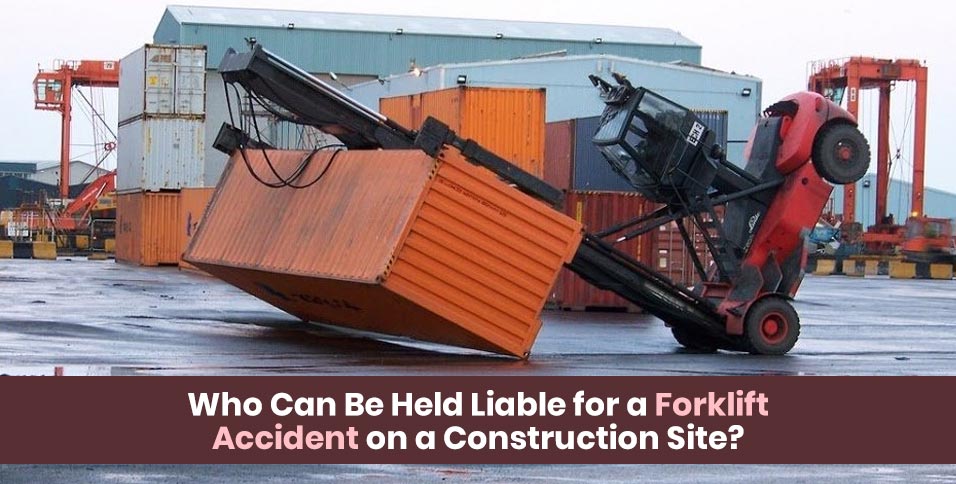
Forklifts are common tools on construction sites and are used every day to move heavy materials. They help finish work faster but can be unsafe if people don’t use them correctly. Accidents involving forklifts often lead to serious injuries that can change someone’s life in an instant. These accidents can involve workers, contractors, or even people just nearby. When someone gets hurt in this type of situation, the question becomes who should be responsible for covering the losses. In many cases, injured workers may have the right to seek forklift injury compensation through legal action or claims against those at fault. Understanding who can be held liable starts with looking at the different parties on a job site. Each party has responsibilities for safety, training, and equipment use, especially when forklifts are obtained through a Forklift Rental service rather than owned outright
The Role of Employers
Employers play a central role in maintaining safe construction sites. They must train workers and ensure everyone knows how to use forklifts safely. They must also follow safety rules to help prevent accidents. If an employer fails to meet these obligations, they may be held liable when someone gets hurt. Even when workers share some responsibility, the employer’s duty to provide a safe environment cannot be ignored.
Equipment Manufacturers
Sometimes accidents happen not because of worker error but because of faulty equipment. A forklift that has a design flaw or a manufacturing defect can fail at a critical moment. If a malfunction leads to injuries, the company that made or sold the forklift could be responsible. This type of liability often comes down to product safety and whether the equipment was safe for its intended use. Holding a manufacturer accountable can be more complex, but it is an important part of protecting injured workers.
Contractors and Subcontractors
Many construction jobs include several contractors and subcontractors working on the same site. Each company may oversee different tasks on the same site. When a subcontractor fails to follow safety rules or allows unsafe operation of machinery, accidents can occur. If a worker from one company is injured due to the negligence of another, liability may extend beyond their direct employer. These cases often involve a close look at contracts, responsibilities, and how safety duties were divided.
Site Owners and Managers
The owner of a construction site or the management team in charge of operations also carries responsibility. Site owners must ensure that the property is reasonably safe for workers and visitors. If they fail to maintain proper oversight, they may be held accountable for injuries that occur on the site. Their duties may include monitoring contractors, inspecting equipment, and enforcing compliance with safety rules. When site owners neglect these responsibilities, they may be added to the list of liable parties.
Shared Responsibility
Liability in forklift accidents is rarely simple. In many cases, more than one party may share responsibility for what happened. An employer may have failed to train workers, while a subcontractor failed to supervise operations, and the equipment itself may have been defective. Courts and legal professionals often evaluate all these factors to decide how responsibility should be divided. This approach ensures that injured workers are not left without options for recovery.
Forklift accidents on construction sites can be devastating, but understanding liability is the first step toward recovery. Employers, manufacturers, contractors, and site owners all have duties to protect workers and prevent unsafe conditions. When those duties are ignored, the law allows injured individuals to seek compensation from those responsible. Every case is unique, but the goal is always to provide the support and financial help needed for recovery. By holding the right parties accountable, injured workers can move forward with the resources they need to rebuild their lives.