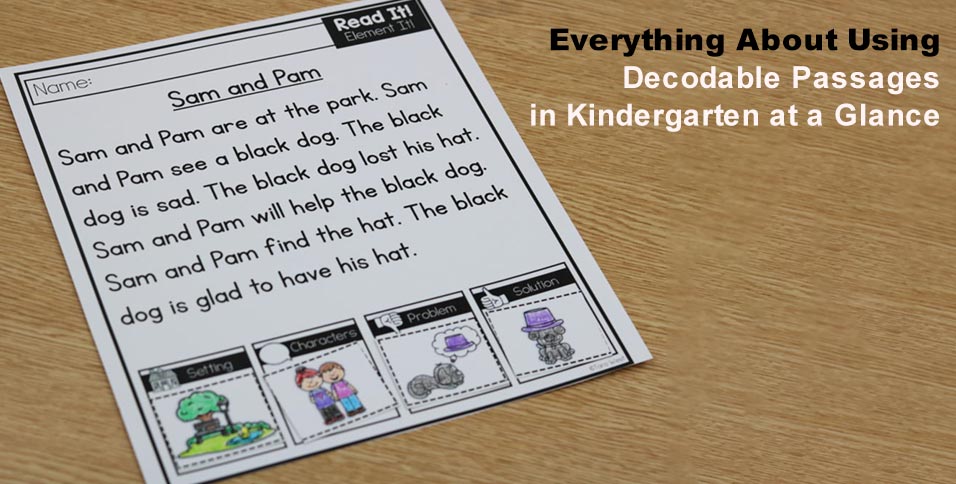
When children start kindergarten, it’s the perfect time to begin their reading journey with more targeted and structured efforts. Teachers need to introduce them to reading fundamentals by choosing the right resources. Anything that is backed by the science of reading can prove most effective. In this context, you can help them go through decodable passages that follow the concept of phonics. Including these texts in early literacy programs is essential if you want children to gain reading confidence. How do you select them? There are many online platforms that offer extensive materials for reading instruction. You can download or buy any of the required books based on your children’s age and reading capacity.
Since this is about teaching reading skills to kindergarteners, you can search for decodable readers kindergarten. These searches will take you to the appropriate platform and its collection of decodable passages, among other options. What do you mean by decodable passages? These short texts contain words that match kindergarteners’ specific phonics knowledge. They focus on words with consonant-vowel-consonant (CVC) patterns, digraphs, or short vowel sounds that match the learners’ existing reading skills. Due to this, beginners learn to decode words systematically and strengthen their phonics skills.
The need for introducing decodable passages in kindergarten
In the initial reading days, children should be exposed to texts that match their phonics abilities. Some schools only rely on leveled readers, which often focus on irregular and complicated words. Kindergarten learners cannot decode these words on their own. You need to give them picture cues. On the contrary, a decodable book is designed in such a way that students can sound out words using their previous knowledge. How does this impact their reading progress? Because decodable passages contain familiar words in the texts, young readers feel confident when they pronounce them. Since they utilize their phonics skills, their decoding abilities also improve. They can use their knowledge of CVC words and others more confidently.
Another good thing about these passages is that they target selective phonics skills. When students read these books, they repeatedly use their phonics skills. It increases their reading fluency and decoding accuracy. Due to this, they acquire one more essential reading skill – automaticity. Hence, it is a clever idea to encourage young readers to identify and decode words based on their knowledge of sounds and patterns.
The connection between the science of reading curriculum and decodable passages
There can be no doubt that decodable passages follow the science-based reading methods. Focus on phonics and systematic exposure to decoding skills is a clear indication of this. Studies also reveal that children learn to read through explicit instruction on language patterns and phonics. With the help of decodable passages, you allow children to use their phonics knowledge in real reading situations, empowering their reading journey.
Therefore, you can say decodable passages prepare readers for complex texts with a strong foundation in phonics. When their grasp of phonics patterns grows, students feel confident trying different reading materials. You can also notice improvement in their comprehension skills. However, choosing the right book is necessary to create a positive impact on your young readers. The texts should match their current learning progress. Also, introducing kids to short texts can be more beneficial at this stage. Since they haven’t yet built reading stamina, the entire exercise can become overwhelming for them.