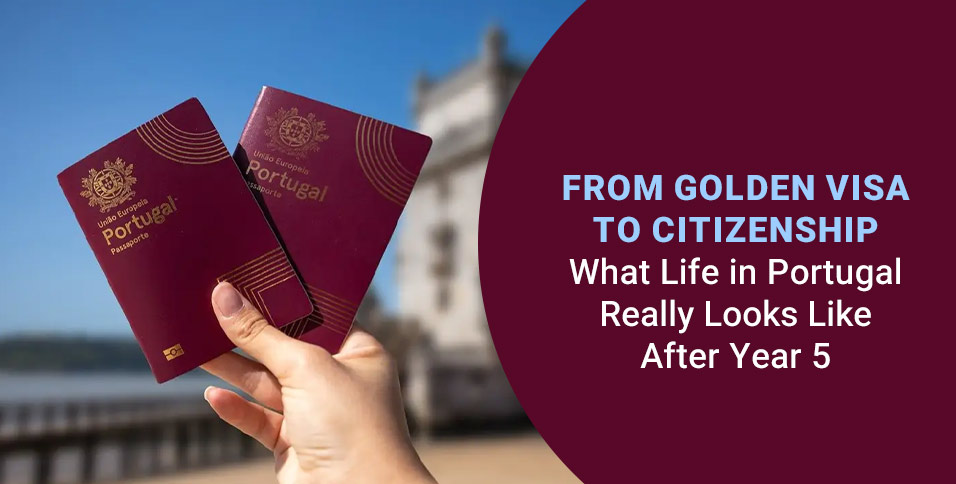
For many, the Portugal Golden Visa isn’t just about residency. It’s about the long game—getting citizenship after five years and building a real life in the country.
But what actually happens after you cross that five-year mark?
The marketing brochures make it sound simple: invest, wait, apply for citizenship, and enjoy life in Europe. But the reality is more layered than that.
Let’s take a closer look at what life really feels like after year five—when the Portugal Golden Visa turns into permanent residency or citizenship, and the “plan B” becomes your actual life.
The Five-Year Residency Requirement: What It Really Means
Portugal requires Golden Visa holders to maintain their residency status for five years before applying for citizenship. But here’s what people often miss: you don’t need to live in Portugal full time.
In fact, the requirement is minimal. You only need to spend an average of seven days per year in the country to maintain your Golden Visa.
For the first five years, this works well for people who aren’t ready to relocate. Maybe you’re testing the waters. Maybe you’re still running a business elsewhere. Portugal lets you keep your options open.
But once you reach the citizenship stage, things start to shift.
Applying for Citizenship: The Process After Year 5
At the five-year mark, you’re eligible to apply for Portuguese citizenship. The process involves:
● Showing proof of legal residency for five years
● Demonstrating ties to Portugal (this can be simple, like having a tax number, local bank account, or property)
● Passing a basic A2-level Portuguese language test
● Submitting clean criminal records from Portugal and your home country
You’ll also need to provide all your Golden Visa documentation again—investment proof, residency cards, and legal paperwork.
On paper, it’s a straightforward process. In practice, expect to wait anywhere from 6 to 24 months for approval, depending on government backlogs.
Life After Citizenship: What Changes and What Doesn’t
Once you get the passport, a few big things change immediately:
● You gain EU citizenship and can live or work anywhere in the EU
● You no longer need to renew residency permits or maintain a specific investment
● You have full voting rights in Portugal and the EU
But here’s the part that often surprises people: daily life in Portugal doesn’t magically transform because of a passport.
You still have to navigate the same cultural shifts, language learning curve, and bureaucratic systems as any other long-term resident. Citizenship removes barriers, but it doesn’t fast-track integration.
Cost of Living: Expectations vs Reality
Many people move to Portugal for the lower cost of living compared to places like London, New York, or Dubai. And it’s true—life can be more affordable here.
But costs are rising. Lisbon and Porto, in particular, have seen steep increases in rent and real estate prices in the last few years. According to Numbeo, Lisbon is now more expensive than Madrid in several categories, including groceries and dining out.
Smaller towns and interior regions still offer excellent value. If you’re open to living in places like Évora, Braga, or the Azores, you’ll get more for your money.
Healthcare: Public vs Private After Citizenship
Portugal’s public healthcare system is accessible to all residents, including Golden Visa holders. Once you become a citizen, you’ll continue to have access to SNS (Serviço Nacional de Saúde), Portugal’s public health service.
The system is good—but can be slow for non-urgent treatments.
Many expats and long-term residents also use private healthcare for faster appointments and specialist care. Private insurance is affordable, with comprehensive plans often costing between €50 to €150 per month depending on age and coverage.
For a list of recommended providers and clinics, check out resources like Expatica’s Portugal healthcare guide.
Taxes: What You’ll Actually Pay
This is one of the biggest questions after getting citizenship. Does life in Portugal mean higher taxes?
The answer depends on your specific situation. Portugal has a Non-Habitual Resident (NHR) tax regime that offers significant tax breaks for the first ten years of residency. But once you become a citizen and start living there full time, you’ll likely pay standard Portuguese tax rates unless you’ve structured things carefully.
Here are the basics:
● Income Tax: Progressive, from 14.5% up to 48% for higher earners
● Capital Gains Tax: 28% for individuals
● Wealth Tax: Applies only to properties valued over €600,000
● Inheritance Tax: None between spouses, children, or parents
Working with a local tax advisor is essential. The rules change frequently, and there are often ways to optimize your liabilities legally.
Language and Integration: Can You Live in Portugal Speaking English?
You can get by in English in Lisbon, Porto, and the Algarve. Most younger Portuguese people speak English well.
But citizenship expects a basic knowledge of Portuguese—that’s why you need to pass the A2-level language test.
More importantly, integrating into daily life is easier when you learn the language. Simple things like dealing with the post office, local markets, or healthcare become much smoother when you can hold a conversation in Portuguese.
If you’re serious about settling in Portugal after year five, language classes are one of the best investments you can make.
Community and Lifestyle: The Day-to-Day Reality
After five years, you’ve likely already built a routine in Portugal. Maybe you split your time between multiple countries, or perhaps you’ve put down roots fully.
Here’s what most long-term expats say:
● The pace of life is slower, and people value time with family and friends.
● There’s a strong café culture—don’t be surprised if coffee breaks become part of your day.
● Bureaucracy can be frustrating, but locals have a patient, “it’ll get done eventually” mindset.
● The weather is a major draw, with over 300 days of sunshine in the south.
Building friendships with locals takes time, but the community is welcoming once you make the effort.
For networking, expat groups on Meetup or Internations are helpful starting points.
What It Really Feels Like After Year Five
The move from residency to citizenship isn’t just paperwork—it’s a lifestyle shift.
Some people see Portugal as a backup plan or a way to hedge against global uncertainty. Others fall in love with the country and fully embrace life here.
Both paths are valid. But if you’re considering the Portugal Golden Visa route, it’s worth thinking beyond the investment. Think about what daily life will feel like after year five, because that’s when your real journey starts.
Also Read: The CEO’s “Plan B”: Why Portugal Is Becoming the Strategic Second Home for Global Leaders