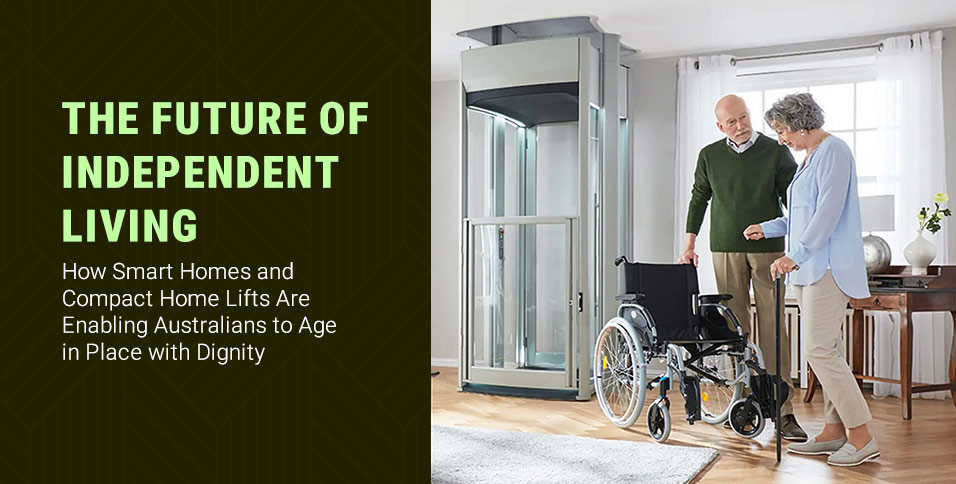
As Australia’s population ages, the desire to remain living independently at home is becoming a national priority. According to the Australian Institute of Health and Welfare (2021), around 90% of older Australians prefer to age in place rather than move to institutional care. This preference is driving innovation in home design and technology. Smart homes and compact home lifts are emerging as key enablers of independence, safety, and comfort. These technologies support mobility for older adults and people with disabilities. They also integrate seamlessly into modern lifestyles, offering convenience and future-proofing for homeowners.
Independent Living Meets Smart Home Innovation
Smart homes are no longer a futuristic concept. They are increasingly part of everyday Australian life. The global smart home market is expected to reach $241 billion by 2027, reflecting widespread adoption of connected devices that improve comfort, security, and energy efficiency. Within this ecosystem, compact home lifts are gaining prominence as essential components that address the mobility challenges faced by aging residents.
Unlike traditional bulky elevators, compact home lifts are designed to fit into smaller spaces typical of Australian homes. They require minimal structural changes. Their integration with Internet of Things (IoT) technology enables remote diagnostics, voice commands, and smart energy management. This enhances both user experience and operational efficiency.
Residents can summon the lift via smartphone apps or voice assistants. Sensors monitor usage patterns to optimise energy consumption. This connectivity adds convenience and ensures timely maintenance, reducing downtime and enhancing safety.
Home Lifts: A Practical Solution for Aging in Place
The benefits of compact home lifts extend beyond convenience. Research from Harvard University (2020) shows that home modifications, including the installation of lifts, can reduce fall risk among elderly residents by up to 40%. Falls are a leading cause of injury and loss of independence in older Australians. Safe vertical mobility within the home is critical.
Home lifts provide a quiet, smooth, and reliable way to move between floors. They remove the physical barriers posed by stairs and allow older adults to maintain autonomy. This reduces reliance on caregivers and can delay or prevent the need to relocate to aged care facilities. Many models are energy-efficient, operating on standard household power.
Features such as regenerative drives and LED lighting minimise electricity use, aligning with increasing environmental awareness among homeowners.
These lifts also serve multifunctional roles. They can transport groceries or laundry between floors, enhancing daily living. Their sleek designs and customisable finishes ensure they complement home aesthetics. Functionality and style are combined.
Retrofitting Homes for the Future
Retrofitting existing homes with compact home lifts is often more cost-effective and less disruptive than relocating. For families committed to aging in place, installation can typically be completed within days. Many lifts do not require pits or machine rooms, making them suitable for a wide range of homes, from heritage properties to modern apartments.
Government policies and building codes in Australia and across the Asia-Pacific region increasingly encourage or mandate accessibility features in residential properties. These frameworks support the adoption of home lifts as part of broader strategies to create inclusive, age-friendly communities. Homeowners who invest in compact home lifts enhance their quality of life. They also future-proof their properties and may increase resale value.
A New Standard for Independent Living
The convergence of smart home technology and compact home lifts is transforming the way Australians approach aging and independent living. By combining innovation, safety, and design, these solutions empower residents to navigate their homes with dignity and ease. As the population continues to age, smart, space-efficient lifts will become a standard feature in homes designed for longevity and accessibility.
Also Read: The Ultimate Guide to Power Racks: Elevate Your Fitness Game at Home