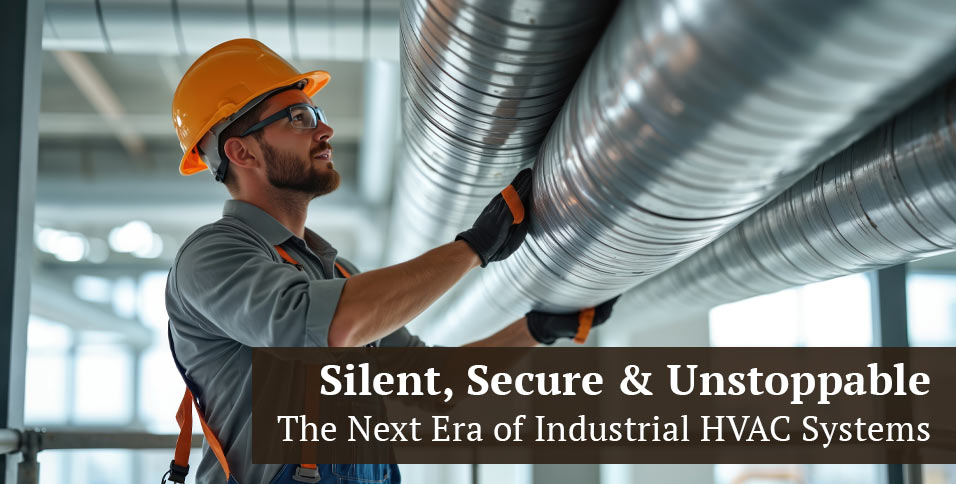
Industrial HVAC systems have quietly transformed over the years. Once loud, energy-hungry machines prone to breakdowns, today’s systems are becoming smarter, more efficient, and more reliable. The focus is no longer just on heating or cooling. Now, industries demand HVAC systems that are quiet, secure from cyber threats, and able to run without interruption. These qualities are no longer a bonus—they are essential.
This shift is driven by the growing need for safer work environments, stronger operational performance, and tighter environmental control. Facilities across sectors—from manufacturing plants to storage centers—rely on HVAC systems to do more than just regulate temperature. These systems must now support productivity, reduce downtime, and protect sensitive processes. To understand this new era of HVAC technology, it’s important to look at how it’s evolving in key areas.
Quieter Operation in Noisy Environments
Industrial spaces are filled with sound—whirring motors, conveyor belts, and heavy equipment all contribute to background noise. Adding a loud HVAC unit on top of that can create distractions, communication problems, and even safety risks.
Modern systems are designed to reduce noise levels without losing power. This is done through better insulation, quieter fan motors, sound-absorbing mounts, and improved airflow design. The result is equipment that blends into the environment rather than disrupting it.
Why does this matter? In a large warehouse or production facility, a quieter HVAC system helps workers focus, makes it easier to communicate, and lowers the chances of hearing-related health issues. In labs or testing rooms, reduced noise also means better working conditions and fewer distractions, which can lead to more accurate results.
For operations that require strict environmental management, a custom environmental control unit is often used to ensure precise temperature and humidity levels without increasing noise levels.
Security Now Comes Built-In
Industrial HVAC systems have become smarter. They’re often connected to building networks and controlled through cloud-based platforms or remote systems. While this improves efficiency and makes monitoring easier, it also opens the door to cybersecurity risks.
A compromised HVAC system can be more than just an inconvenience. It can serve as a weak point for hackers to access larger facility networks. To prevent this, newer systems are now built with cybersecurity in mind. Features such as encrypted communication, secure firmware updates, and multi-level access controls are becoming standard.
Security also includes physical protection. For example, in food production or cleanroom environments, unauthorized adjustments to airflow or temperature can lead to spoilage, contamination, or system failure. Built-in alerts and system logs now help detect tampering early, giving managers time to act before issues grow.
Uninterrupted Performance as a Priority
Downtime in any industrial setting is costly. If an HVAC unit fails in a facility storing temperature-sensitive goods or in a server room, the consequences can be immediate and severe. Today’s systems are being built with nonstop reliability in mind.
Key upgrades include the use of predictive maintenance tools. These tools rely on built-in sensors that measure temperature, pressure, vibrations, and other indicators. When a reading goes outside the expected range, it alerts staff before a serious breakdown happens. This approach prevents major failures and reduces emergency repairs.
Some systems also include backup components. If a fan or compressor fails, a secondary unit kicks in. This keeps the operation running while the faulty part is repaired or replaced. In high-stakes environments, this built-in redundancy is critical.
Energy Efficiency That Saves More Than Money
Industrial facilities use a lot of energy, and HVAC systems are often a big part of the electricity bill. That’s why energy efficiency is no longer just a selling point—it’s a necessity.
Newer HVAC models use advanced technology to deliver the same performance with less power. Features like variable speed drives, smart sensors, and better thermal insulation all contribute to lower energy use. In some facilities, energy-efficient HVAC systems can cut power consumption by 20–40%.
Zone-based heating and cooling is also becoming common. Instead of conditioning the air across an entire plant, the system focuses only on areas that need it. This targeted approach reduces waste and makes sure the environment stays comfortable and stable.
These improvements not only lower operating costs but also help businesses meet environmental regulations and sustainability goals. In some regions, companies may even qualify for tax credits or energy rebates for upgrading to efficient HVAC equipment.
Smarter Controls, Less Oversight
Managing HVAC systems used to mean regular manual checks and adjustments. That’s no longer the case. Automation has taken over, making systems more responsive and easier to manage.
Many modern systems come with central control dashboards. From a single screen, facility managers can check temperatures, energy use, filter health, and more. They can also receive alerts if something needs attention.
Some HVAC units can even learn from daily patterns. For example, if certain areas heat up at specific times of day due to sunlight or machinery, the system adapts on its own. This level of automation ensures consistent performance with minimal hands-on management.
Adapting to Different Industrial Needs
Industrial operations vary greatly. A cold storage facility has very different HVAC needs compared to a fabrication plant or a cleanroom. That’s why flexibility is built into newer systems.
Many manufacturers offer modular systems that can scale with a facility’s size. Some allow for customized duct layouts, different control zones, and tailored humidity controls. Portable units are also available for short-term or mobile applications.
This flexibility supports changing workflows, facility expansions, or even temporary reconfigurations. It ensures that HVAC systems can grow or shift with the business instead of needing a full replacement.
Safety and Compliance Go Hand in Hand
In many industries, HVAC systems play a direct role in maintaining compliance with safety standards. From food and pharmaceutical production to electronics and aerospace manufacturing, temperature, humidity, and air purity must be carefully controlled.
Professional HVAC technician in blue hardhat performing maintenance check on commercial heating system, inspecting internal components with focused attention to detail.
To meet these demands, modern systems come equipped with high-performance air filters, UV light sanitization, and antimicrobial surfaces. These features help remove bacteria, viruses, and other airborne threats.
In sensitive settings, such as medical labs or semiconductor plants, maintaining air quality is not optional—it’s required by law. Failing to meet standards can lead to failed inspections, fines, or damaged products. A reliable HVAC system helps prevent those outcomes.
Environmentally Responsible Design
Sustainability is becoming a major part of industrial planning. Businesses are under pressure to reduce their environmental impact, and HVAC systems are a logical place to start.
Today’s systems often use low-emission refrigerants that meet global environmental guidelines. Many components are recyclable, and designs now focus on reducing both energy use and greenhouse gas emissions.
Choosing an eco-friendly HVAC system can also enhance a company’s public image and align with broader corporate responsibility goals. Some facilities even seek green building certifications, and energy-efficient HVAC is a key factor in qualifying.
Conclusion
The future of industrial HVAC systems lies in designs that prioritize quiet operation, strong security, and uninterrupted performance. These systems do more than regulate temperature—they protect data networks, support worker safety, lower energy use, and help meet compliance standards. With smarter controls, greater adaptability, and eco-friendly features, modern HVAC solutions are becoming essential tools for efficient and resilient industrial operations. As facilities grow more complex, the need for HVAC systems that can keep up—without constant oversight or failure—continues to rise. Investing in these next-generation systems is no longer optional; it’s a necessary step toward stable, sustainable growth.
Author Name: Liam Mercer
Author Bio: Liam Mercer is a technical writer and industry researcher specializing in industrial engineering, HVAC innovation, and sustainable facility solutions. With over a decade of experience translating complex technologies into accessible content, he focuses on helping businesses understand the tools that drive efficiency and resilience.