After the death of Ali Khamenei, Iran’s highest political and religious authority, during the ongoing Iran war, the country faced an immediate succession crisis.
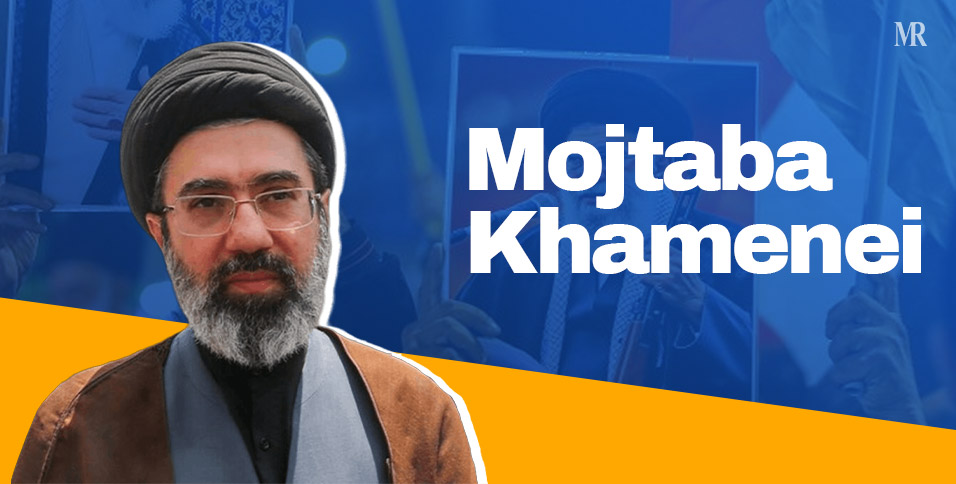
On March 8, 2026, Iran’s Assembly of Experts appointed Mojtaba Khamenei as the third Supreme Leader of the Islamic Republic. This appointment placed Ali Khamenei’s successor at the top of Iran’s power structure during an active conflict.
The new Khamenei had remained largely out of public view for years while working within Iran’s political and clerical establishment. Thus, there is now a rise in attention towards the new mysterious man leading Iran, Mojtaba Khamenei.
Who is Mojtaba Khamenei?
Mojtaba Khamenei is an Iranian Shia cleric and politician who became the third Supreme Leader of Iran on 8 March 2026. He is the second son of Ali Khamenei, making him the first leader in the Islamic Republic’s history to succeed his father directly in the country’s highest political and religious position.
Now that we understand who Mojtaba Khamenei is, it is important to examine the factors that shape his influence, especially as Iran navigates an ongoing war and a major leadership transition.
Here Are 10 Rare Facts About Iran’s New Supreme Leader, Mojtaba Khamenei
His Childhood Coincided With the Iranian Revolution
Mojtaba Khamenei was born on 8 September 1969 in Mashhad, Iran, into a religious family that would soon become central to the country’s political future.
His early years coincided with the 1979 Iranian Revolution, which overthrew Shah Mohammad Reza Pahlavi and transformed Iran into an Islamic Republic.
During this period, his father, Ali Khamenei, emerged as a prominent revolutionary figure and later became the Supreme Leader in 1989, placing Mojtaba within Iran’s ruling clerical circle from an early age.
Joined the Islamic Revolutionary Guard Corps at 17
In 1987, Mojtaba joined the Islamic Revolutionary Guard Corps (IRGC), the most powerful military and political force in Iran.
- He served in the Iran–Iraq War (1980–1988).
- He reportedly fought in operations such as Operation Dawn 10 and Operation Mersad.
This early military experience helped him build relationships with future security and intelligence leaders in Iran.
He Pursued Religious Studies in Qom
In 1999, Mojtaba moved to Qom, Iran’s most important religious center, to study theology in the Qom Seminary.
There, he studied under influential clerics, including Mahmoud Hashemi Shahroudi, eventually becoming a Shia cleric and theology instructor.
He Is a Cleric but Does Not Hold the Highest Religious Rank
Despite years of religious study, Mojtaba holds the clerical title of Hojjatoleslam, a mid-level rank in the Shia clerical hierarchy.
This rank is below that of Grand Ayatollah, the highest religious authority traditionally associated with Iran’s Supreme Leader.
His position has therefore drawn attention because it differs from the religious status of leaders such as Ayatollah Ruhollah Khomeini and Ali Khamenei.
Married Into One of Iran’s Most Influential Political Families
In 1999, Mojtaba Khamenei married Zahra Haddad-Adel, the daughter of Gholam-Ali Haddad-Adel.
This marriage significantly strengthened his political network because:
- Haddad-Adel is a prominent conservative figure in Iranian politics.
- He served as Speaker of the Iranian Parliament (2004–2008).
- He has long been a close ally of Ali Khamenei and conservative clerical circles.
The alliance between the Khamenei family and the Haddad-Adel political network helped consolidate Mojtaba’s connections within Iran’s clerical, political, and ideological establishment.
The couple reportedly has three children, though details about them remain largely private.
Became an Influential Figure Inside the Supreme Leader’s Office
By the late 1990s and early 2000s, Mojtaba had begun working closely inside the office of his father, Supreme Leader Ali Khamenei.
He effectively functioned as:
- Deputy chief of staff for political and security affairs
- A key coordinator between the Supreme Leader’s office and security institutions
- A gatekeeper controlling access to the Supreme Leader Ali Khamenei
Despite holding no formal government office, and his low profile, he remained one of the most influential figures inside the Supreme Leader’s inner circle, operating largely behind the scenes within Iran’s power structure.
Played a Role in Iran’s Hardline Political Networks
During the 2000s, Mojtaba Khamenei emerged as an influential figure within Iran’s conservative political circles.
- He was widely associated with the rise of Mahmoud Ahmadinejad, who won the presidential election in 2005.
- Critics accused him of influencing conservative political mobilization behind the scenes.
These connections strengthened his reputation as a power broker operating within the country’s conservative political establishment.
Linked to the Suppression of the 2009 Green Movement
Mojtaba Khamenei became a controversial figure during the protests that followed Iran’s 2009 presidential election, widely known as the Iranian Green Movement.
- Reformist leaders accused him of interfering in the election process.
- Protesters believed he played a role in coordinating the state’s response to demonstrations.
- His name became a major focus of criticism during the protests.
Although his role was never formally confirmed, the controversy significantly raised his profile both inside Iran and internationally.
Sanctioned by the United States
In 2019, Mojtaba Khamenei was sanctioned by the U.S. Treasury Department.
The sanctions accused him of:
- Acting on behalf of the Supreme Leader without holding a formal office
- Working closely with the IRGC and Basij forces
- Supporting Iran’s regional and domestic policies tied to the leadership office
The move highlighted his growing influence inside Iran’s ruling system.
Became Iran’s Third Supreme Leader After His Father’s Death
28 February 2026, Ali Khamenei, one of the most powerful person in the world, was killed during airstrikes in Tehran, triggering a succession process within Iran’s leadership.
- The 88-member Assembly of Experts began selecting a successor.
- On 8 March 2026, Mojtaba Khamenei was officially chosen as Iran’s third Supreme Leader.
His appointment marked a historic moment, as the son of the previous leader became the new head of Iran’s theocratic state.
After reports that Mojtaba could become Iran’s new leader, Donald Trump publicly criticized the possibility, stating, “They are wasting their time. Khamenei’s son is a lightweight. I have to be involved in the appointment,” and added that selecting Khamenei’s son as Supreme Leader would be “unacceptable.”
End Note
Mojtaba Khamenei’s appointment as Iran’s third Supreme Leader marks a historic and controversial selection in the country’s leadership.
As Ali Khamenei’s successor, he now steps into power during a time of conflict, global scrutiny, and major political transition.
How the new Khamenei shapes Iran’s future will remain closely watched by both allies and critics around the world.
Maria Isabel Rodrigues