Recovery is often described as a process, but for many people navigating neurological injury, it feels more like a series of disconnected steps. Appointments focus on isolated symptoms. Progress is measured in narrow milestones. The inner experience of confusion, fear, and identity loss rarely finds a place in the room. What gets missed is not effort or intention, but continuity.
In neuro rehabilitation, the body often receives one set of instructions, the brain another, and the mind is left to figure things out on its own. Movement is trained without addressing readiness. Learning is introduced before the nervous system can support it. When progress stalls, the assumption tends to be limitation rather than misalignment.
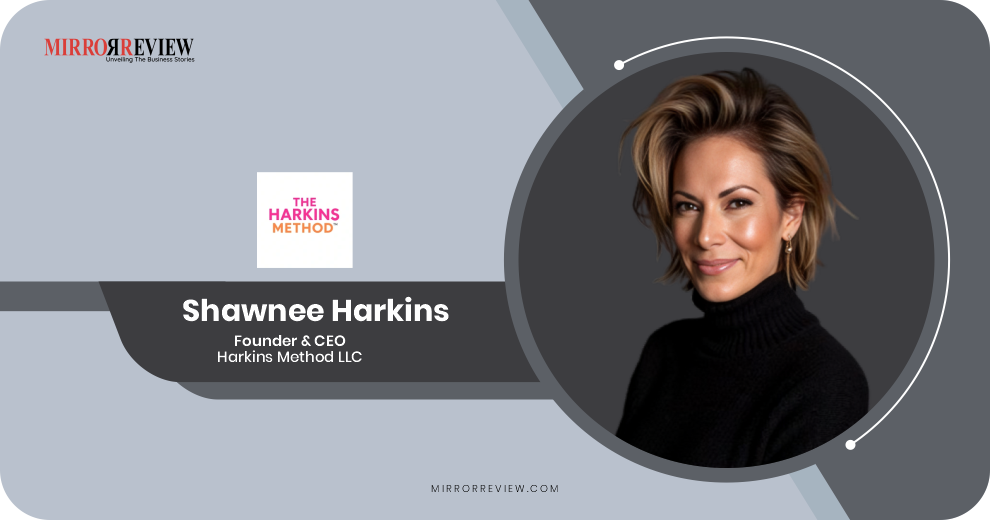
This gap becomes especially visible in cases of severe brain injury, where recovery is not only physical but deeply personal. The work involves more than restoring function. It requires rebuilding trust in the body, clarity in the mind, and a sense of self that injury has interrupted. Few people understand this from the inside, and Shawnee Harkins is among those few.
Shawnee’s work in neuro recovery grew out of lived experience rather than formal theory. By the age of twenty-four, she had survived multiple severe traumatic brain injuries that left her unable to walk, speak clearly, or write, with significant cognitive impairment shaping every moment of daily life. Recovery demanded more than regaining lost skills. It required relearning how to move, communicate, and think, while also redefining who she was in the aftermath.
As she progressed through rehabilitation, Shawnee began to notice what was missing. Care existed. Expertise existed. What did not exist was integration. The mind was treated separately from the brain, the brain from the body, and the human experience was often overlooked altogether. She recognized early that before movement or learning could take hold, the state of the nervous system had to change first.
Long before neuroplasticity became part of everyday conversation, Shawnee began training her mind through visualization, breathwork, mental imagery, and intentional language. She practiced movement internally before her body could produce it. Over time, her brain adapted. She walked again. She spoke again. She rebuilt her life. That personal process became the foundation of a body of work shaped by patience, awareness, and a deep respect for how recovery actually unfolds.
From Lived Insight to a Scalable System
As Shawnee moved from personal recovery into working alongside other survivors, a pattern became difficult to ignore. Individuals were often discharged while progress was still fragile. Caregivers were expected to manage complex needs with little support. Outcomes were evaluated quickly, long before meaningful neurological change had time to take hold.
Neuroplastic recovery does not operate on short timelines. It requires consistency, internal safety, and a gradual reconstruction of identity. When those elements are missing, improvement tends to stall. Shawnee saw this gap repeatedly in survivors of traumatic brain injury, stroke, and concussion, and it became the catalyst for what would later be formalized as The Harkins Method™.
Over years of real-world application, her approach evolved into a structured, repeatable system. The work emphasized preparing the nervous system before introducing learning or movement, allowing recovery to build in a way that could last beyond clinical discharge. As outcomes compounded, the limits of one-to-one delivery became clear.
“At some point, it became obvious that this kind of recovery couldn’t be confined to individual sessions,” Shawnee explains.
That realization led to The Harkins Project, VRx. Designed as a neurotechnology platform, it leverages AI, augmented reality, and virtual reality to extend neuroplasticity-driven recovery while preserving the human essence of healing. The result is a model built not for speed, but for continuity and long-term impact.
Programs, Platforms, and What Sets the Work Apart
As Shawnee’s work expanded, so did the need for structure. What began as an approach shaped through practice had to become something others could understand, apply, and sustain over time. The challenge was not adding complexity, but maintaining integration. Cognitive, physical, and behavioral recovery could not exist in parallel lanes. They had to function as a single system.
That system became The Harkins Method™ – Neural Network of Change™, a neuroscience-backed, drug-free training framework designed to support neuroplastic change through an integrated mind, brain, and body process. The method focuses on rebuilding neural pathways by addressing how a person thinks, moves, and responds, rather than isolating those functions into separate interventions.
The work reaches people through several distinct programs. Neuro State of Mind™ provides personalized neuro rehabilitation and performance training, adapting to individual capacity and progression.
NeuroFit Training Club™ extends the method into education and prevention, offering scalable brain health training for long-term support. The Harkins Project, VRx brings the method into immersive environments, using AI, augmented reality, and virtual reality to translate the work beyond traditional settings.
What differentiates this work from conventional rehabilitation is where it places its attention. Progress is not driven by repetition alone, but by the state of the nervous system, the rebuilding of identity, and continued engagement over time. As Shawnee often emphasizes, “Change does not stick unless the nervous system is ready to receive it.”
In this model, recovery is not treated as a series of tasks to complete. It is treated as a process that unfolds when the internal conditions for change are consistently supported.
Cultivating Hope, Resilience, and Trust
Many people arrive at this work believing they have reached the end of the road. They have followed protocols, attended appointments, and complied with every recommendation placed in front of them. What they often carry with them is not resistance, but fatigue. Trust has eroded after years of being told progress has plateaued.
Shawnee approaches this moment carefully. Rebuilding trust begins by honoring the full human experience. Recovery, in her view, extends beyond physical function to include mental, emotional, relational, and spiritual dimensions. When those layers are acknowledged, people begin to re-engage with the process rather than brace against it.
One long-term example is Kyle Alexander, a survivor of severe traumatic brain injury whom Harkins has worked with for seven years. Early in his recovery, Kyle was told he might never walk again. Today, he walks independently, speaks with confidence, and is preparing to return to ministry. His progress unfolded gradually, shaped by consistency rather than urgency.
Kyle’s mother, Donna, recalls how different life felt at the beginning. “When Kyle first had his accident, I had to be put on antidepressants. I couldn’t talk about it without crying. Now, I still cry, but it’s because of the progress he’s making. Without The Harkins Method, Kyle would still be in a wheelchair. He wouldn’t be speaking as fluently or thinking as clearly. We’ve learned there’s more to recovery than just PT and OT.”
Alongside physical gains, Kyle learned to regulate his nervous system. Through breathwork and focused attention, he developed the ability to interrupt spasticity episodes, auras, and seizures. What once sidelined his recovery for weeks became something he could navigate in real time, allowing him to return to training instead of starting over.
The work extends beyond brain injury recovery into stroke rehabilitation and performance rebuilding. John Cothrine Jr., a business owner and stroke survivor, sees the broader implications.
“If The Harkins Method can be duplicated through technology, it can help many more people. Shawnee can’t train everyone one-on-one, but technology allows this method to reach and heal more lives through neuroplasticity.”
Shawnee also works with children, including Jude, a five-year-old living with cerebral palsy. His parents, Dr. and Mrs. Mathew, noticed changes that reached beyond physical milestones.
“Before starting The Harkins Method, Jude struggled with weakness and coordination between both sides of his body. Since beginning this work, his strength, hand-eye coordination, confidence, and willingness to try new challenges have all improved. We are watching neuroplasticity happen right in front of us.”
Across ages and diagnoses, the pattern remains consistent. Neuroplasticity does not disappear with time. When the nervous system is supported, and the person is seen as a whole, recovery remains possible at every stage of life.
Leadership and Measuring Impact
As founder and chief executive officer, Shawnee leads with a clear division of responsibility and a steady sense of direction. Her role spans vision, product strategy, research alignment, and the development of an ecosystem that can support long-term recovery rather than short-term intervention. Each decision ties back to a single question: whether the work can continue to serve people well over time.
Impact, in this model, is not measured by speed or scale alone. Shawnee evaluates success through functional outcomes, sustained engagement, caregiver feedback, and restored independence. When individuals remain involved for years and continue to make progress, it signals that the system is supporting real change rather than temporary gains.
Her leadership has been shaped by restraint as much as ambition. Rather than pursue rapid expansion, she has chosen deliberate growth, allowing the work to mature without dilution. “Protecting the integrity of the work has been the most important decision of my career,” Shawnee says.
That choice reflects a leadership style grounded in responsibility to those who rely on the work. Growth, in her view, only matters when it strengthens outcomes and preserves the trust placed in the system.
The Road Ahead
Shawnee sees the next phase of neuro recovery taking shape at the intersection of neuroscience and technology. For her, AI, augmented reality, and virtual reality are not ends in themselves, but tools that make neuroplastic training more accessible and consistent across environments. Used responsibly, they offer a way to extend recovery beyond traditional settings while maintaining continuity of care.
Her vision centers on building infrastructure that supports recovery at scale without reducing it to data points or protocols alone. Accessibility, measurability, and dignity remain the guiding principles. The goal is not to replace human connection, but to protect it as the work reaches more people.
In this future, technology serves as a bridge rather than a barrier. By preserving the humanity at the core of healing, Shawnee aims to create systems that allow neuro recovery to remain personal, even as it becomes global.
A Closing Reflection
Recovery has a way of revealing strength that often goes unnoticed until it is tested. In Shawnee’s work, that strength is not something imposed from the outside. It is something uncovered, trained, and gradually trusted again by the individual.
Her intention has remained consistent throughout the evolution of her work. She aims to support people as they reconnect with their own capacity for change, even when progress feels uncertain. Having moved through her own healing journey, she now works from a place of perspective rather than urgency.
“I cannot imagine spending my life any other way than in service,” Shawnee says. “Helping people recover is not just what I do. It’s how I choose to contribute.”
That commitment shapes her broader mission. She seeks to ensure that hope and healing are not limited by geography, resources, or time. By using technology thoughtfully and responsibly, she continues to build systems that respect the human nervous system, the human spirit, and the dignity of recovery itself.
Connect with Shawnee and The Harkins Method™
LinkedIn:https://www.linkedin.com/in/shawnee-harkins/
Personal Website:https://shawneeharkins.com
Neuro State of Mind: https://NeuroStateOfMind.com
NeuroFit Training Club (sign-up):https://www.skool.com/neurofit-training-club-join/about
For any inquiries or follow-up, Shawnee can be reached directly at shawnee@shawneeharkins.com.
Also Read: NeuroTech Pioneers: Top Business Women Leaders 2026