Healthcare systems do not fail loudly. Most of the time, they fail quietly. In delayed appointments. In confusing processes. In patients who feel unseen and unheard. Behind each of those moments sit decisions about policies, workflows, and leadership priorities. Those decisions shape outcomes long before a clinician ever enters the room.
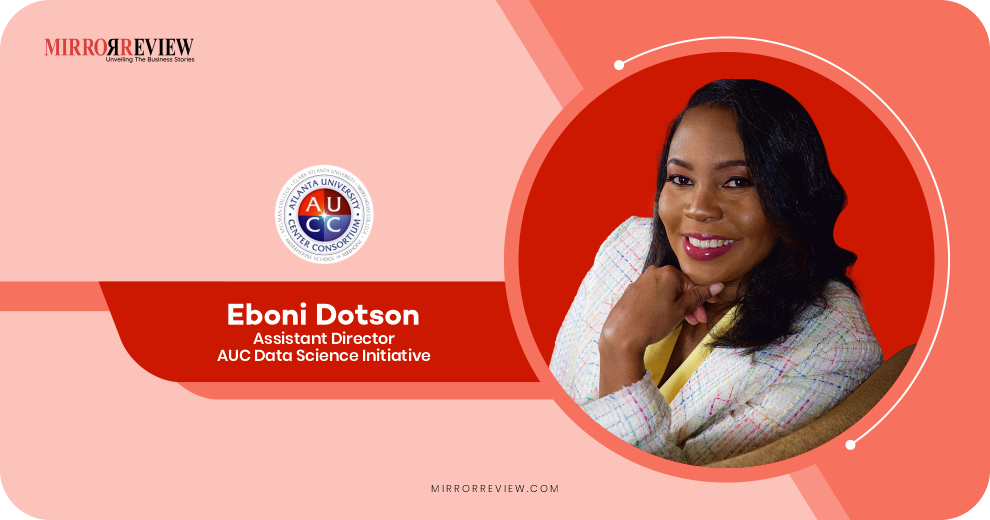
Eboni Dotson has spent her career paying attention to those quiet moments. She did not arrive in healthcare leadership chasing titles or distance from patients. Her path took shape through lived experience. She has been a patient. She has been a caregiver. And she has navigated healthcare systems as a Black woman who understands how easily people can fall through the cracks when systems are not built with care.
Early in her journey, Dr. Dotson believed, like many do, that the greatest impact in healthcare happened at the bedside. Over time, that belief began to shift. She started to see how leadership decisions ripple outward. “I saw how policies, workflows, and leadership decisions quietly but powerfully determined who received care, who was heard, and who was left waiting,” she says. What she witnessed was not always intentional, but it was consistent enough to demand attention.
That awareness became a turning point. Dotson realized that compassion alone could not fix broken systems. Healthcare needed structure, accountability, and leaders willing to look closely at how things actually worked. She moved into healthcare operations and quality improvement with a clear purpose. “I moved into healthcare operations not because I wanted distance from patients, but because I wanted proximity to change,” she explains.
Each role since then has sharpened her focus. Dotson works at the intersection of efficiency, equity, and trust, helping organizations build systems that serve people better and more fairly. For her, leadership is not about control. It is about responsibility. Healthcare, she believes, must earn the trust people place in it, and that work begins far beyond the exam room.
Building Pathways through Data, Education, and Access
Dr. Dotson’s current work places her at a different, but deeply connected, point in the healthcare and equity conversation. As Assistant Director of HBCU Engagement at the AUC Data Science Initiative, she operates where education, innovation, and justice meet. The role allows her to think beyond a single organization and focus instead on systems that shape who gets to participate in the future of data-driven decision-making.
Her day-to-day work centers on expanding access to data science education and applied research for faculty and students across historically Black colleges and universities. Much of that work ties directly to healthcare and social impact, where data can influence everything from patient outcomes to public policy. Dr. Dotson approaches this responsibility with intention. She understands that access to data literacy is no longer optional. It determines who gets to ask questions, who gets funded, and whose solutions are taken seriously.
What gives the role its weight is its long-term impact. Dr. Dotson is not simply supporting programs or checking milestones. She is helping institutions and individuals step into spaces they have long been excluded from. “I am helping institutions and individuals claim their rightful place in shaping the data-driven future,” she says. That work happens through faculty research support, student engagement, and partnerships that strengthen institutional capacity.
At the center of her approach is a clear belief. Talent has never been the issue. Access has. Dr. Dotson works to make sure that brilliance is not limited by resources or opportunity. Her goal is to help HBCUs lead in innovation, not follow it, and to ensure that the next generation enters the data economy prepared to shape it with purpose.
Turning Responsibility into Action Through Thoughtful Consulting
Healthcare Strategic Consultants, LLC grew out of a pattern Dr. Dotson saw again and again. Leaders cared deeply about their organizations and the people they served, yet many were operating without the structure needed to create lasting change. The responsibility felt heavy. The support systems did not always match it. Dr. Dotson founded the firm to close that gap.
The consultancy focuses on healthcare operations, quality improvement, leadership development, and organizational transformation. Each area connects back to a central idea. Systems work best when they align with the values they claim to hold. Dr. Dotson partners with organizations to bring that alignment into focus, helping leaders move from intention to execution in practical ways.
Much of the work involves untangling complexity. She works alongside leadership teams to strengthen governance, clarify workflows, and improve how decisions are made. Equity is not treated as a separate initiative. It is embedded into operational strategy, where it can shape outcomes rather than sit on the sidelines. This approach allows organizations to improve performance without losing sight of the people affected by every decision.
For Dr. Dotson, the work is not abstract. It is personal. She has seen what happens when systems fail and when accountability is unclear. Consulting gives her the ability to stand with leaders as they build organizations that function well and treat people with dignity. Her goal is not just high performance. It is to help create healthcare organizations that are humane, resilient, and worthy of trust.
Bridging Data Innovation with Equitable Care
Data can reveal uncomfortable truths, or it can hide them. At the AUC Data Science Initiative, Dr. Dotson approaches data science as both a technical discipline and a moral one. Students and faculty are taught that numbers carry stories, and those stories shape real lives. The initiative supports faculty-led research and places students inside real-world challenges tied to health disparities, access, and community well-being.
This grounding keeps innovation connected to context, not abstraction. When data is applied with care, it becomes a tool for accountability rather than convenience. Dr. Dotson believes responsible data use can move healthcare closer to fairness, ensuring efficiency never comes at the expense of humanity. For communities long overlooked by traditional systems.
Building Partnerships That Last
Dr. Dotson treats partnerships as relationships rather than transactions. She looks for collaborators who understand that equity work is not occasional or convenient, but ongoing. Trust and shared values guide how those relationships take shape. Her strategy focuses on building pathways that give students hands-on experience while supporting faculty scholarship and institutional growth. Just as important, she works to ensure programs can survive beyond a single grant or funding cycle.
Sustainability, for Dr. Dotson, means institutions are equipped to carry the work forward on their own terms. “True partnership means building something together that lasts,” she says, “and being willing to stay when the work gets hard.” This approach helps create opportunities that grow stronger over time, not smaller, for everyone involved.
Measuring Equity with Accountability and Care
Dr. Dotson believes equity must move from intention to action. She builds clarity around outcomes, insists on continuous evaluation, and demands accountability at every stage. Her work begins with difficult questions. Who benefits? Who remains unseen? What must change to close the gap? Measurement alone is not enough. She grounds programs in lived experience, ensuring communities help shape the solutions meant to serve them.
She views people as contributors, not recipients. Impact becomes meaningful when data and dignity move together. Progress is tracked carefully, but never at the cost of humanity. By holding systems accountable while honoring real stories, Dr. Dotson ensures equity work delivers results that last. This discipline keeps her work focused, transparent, and grounded in responsibility over time consistently.
Collective Approach to Leadership and Restoration
Dr. Dotson describes her partners as a collective of courageous leaders committed to cultural restoration and transformational leadership. They include academic administrators, faculty members, philanthropic partners, and industry collaborators who share a belief in restoring dignity, opportunity, and agency to communities long excluded from innovation spaces. These relationships are built on trust and shared responsibility, not visibility or credit.
What connects this group is a clear understanding of leadership as stewardship. Each partner recognizes their role extends beyond immediate results. Together, they focus on building systems that reflect their values and endure over time. The work honors the past while preparing future generations to lead with purpose, care, and accountability. This commitment grounds collaboration in intention, patience, and shared long-term vision.
Consulting as a Complement to Purpose
Consulting places Dr. Dotson inside moments that most leaders rarely discuss openly. As Founder and CEO of Healthcare Strategic Consultants, LLC, she often meets organizations during tension, transition, or transformation. These moments demand honesty, structure, and guidance. The work complements her academic role by grounding theory in daily operations and turning vision into execution.
Lessons from the classroom inform the field, and real-world challenges sharpen her thinking as an educator. Dr. Dotson sees both roles as expressions of the same calling. Each allows her to help leaders build systems that serve people rather than exhaust them. Whether advising executives or shaping academic pathways, she focuses on practical change that lasts. The goal remains consistent. Healthcare systems should work with people, not against them.
Leadership Tested by Conviction
Leadership is tested when advocating change that unsettles comfort yet serves conscience. In those moments, Dr. Dotson relied on courage, preparation, and prayer to stay grounded. She learned that leadership rarely offers immediate validation. Often, it demands steadiness long before agreement follows. Standing firm carried a cost, but it clarified her values. These experiences strengthened her resilience and sharpened her sense of responsibility. Integrity became nonnegotiable, even when progress felt slow or lonely.
Those moments reaffirmed her commitment to lead with integrity, regardless of outcome or recognition. They shaped a leader willing to choose principle over comfort, and patience over applause, while trusting that meaningful change often arrives after persistence, faith, and resolve are fully tested over time and pressure consistently.
Measuring Impact through People, Not Plaques
Dr. Dotson measures impact differently than most. For her, the most meaningful achievements are not awards or titles, but people. She points to students who now see themselves as innovators and problem-solvers. She points to faculty who feel supported enough to pursue bold research questions. She points to institutions that are stronger, more connected, and better equipped to serve their communities.
These outcomes reflect progress that cannot always be quantified, yet they signal lasting change. Each success reinforces why the work matters. It confirms that access, support, and belief can shift trajectories. For Dr. Dotson, those moments offer the clearest evidence that her efforts are creating real, human impact where it counts most.
Sustaining Balance through Alignment
Balance, for Dr. Dotson, is less about separation and more about alignment. She is intentional about how she spends her time and energy, knowing effectiveness depends on restoration. She protects space for reflection, for relationships, and for moments that allow her to slow down. Those practices are not indulgences. They are part of how she leads well.
Creating room to think clearly helps her make better decisions and remain present in demanding environments. By honoring what restores her, Dr. Dotson sustains the clarity and steadiness her work requires. Balance becomes a practice of alignment between values, responsibilities, and care for self, allowing her to remain grounded while carrying complex work forward with purpose and consistency over time and across evolving professional seasons.
Scaling Impact without Losing Purpose
Dr. Dotson’s next chapter centers on scale without drift. She is focused on expanding ecosystems that prepare underrepresented leaders to shape healthcare, policy, and innovation on a global stage. The work is not about growth for visibility, but reach with responsibility. She wants systems that open doors, share power, and endure. As initiatives grow, purpose remains the anchor.
She plans to deepen partnerships, strengthen pipelines, and invest in leaders who will carry this work forward in their own contexts. The aim is long-term change built with care. Wherever the work expands next, it will remain grounded in service, stewardship, and a clear commitment to equity that crosses borders and disciplines, while honoring community voice and shared accountability.
A Guiding Philosophy for Leadership
For Dr. Dotson, leadership is a calling, not a title. She believes that true transformation begins when leaders approach their work with courage, humility, and genuine care for the people they serve. Success is not measured by recognition, but by the positive, lasting change created in communities, organizations, and individuals.
She encourages leaders to prioritize integrity over convenience and to center the humanity of those affected by their decisions. “Lead with courage, humility, and love for the people your work touches,” she says. For Dr. Dotson, this principle guides every initiative, partnership, and strategy, reminding us that meaningful leadership transforms systems because it honors people first.
Quotes
Also Read: Leadership Visionaries: Women Transforming Global Healthcare 2026