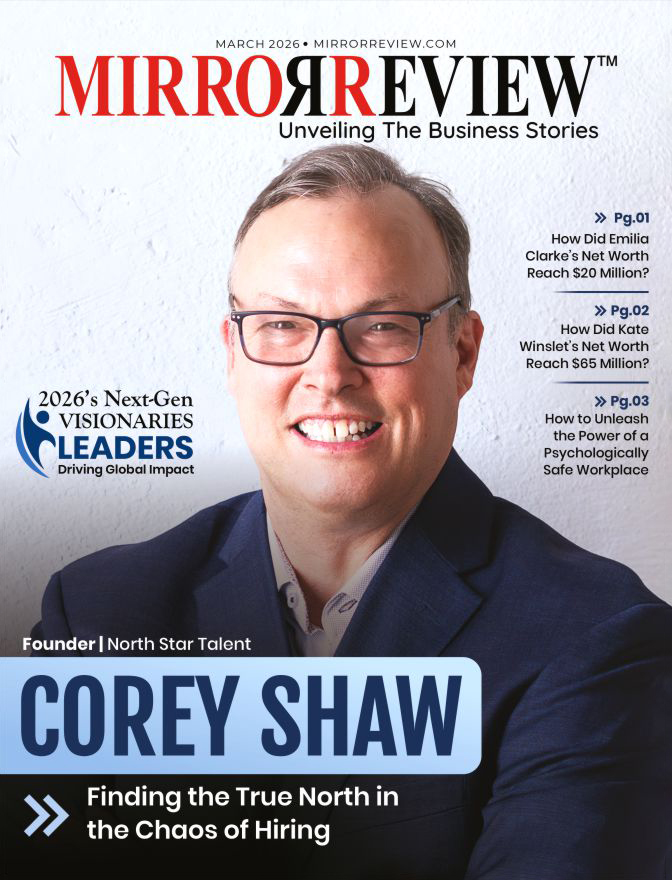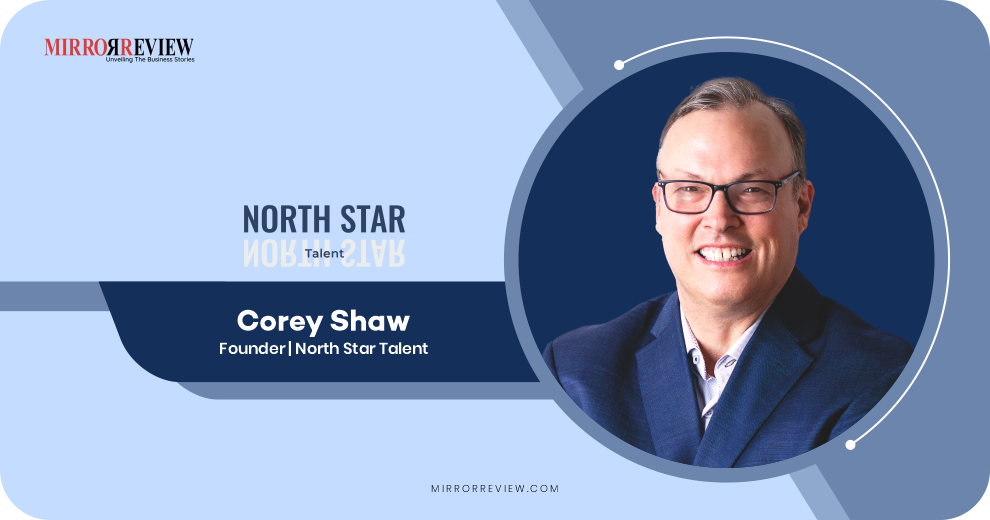
There is a particular kind of quiet that exists in the heart of a large financial institution, a sort of hum that sounds like money moving and data clicking into place. It is a world of rigid structures and high-stakes decisions, where the human element can sometimes feel like a variable to be managed rather than the pulse of the machine. Corey Shaw, the founder of North Star Talent, spent years within this hum, navigating the marbled corridors and glass towers of TD Bank, CIBC, and Canada Life. He saw the way organizations, even the most successful ones, can treat the act of hiring as a clerical function, a series of boxes to be checked off in a hurry. But Corey looked at it differently. He saw a map where others saw a list. He saw a North Star.
In 2023, Corey decided to step away from the safety of the corporate canopy to plant something of his own. He founded North Star Talent, a Canadian company born from a simple, yet radical, observation: most organizations do not know the economic impact of their hiring. They know how to promote their brand, post ads, interview, and onboard, but often lack the architecture that connects talent to the right opportunity, driving a company’s success. To watch Corey talk about talent acquisition is to watch an architect explain a building’s foundation. It is not about the glass or the steel you see above ground; it is about the structure beneath that holds everything upright.
The Architecture of Attraction
Before he was the founder of a strategic consultancy, Corey was a student of the corporate ecosystem. His journey took him through the heavyweights of the Canadian economy, from the Retail, Commercial, and Wealth divisions of TD Bank to the legacy-rich environments of Canada Life, Co-operators, and The Salvation Army. He didn’t just work in Human Resources; he lived in the intersections of Project Management, Financial Planning, and Commercial Banking. This multi-disciplinary background gave him a perspective that most talent leaders lack. He didn’t just see a resume; he saw a balance sheet.
Corey was drawn to talent acquisition because he recognized it as the most powerful lever a company has to improve its economic success. It is the gate through which all value must pass. At TD Bank, he wasn’t just filling roles; he was forming the enterprise Talent Acquisition Strategy, Policy, Governance, and Practices. He was building the operating model that would dictate how thousands of people were hired internally or externally. It was here that he began to realize that an effective hiring strategy, when properly aligned with technology and process, could fundamentally change the trajectory of a billion-dollar business.
Yet, despite the scale of these roles, Corey noticed a recurring theme. Even at the top, there was often a disconnect. Companies would have a business strategy on one page and a hiring plan on another, and the two rarely spoke the same language. This realization became the seed for North Star Talent. He saw that without a thoughtful plan, efficient processes, and the right technologies, hiring became a gamble. And in business, gambling on people leads to turnover, disengagement, and a slow, quiet erosion of the brand.
The Why Behind the Work
When you sit down with Corey, you quickly realize that his approach isn’t just about efficiency; it’s about purpose. There is a deep, underlying “why” to everything he builds. He believes that the reason a company exists is inextricably linked to the people it chooses to represent it. To Corey, an effective workforce model isn’t a luxury; it is a proactive act of survival.
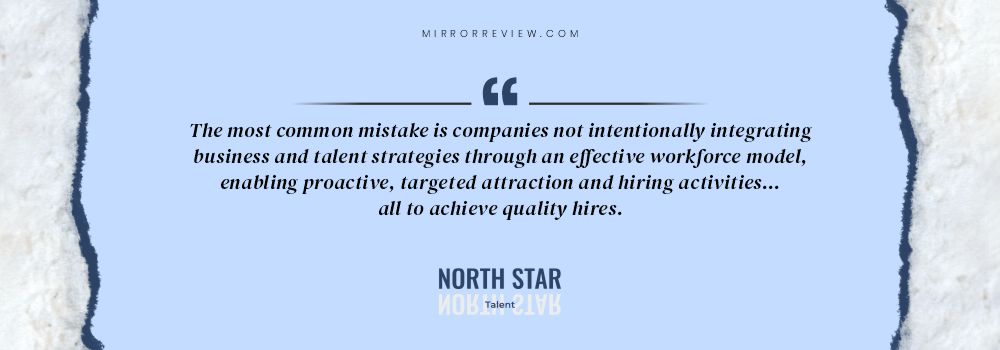
The most common mistake companies make today, Corey observes, is a lack of intentionality. They react to vacancies like a homeowner reacts to a leaky roof, rushing to patch the hole without wondering why the wood rotted in the first place. Corey’s mission is to move organizations away from this reactive posture. He wants them to integrate their business and talent strategies so tightly that they become one and the same.
At North Star Talent, this begins with a deep dive into the current reality of the organization. Corey performs what is essentially a cultural and structural audit. He looks at the aspirational state of hiring quality. He asks, “What does success actually look like for you?” and then he builds a roadmap to get there. It is a process of stripping away the noise and focusing on the signals. He isn’t interested in providing a generic solution because he knows that a strategy that works for a major bank won’t necessarily work for a mid-sized growth company. Everything must be customized, relevant, and aligned to the specific market and organizational reality.
From Order Takers to Alchemists
Perhaps the most compelling evidence of Corey’s impact can be found in his recent work at a large, complex organization in the automotive industry where the stakes of hiring are incredibly high. Corey didn’t just give them a new set of rules; he gave them a new identity. He formed their talent acquisition strategy and roadmap, creating evolution proof points and a robust operating model.
But the real magic happened in the training. Corey has been delivering a program designed to elevate recruiters from what he calls “order takers” to “strategic, trusted, expert talent advisors.” This is where his philosophy of service truly shines. He isn’t just serving the board or the executives; he is serving the recruiters themselves. He is giving them the tools to move beyond the transactional and into the transformational.
An order-taker waits for a job description and tries to find a match. A strategic advisor understands the business’s long-term goals and finds the person who can fulfill them before the need even becomes a crisis. By empowering these individuals, Corey is effectively changing the DNA of the organization. He is guiding them on how to be the curators of the company’s future. This is the essence of his leadership: he leads by lifting others, by providing the clarity and the framework they need to excel in their own right.
The Digital Hearth: Blending AI with Humanity
As we look toward the next three to five years, the conversation in every boardroom inevitably turns to Artificial Intelligence. For many, AI is a threat or a cold, impersonal replacement for human intuition. But Corey sees it as a new tool in the artisan’s kit. He believes the defining trend of the near future will be the governance model that effectively blends AI with human interaction.
Corey’s vision for technology is not one of automation for its own sake. He speaks of using AI and Machine Learning to plan, attract, source, and assess talent, but always within a framework that is “fit to purpose.” He believes that technology should be the digital hearth around which human connections are made. It should remove the friction of the process so that the human elements, the interviews, the cultural fit, and the shared values can take center stage.
This focus on governance and intentional build-to-sustain models is what sets Corey apart. He isn’t interested in the latest shiny object; he is interested in what works for the long haul. He understands that while an algorithm can find a candidate, it cannot understand a candidate’s passion and purpose. Only a human, supported by the right technology, can do that.
The Servant’s Compass
If you ask Corey who he is serving, his answer reveals the humble, grounded nature of his leadership. While he has spent his career in the upper echelons of corporate Canada, his heart is increasingly drawn to the smaller and medium-sized organizations. These are the companies that often lack the infrastructure and maturity to handle complex talent issues, yet for them, every single hire is a make-or-break decision.
Corey wants to grow his offering to help these organizations find their growth and viability in a competitive talent economy. He sees himself as a guide for those who are still finding their way. There is a sense of stewardship in his work, a feeling that he is responsible for the health of the broader economic ecosystem. By helping these companies hire better, he is helping communities thrive.
This is the “Who” that drives him. It is not about the prestige of the client list; it is about the impact of the work. Corey is a leader who leads from the front during times of transformation, as he did during a significant business overhaul early in his career. He knows how to gain deep insight into transformation drivers while simultaneously delegating authority to ensure that the day-to-day business continues to flourish. He is a master of balance, or as he prefers to call it, harmony.
The Harmony of the Quiet Moments
The concept of “work-life balance” is often discussed as a scale, with one side always threatening to tip the other. Corey rejects this binary. He seeks “work-life harmony,” a state where his professional passion and his personal well-being feed into each other rather than competing. He focuses on a holistic sense of wellness, encompassing the financial, physical, and mental.
Beyond the boardroom and the strategy sessions, Corey is a man of diverse interests. He is a regular presence in his community, volunteering his time and staying grounded in the needs of those around him. He is a lifelong learner, often found with a book in hand, constantly refining his understanding of the world. He is a sports enthusiast, finding the same rhythm in the game that he finds in a well-oiled business process.
And then there is the music. Corey is a lover of live music, a pursuit that requires one to be fully present in the moment. There is something poetic about a man who spends his days building structures for the future, spending his evenings lost in the fleeting, beautiful resonance of a live performance. It is this capacity for presence that makes Corey such an effective leader. He hears the notes that others miss.
The True North
In the end, Corey Shaw’s story is not just about talent acquisition. It is about the search for clarity in a world that is often intentionally confusing. It is about the belief that every organization, no matter how small, deserves to have a North Star. Through his company, he is providing the compass and the map.
Corey has built a distinguished career by being the person who looks at the messy, human reality of business and finds the pattern. He has taken the lessons from TD Bank, CIBC, Canada Life, Co-Operators, and The Salvation Army and distilled them into a mission that is both strategic and deeply human. He is a visionary who isn’t afraid to get his hands dirty in the data, a mentor who believes in the power of diversity, and a servant leader who knows that his success is measured by the success of those he helps.
As the workforce continues to evolve, as AI changes the way we work and the economy demands ever more agility, Corey will be there, guiding organizations toward their own aspirational state. He will be teaching recruiters how to be advisors, helping founders find their first crucial hires, and reminding us all that at the heart of every great company is a group of people who were chosen with intention.
Corey is not just finding talent; he is building the future, one strategic hire at a time. And as he looks toward the horizon, his focus remains steady. He is serving the growth of the economy, the integrity of the profession, and the human potential that lies within us all. He has found his North Star, and in doing so, he is helping the rest of us find ours.
Quote
Also Read: 2026’s Next-Gen Visionaries: Leaders Driving Global Impact