On June 8, 2022, a new policy group for circular textiles was announced in New York, backed by 11 founding organizations and a plan to publish a position paper before the year ended.
The group, introduced as American Circular Textiles (ACT) and now known as American Circular Textiles (AMCIRC®), emerged amid debate over New York’s Fashion Sustainability and Social Accountability Act (A8352/S7428). The proposed legislation sought to require fashion retailers and manufacturers to disclose their environmental and social due diligence policies. It did not advance beyond committee during the 2021–2022 legislative session.
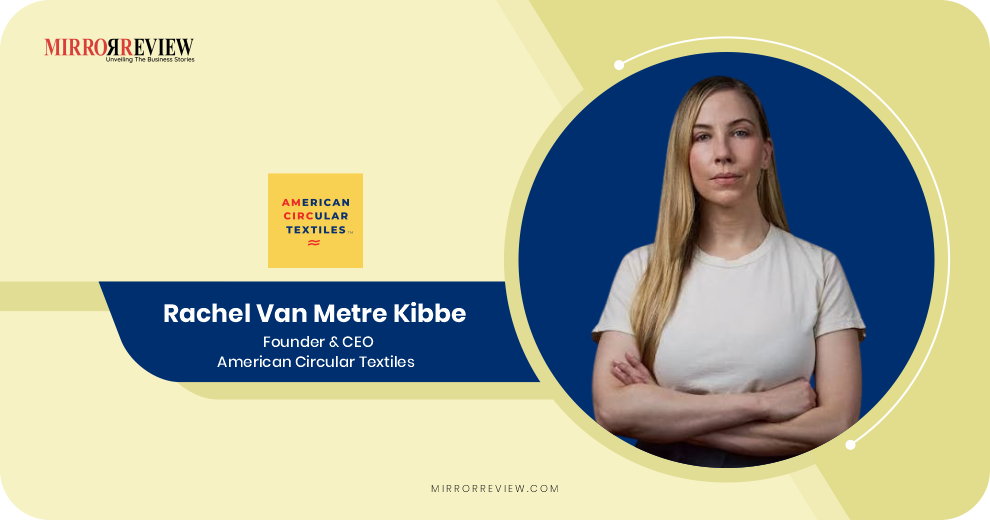
One of the organizers was Rachel Van Metre Kibbe, then CEO of Circular Services Group, and today Founder and CEO of American Circular Textiles (AMCIRC®).
After rallying support for the bill and advocating for circularity to be part of the policy conversation, Rachel and Marisa Ader of Resource Recycling Systems recognized a broader need. Circular fashion and its stakeholders required a formal working body capable of representing their interests and helping shape policy beyond a single piece of legislation.
From Working Group to Platform
American Circular Textiles was spearheaded by Circular Services Group (CSG) and Resource Recycling Systems (RRS) to build a collective voice for the circular textile industry. Its early agenda focused on advancing U.S. policy that could strengthen textile reuse and recovery, with reuse positioned high in the circular economy’s waste hierarchy.
The idea was to move beyond isolated efforts by individual companies and establish a platform where brands, reuse businesses, recyclers, and other stakeholders could develop shared policy recommendations. The coalition’s work has since expanded into a broader effort to strengthen domestic circularity and sustainable fashion policy across apparel and footwear.
AMCIRC describes itself as an independent strategic policy-intelligence and access platform for circular textiles in the United States. Its approach combines policy analysis, industry engagement, and coordinated advocacy, helping businesses understand emerging rules and participate in the conversations that shape them.
By October 2025, the coalition reported representing more than 30 circular fashion and apparel brands and supply-chain stakeholders. That month, it was named a Founding Partner of the inaugural Textile Recycling Expo USA, strengthening its role as a convenor across the textile value chain. The coalition’s involvement connected policy discussions with a wider industry gathering of recyclers, manufacturers, brands, and innovators.
AMCIRC brings together stakeholders across retail, resale, recycling, repair, manufacturing, and technology. In August 2026, the Ellen MacArthur Foundation joined as its anchor Insights Partner, creating a new participation category through which select multistakeholder organizations and nongovernmental organizations can contribute research, expertise, and systems-level perspectives. Rachel welcomed the Foundation’s experience in circularity and emphasized the value of translating shared knowledge into practical progress on U.S. textile policy.
The Advisory Firm
Behind the platform sits Circular Services Group (CSG), where Rachel has served as Founder and CEO since September 2019.
Based in New York, CSG is a strategic advisory firm helping companies anticipate regulatory risk, navigate policy change, and build resilient supply chains and business models. Its clients include Fortune 500 brands, institutions, and public-sector leaders working through rapidly changing commercial and regulatory environments.
Her approach is grounded in the intersection of public policy, commercial markets, and corporate reputation. Rather than treating regulation as something to address only after a rule is introduced, she helps organizations anticipate what may change, understand the implications, and prepare their businesses accordingly.
This work gives her a distinctive position in sustainable fashion. While designers and manufacturers determine what products are made and how materials are used, policy can influence the wider infrastructure that determines whether those products are reused, repaired, recycled, or discarded. Rachel works at that intersection, helping businesses prepare for the conditions under which circular models must operate.
Ocean Plastics and Microfibers
From April 2022 to April 2026, Rachel served as a Strategic Advisor to The Nature Conservancy’s California Ocean Plastics initiative. Her work focused on building coalitions with fashion-industry stakeholders to address microfiber fragmentation and microplastics pollution.
The assignment began shortly before AMCIRC’s launch, underscoring how closely her advisory and policy work were connected. Both addressed a problem that extends beyond the design of an individual product: textile materials move through production, use, washing, collection, and disposal, and their environmental consequences cannot be addressed at only one stage.
Coalition-building offered a way to bring companies and other stakeholders together around shared challenges. It also reinforced a recurring theme in Rachel’s work: environmental problems that cross supply chains require responses that do the same.
The Retail Years
Before policy came retail. From March 2011 to October 2019, Rachel was Founder and CEO of HELPSY, an early multi-brand online platform for ethical and sustainable fashion.
HELPSY brought together sustainable fashion labels for consumers at a time when responsible clothing remained a relatively specialized category. The venture reflected an early conviction that sustainability needed to be accessible and appealing to mainstream shoppers, not confined to a separate niche.
The HELPSY name later became associated with clothing collection and recycling, extending the circularity conversation beyond the retail experience to the challenge of keeping unwanted textiles in circulation. This broader context connects her early consumer-facing work with the policy and infrastructure questions that define her current role.
CSG began in September 2019, shortly before the end of her recorded HELPSY tenure. The transition marked a shift in emphasis: from creating a platform through which consumers could find ethical fashion to advising organizations on the commercial, regulatory, and structural changes needed to make circularity work at scale.
An Unexpected Ledger
Her professional history also includes an earlier chapter in financial restructuring. From October 2010 to October 2014, Rachel was Executive Assistant to the Head of Restructuring at Blackstone. From October 2014 to February 2016, she held the same title at PJT Partners.
These roles placed her close to the processes through which organizations assess financial pressures, evaluate risk, and navigate restructuring. Those questions are distinct from textile circularity, but they connect to the broader challenge of helping businesses adapt when their operating conditions change.
The dates of these financial roles overlap with the period listed for HELPSY. The available chronology does not establish how the responsibilities were arranged, so the roles should not be interpreted as evidence that she simultaneously held several full-time positions. What the record does show is experience spanning finance, retail, advisory work, and policy.
Where Policy Meets Material Reality
Rachel represents the policy and systems dimension of circular fashion.
A garment may be designed for durability, repair, resale, or recycling, but its potential depends on the systems around it. Collection infrastructure, market incentives, manufacturing capacity, and public policy all influence whether circular design can become a practical reality at scale.
That is the question at the center of her work. Through CSG, she advises organizations navigating regulatory and market changes. Through AMCIRC, she brings businesses and other stakeholders together to help shape the policy environment in which circular textiles must operate.
Her contribution lies in connecting those two efforts: helping individual organizations prepare for change while building the collective industry voice needed to influence it. In a fashion industry confronting textile waste and pressure to rethink its supply chains, Rachel is working on the structures that can help turn circularity from an ambition into an operating reality.
Read more : The Top 10 Visionary Leaders in Sustainable Design of 2026